Japan Retrieves Rare Earth Sediment Near Minamitorishima
Chikyu pulled sediment containing rare earths from nearly 6,000 meters beneath Minamitorishima on Feb. 1, officials said.



Overview
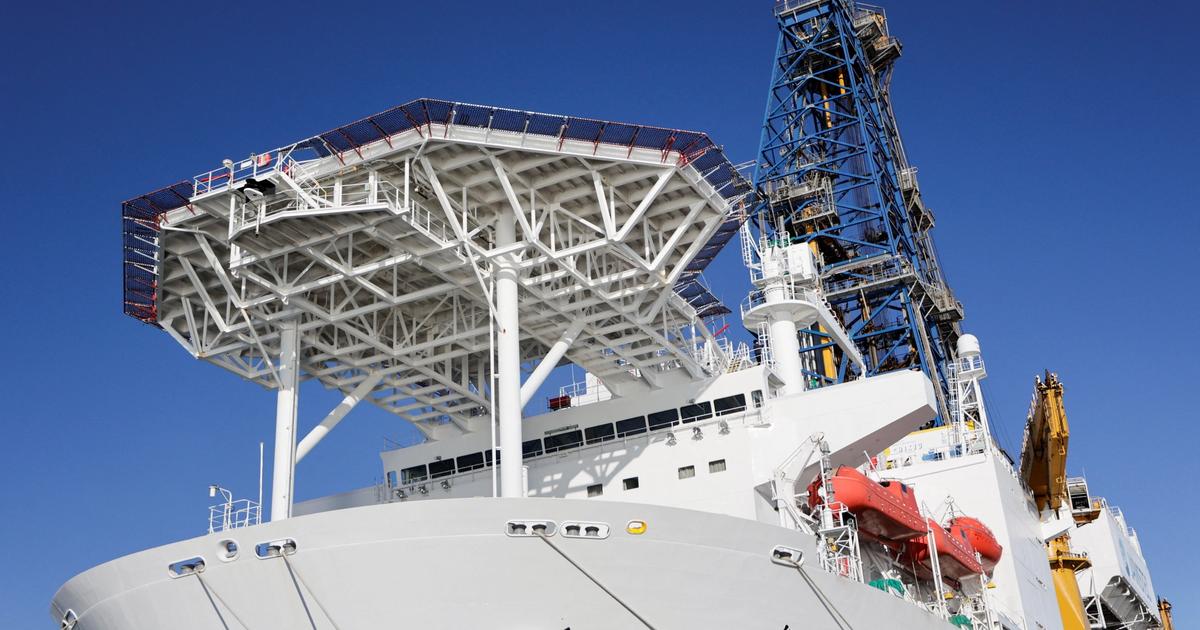
The research vessel Chikyu retrieved sediment containing rare earth elements from nearly 6,000 meters beneath the seabed near Minamitorishima on Feb. 1, according to the Japan Agency for Marine-Earth Science and Technology (JAMSTEC).
The test retrieval aims to reduce Japan's reliance on China for heavy rare earths used in defense and electric-vehicle magnets, Prime Minister Sanae Takaichi said in a statement on X.
Deputy Chief Cabinet Secretary Masanao Ozaki said the recovery is a "meaningful achievement" for economic security but officials said the amount of rare earths in the sediment and its commercial viability remain under analysis.
The area around Minamitorishima is estimated to contain more than 16 million tonnes of rare earths, the Nikkei business daily reported, and Chikyu arrived at the site on Jan. 17 after departing last month for the mission.
Officials said samples will undergo chemical analysis and that Japan must demonstrate a full mining-to-refining process, economic viability and environmental safeguards before any commercial development can proceed.
Analysis
Center-leaning sources present the reporting as neutral, balancing strategic and environmental angles. They report Japan’s accelerated deep-sea mining tests and successful sediment retrieval alongside China’s dominant market share and export bans, while noting technological feasibility and potential undersea ecosystem damage—using factual, non-pejorative language and multiple perspectives.
FAQ
The Chikyu is a deep-sea drilling vessel operated by JAMSTEC that retrieved sediment containing rare earth elements from nearly 6,000 meters beneath the seabed near Minamitorishima on February 1.
The area is estimated to contain over 16 million tonnes of rare earths, potentially equivalent to centuries of supply depending on demand.
It aims to reduce Japan's heavy reliance on China for rare earths critical for defense, electric vehicles, and economic security.
Samples will undergo chemical analysis, and Japan must prove full mining-to-refining processes, economic viability, and environmental safeguards before commercial development.
It has low thorium and uranium content, allowing simpler acid-soaking extraction with a smaller environmental footprint than traditional mining.