GM to Take $6 Billion Charge as EV Plans Shrink
General Motors will record a $6 billion fourth-quarter charge after cutting EV capacity amid weaker demand, lost tax credits, supplier settlements, and shifting production plans.


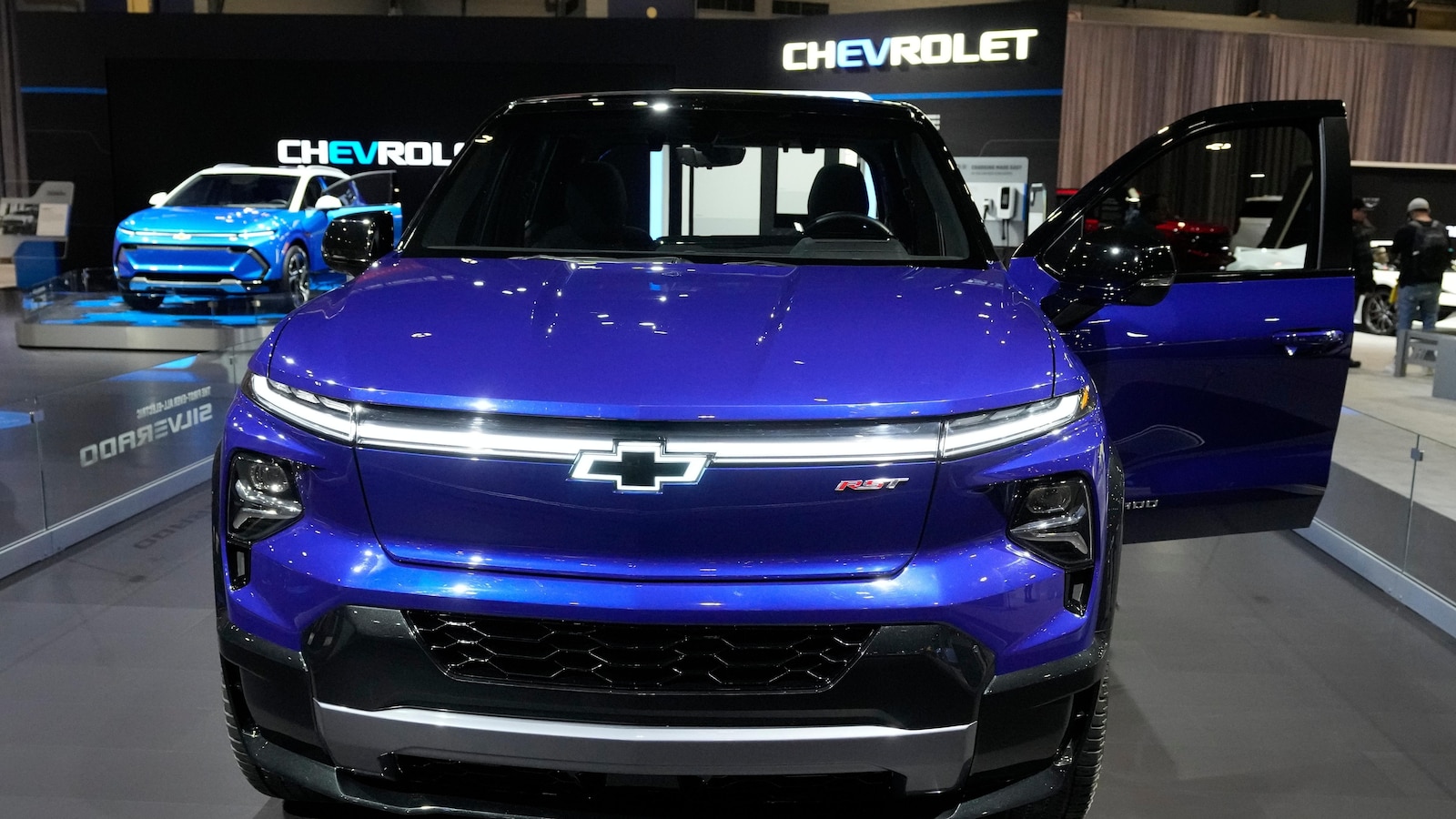



Overview
General Motors will take roughly $6 billion in charges in Q4 after reassessing EV investments and scaling back planned electric vehicle production in North America.
The company cited weaker EV demand driven by the end of the U.S. clean vehicle tax credit, looser emissions rules and dealer resistance to selling EVs.
GM says the $6 billion includes approximately $1.8 billion in non-cash impairments and about $4.2 billion for supplier settlements, cancellations and related charges.
GM is repurposing some plants to make combustion pickups and SUVs; previously closed BrightDrop electric van brand left dealers holding thousands of unsold vans.
Despite charges, GM grew U.S. sales six percent in 2025 and sold many New Energy Vehicles in China; it will keep core EVs on sale and rebattery the Chevy Bolt.
Analysis
Center-leaning sources frame this coverage as skeptical of EV ambitions, using evaluative language ('got overenthusiastic', 'retreat') and attributing blame to policy shifts and dealer hostility. Editorial choices — highlighting large write-downs, supplier penalties, and conversion anecdotes — emphasize financial loss and practical skepticism over technological or climate benefits.
FAQ
GM is taking a roughly $6 billion fourth-quarter charge because it is scaling back planned EV production in North America amid weaker demand, the loss of some U.S. clean vehicle tax credits, looser emissions rules, and the need to settle, cancel, or renegotiate contracts with EV suppliers.
GM is repurposing some plants that were slated for EVs to instead build internal-combustion pickups and SUVs, while keeping some battery module production, reflecting a shift toward where it sees more reliable demand and margins.
GM plans to maintain roughly a dozen EV models in its U.S. lineup, keep core EV nameplates on sale, and reintroduce the Chevy Bolt with updated batteries, but it will constrain volumes rather than pursue the previously planned rapid EV expansion.
Despite the EV write-down, GM’s U.S. vehicle sales recently grew by about six percent and the company reported strong sales of so-called New Energy Vehicles in China, indicating that its broader business remains relatively healthy even as it adjusts EV strategy.
GM’s pullback is influenced by slower-than-expected EV adoption in the U.S., dealer resistance to stocking and selling EVs, uncertainty around federal tax credits and emissions rules, and industry data suggesting EVs will account for a smaller share of U.S. sales than previously forecast in the near term.