U.S. and India Reach Interim Trade Deal Lowering Tariffs
The interim agreement, announced in a joint statement Friday, cuts many tariffs and secures $500 billion in Indian purchases over the next five years.




Overview
According to a joint statement Friday, the United States and India reached an interim trade agreement reducing Indian tariffs on U.S. industrial goods and making many Indian products subject to an 18% U.S. reciprocal tariff.
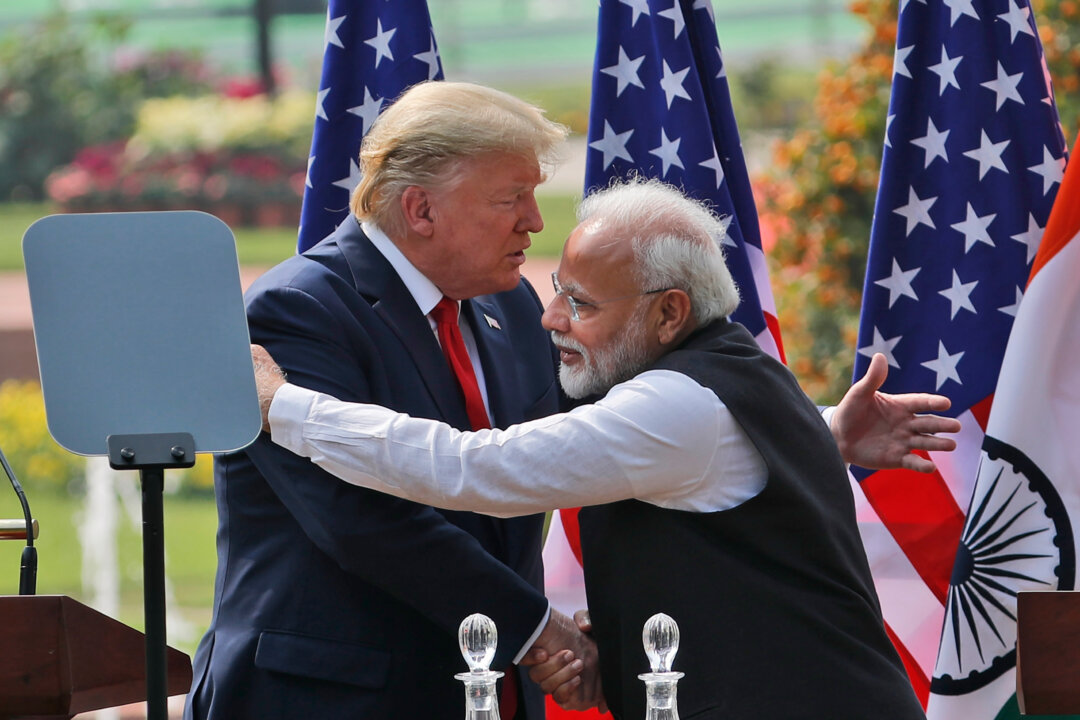
The deal follows a phone call between President Donald Trump and Prime Minister Narendra Modi and aims to repair ties after earlier U.S. punitive tariffs, officials said.
U.S. Trade Ambassador Jamieson Greer praised President Donald Trump's "dealmaking" and thanked Indian Minister of Commerce and Industry Piyush Goyal for his leadership, the joint statement said.
India committed to purchase $500 billion of U.S. energy products, aircraft parts, precious metals and coking coal over the next five years, and the pact reduces a prior 50% tariff to 18%, the statement said.
A formal trade agreement is expected in March and further tariff eliminations will depend on full implementation and ongoing negotiations, officials said.
Analysis
Analysis unavailable for this viewpoint.
FAQ
India will eliminate or reduce tariffs on all U.S. industrial goods and various food/agricultural products like DDGs, sorghum, tree nuts, fruits, soybean oil, wine, and spirits. The U.S. will apply an 18% reciprocal tariff on most Indian goods such as textiles, apparel, and machinery, down from 50%, with potential removal on items like pharmaceuticals, gems, and aircraft parts upon successful implementation.
India intends to purchase $500 billion of U.S. goods over the next five years, including energy products, aircraft and parts, precious metals, technology products like GPUs, and coking coal.
A formal Bilateral Trade Agreement (BTA) is expected in March 2026, with tariff reductions starting soon after the joint statement signing (expected February 11-13, 2026), and India’s changes after mid-March.
The U.S. tariff reduction from 50% to 18% partly stems from eliminating a 25% penalty linked to India's Russian oil purchases, though Indian officials have not confirmed halting them entirely.
The deal includes economic security alignment, supply chain resilience, investment reviews, export controls, countering non-market policies (likely China), and digital trade rules in the full BTA.