Amazon Surpasses Walmart As World’s Top Company By Sales
Amazon posted roughly $716.9–$717 billion in revenue, edging past Walmart’s roughly $713–$713.2 billion as AWS, advertising and subscriptions lift Amazon beyond retail.
 Business Insider
Walmart's growing share of high-income shoppers helped its e-commerce business turn into a powerhouse

 NPR
NPRAmazon dethrones Walmart as the world's biggest company by sales
 NBC News
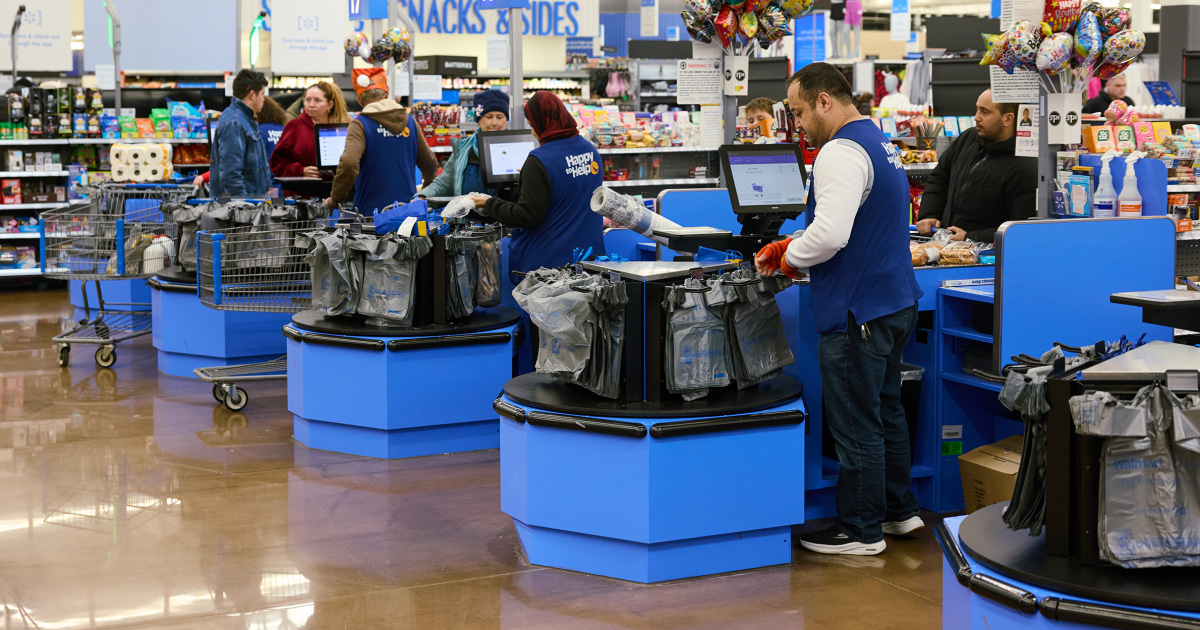
K-shaped economy hits Walmart as high-income shoppers are increasingly driving sales

 CNN
CNNAmazon overtakes Walmart to lead the world in sales | CNN Business
Overview
Amazon reported roughly $716.9 to $717 billion in annual revenue, surpassing Walmart's roughly $713 to $713.2 billion, according to company reports.
Amazon's growth was powered by cloud computing, advertising and subscriptions, with Amazon Web Services producing nearly $129 billion, which helped offset losses in its retail business, according to reports.
Walmart said its U.S. same-store sales rose 4.6% for the quarter that ended Jan. 31 and that higher-income shoppers are increasingly driving growth, company executives said.
Walmart's e-commerce rose nearly 25% to top $150 billion and the company said its fiscal-year sales grew 4.7% to $713.2 billion while Walmart operates nearly 11,000 stores and employs more than 2 million people.
Both companies are accelerating investments in AI and technology: Walmart moved its listing to Nasdaq and said its shopping assistant Sparky increases transaction totals by 35%, while Amazon reached a market value above $2 trillion in 2024.
Analysis
Center-leaning sources frame Walmart's e-commerce rise optimistically by foregrounding positive metrics and company quotes while relying on sympathetic analysts and executives. Editorial choices — loaded terms like 'powerhouse' and emphasis on profitability, AI gains, and store convenience — privilege growth narratives; critical perspectives and competitive or labor concerns are largely absent (quotes remain source content).
FAQ
Amazon's achievement is primarily driven by its diversified business model extending far beyond e-commerce. AWS (Amazon Web Services) contributed roughly $129 billion in revenue, while advertising and third-party seller services (approximately 24% of total sales) significantly boosted growth.[4] These high-margin businesses helped offset lower margins in Amazon's core retail operations, allowing the company to grow faster than Walmart despite both companies operating in similar retail markets.[2]
Amazon's lead is quite narrow, with only a $3.5 billion difference separating the two companies.[4] Amazon reported $716.9 billion in annual revenue compared to Walmart's $713.2 billion, representing just a 0.5% margin.[4] This close competition underscores how fiercely contested the retail landscape has become between these two giants.
Yes, Walmart remains a strong competitor with significant growth momentum. The company's U.S. same-store sales rose 4.6% for the recent quarter, and its e-commerce revenue surged nearly 25% to top $150 billion.[2] Additionally, Walmart's fiscal-year sales grew 4.7% to $713.2 billion, and its digital business achieved double-digit percentage growth for 15 consecutive quarters.[4] This demonstrates Walmart's strength despite being surpassed in total revenue.
Both Amazon and Walmart are making significant AI investments. Amazon announced capital expenditures reaching $200 billion in 2026, predominantly for AWS infrastructure to support AI capabilities.[2] Meanwhile, Walmart introduced its shopping assistant Sparky, which increases transaction totals by 35%, and moved its stock listing to Nasdaq.[2] Walmart also partnered with Google to integrate its products into the AI assistant Gemini.[2] These parallel investments highlight how critical AI has become to their competitive strategies.
Amazon is focusing on faster delivery as its primary competitive advantage in the grocery sector. The company announced that U.S. Prime members received over 8 billion items with same-day or next-day delivery in 2025, representing a 30% increase from the prior year, with groceries and everyday essentials comprising half of these deliveries.[2] This speed-focused approach directly challenges Walmart's traditional strength in grocery retail.
