Markets Slide After Trump Announces 15% Global Tariff
Stocks tumbled after Trump announced a 15% tariff under the Trade Act of 1974 following a Supreme Court limitation on IEEPA authority.
 PBS NewsHour
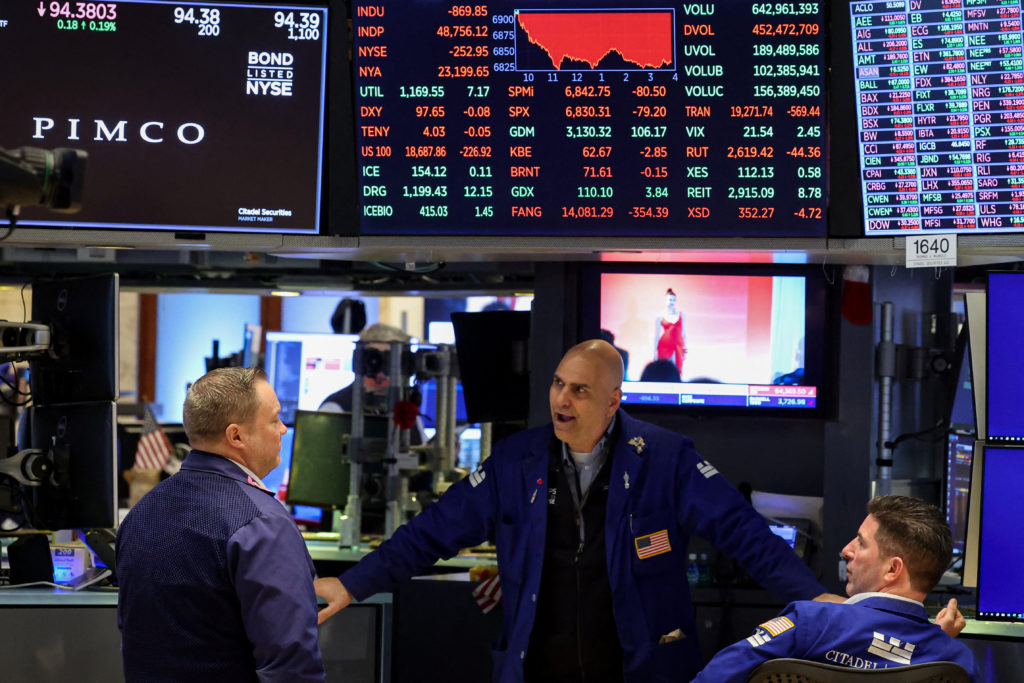
Stocks drop after Trump ramps up new tariffs and investors dump potential AI losers
 ABC News
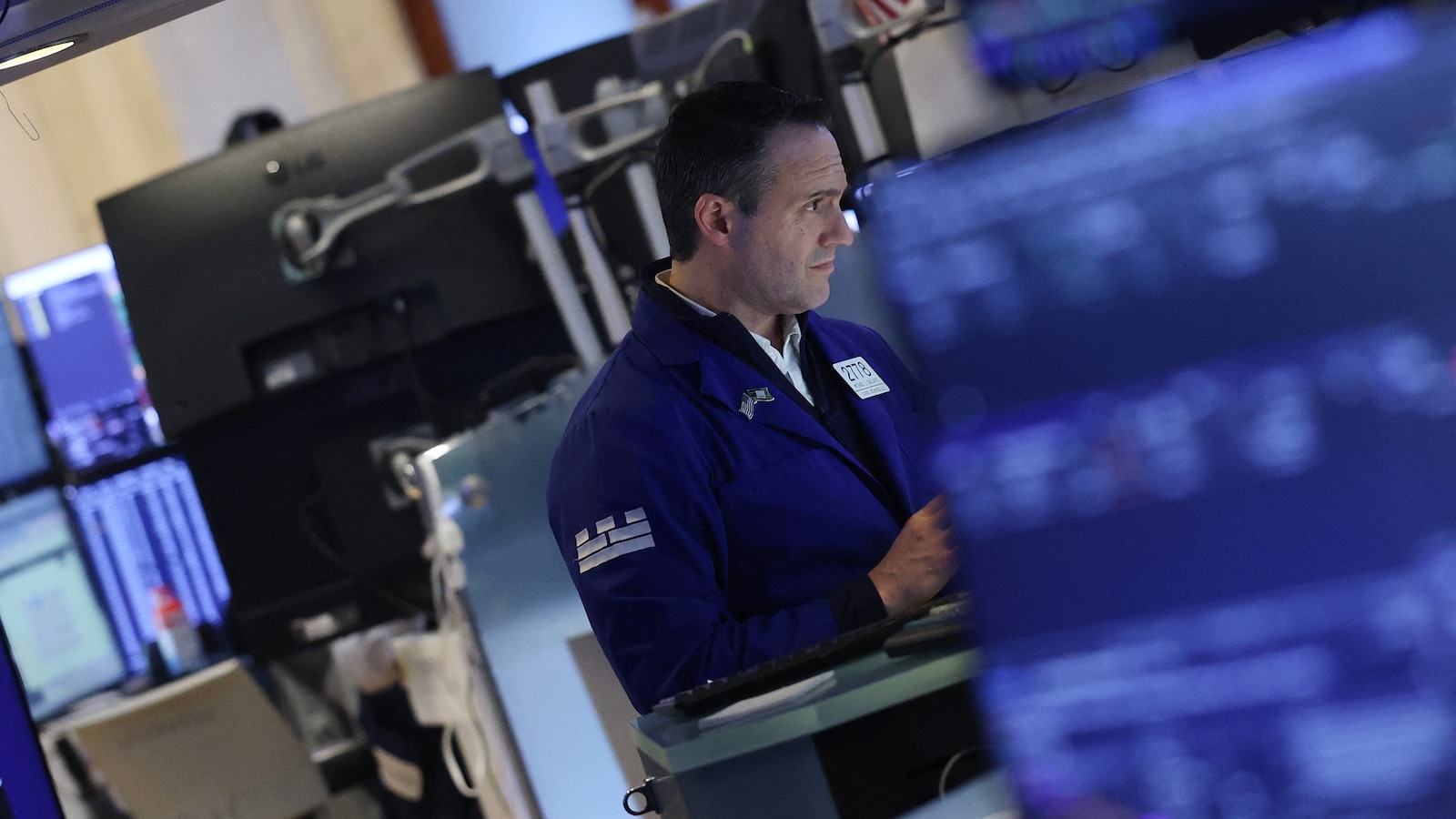
Dow closes down more than 800 points after Trump ratchets up tariffs

 CBS News
Dow slides nearly 800 points as AI and tariff risks rattle investors
 The Guardian
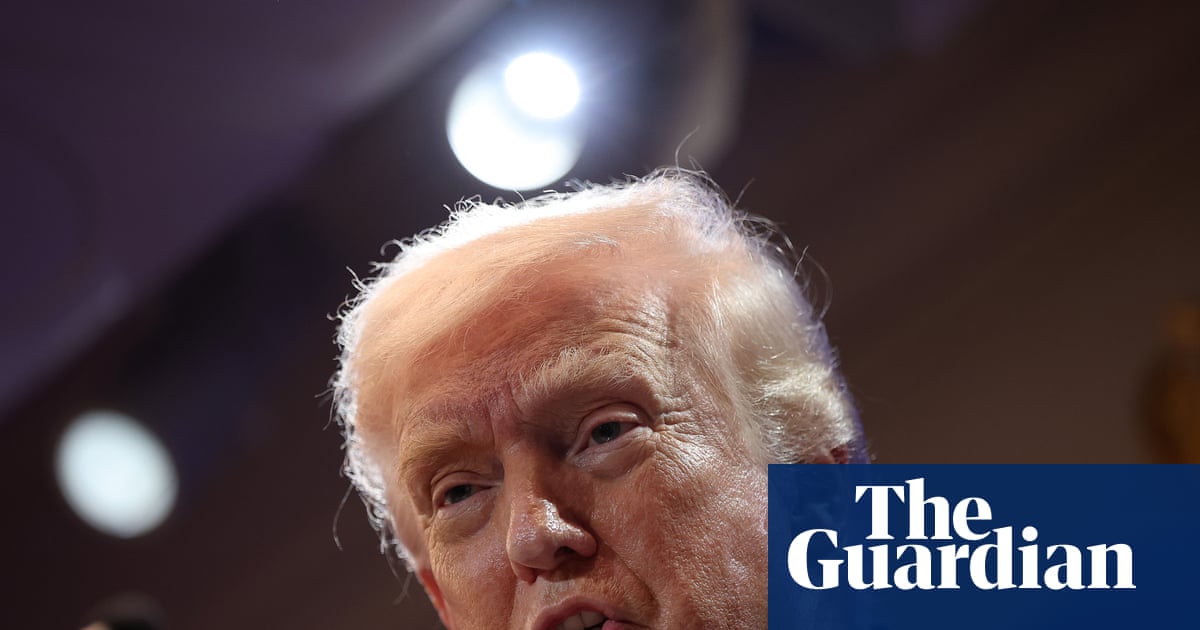
Stock markets stumble as global trade faces more Trump tariff uncertainty
Overview
U.S. stocks closed sharply lower, with the Dow falling roughly 820 to 822 points, after President Donald Trump announced a 15% tariff on most imported goods.
The selloff followed a Supreme Court ruling that the International Emergency Economic Powers Act does not authorize the tariffs and Trump's move to invoke Section 122 of the Trade Act of 1974.
Market participants cited renewed fears about artificial intelligence disruption and heightened tariff uncertainty as drivers of the broad selloff, analysts and strategists said.
The S&P 500 dropped about 1% to 6,839.20 (down 70.31 points), the Nasdaq fell about 1.1% to 22,634.61, bitcoin slid 4.3% to about $64,450, and gold jumped, according to market data.
The new tariffs are scheduled to take effect starting Feb. 24, and lower courts will decide whether refunds are owed for previously collected tariffs, court filings and reports show.
Analysis
Center-leaning sources frame the coverage around market instability, using loaded terms (jittery, slumped) and leading with large index losses. Editorial choices prioritize investor and analyst voices and highlight Trump's social media escalation, while offering little pro-tariff policy context. Quote selection emphasizes uncertainty and economic risk, shaping a cautionary narrative.
FAQ
Trump is invoking Section 122 of the Trade Act of 1974, which allows for a temporary import surcharge of up to 15% for 150 days.[1][2] This represents a shift from his previous reliance on the International Emergency Economic Powers Act (IEEPA), which the Supreme Court ruled on February 20, 2026, did not authorize his tariffs.[2] After the 150-day period expires, Congress will need to take action for tariffs to continue.[1]
While the 15% rate appears higher, it is actually lower than what some major trading partners were paying under the previous tariff regime.[1] Countries that had negotiated more favorable rates under prior agreements, such as the UK, EU, and Japan, risk losing out under the new blanket tariff, while countries that faced higher tariffs previously, including China, India, and Brazil, may benefit.[3]
Certain critical minerals, metals used in currency and bullion, energy, and energy products are exempted from the temporary import duty based on the needs of the U.S. economy.[4] The White House stated that some goods will not be subject to the tariff to ensure the duty more effectively addresses fundamental international payment problems facing the United States.[4]
The tariff is a temporary measure lasting 150 days, approximately five months into the summer.[1][2] After this 150-day period expires, Congress will have to step in to determine whether tariffs continue.[1]
Lower courts will decide whether refunds are owed for tariffs that were previously collected under the IEEPA-based tariffs that the Supreme Court struck down.[2] Court filings and reports indicate this determination process is ongoing.