Uber to Invest $1.25B in Rivian to Deploy 50,000 Robotaxis
Initial $300 million investment and a 10,000-vehicle purchase, with options up to 40,000 more, aiming to deploy across 25 cities by 2031.

 Fox Business
Uber, Rivian ink $1.25B deal to put thousands of robotaxis on US streets

 CNBC
CNBCUber to invest up to $1.25 billion in EV maker Rivian in deal to launch 50,000 robotaxis
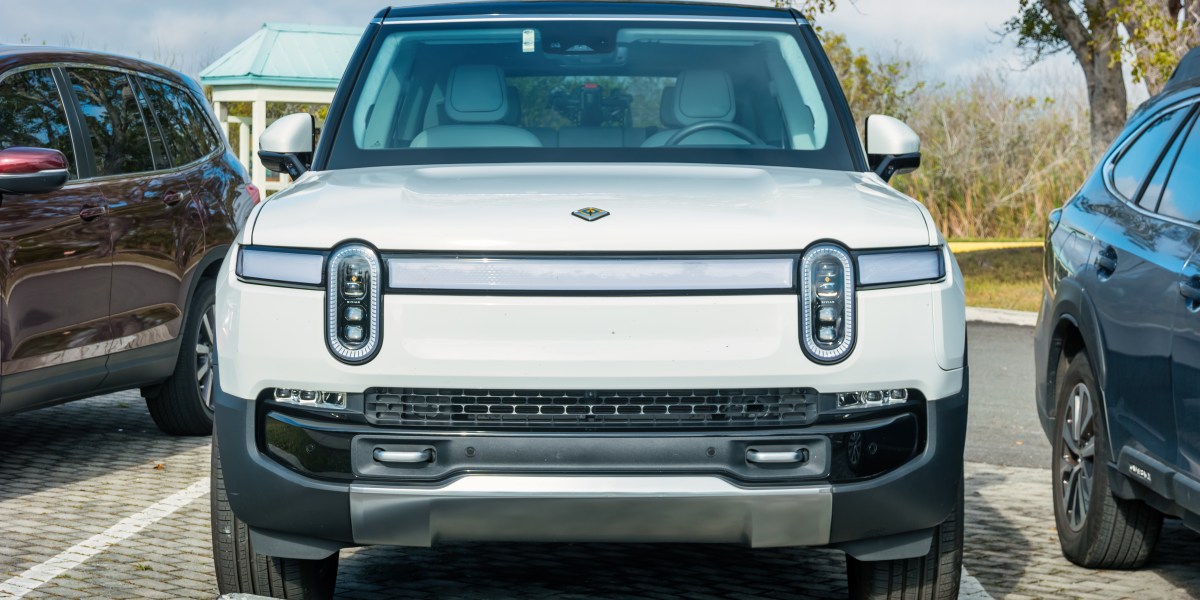
 Fortune
Uber will operate its own robotaxis again—this time with Rivian’s not‑yet‑built EVs | Fortune

 Gizmodo
Uber and Rivian Team Up to Deploy 50,000 Robotaxis

 ABC News
Uber to invest up to $1.25B in Rivian to help launch robotaxis
Overview
Uber announced on Thursday it will invest up to $1.25 billion in Rivian to deploy up to 50,000 fully autonomous Rivian R2 robotaxis.
The agreement includes an initial $300 million investment, commitments to buy 10,000 R2 robotaxis and options to purchase up to 40,000 more beginning in 2030, subject to performance milestones.
Uber CEO Dara Khosrowshahi said Rivian's vertical integration and fleet data give conviction to meet the targets, and Rivian CEO RJ Scaringe highlighted RAP1 and a multi-modal perception platform as central to autonomy progress.
The companies plan initial deployments in San Francisco and Miami in 2028 and say the vehicles will be available exclusively through Uber in 25 cities across the U.S., Canada and Europe by 2031.
An initial $300 million is expected soon pending regulatory approval, and remaining investments and vehicle purchases are contingent on Rivian meeting autonomous-performance milestones through 2031.
Analysis
Center-leaning sources frame the Uber–Rivian tie-up as a bullish milestone in the robotaxi 'resurgence,' emphasizing market size and company competence while leaning heavily on company releases and executive quotes. Editorial choices—terms like 'multitrillion-dollar market' and 'ambitious but achievable,' plus limited outside skepticism and a lone critical note buried amid upbeat details—produce an optimistic narrative.
FAQ
The Rivian R2 is a compact electric SUV that sits between the Tesla Model Y and Honda CR-V in size[1]. It measures 186 inches in length and is approximately 2,000 pounds lighter than Rivian's R1S model[1]. The R2 comes in multiple powertrain options: a 350-hp single-motor rear-wheel-drive Standard model with an estimated 345-mile range, a 450-hp dual-motor Premium variant, and a 656-hp dual-motor Performance model that accelerates from 0 to 60 mph in 3.6 seconds[2][3]. The Performance trim offers up to 330 miles of estimated range and features a semi-active suspension system that adapts to driving conditions[2]. Base pricing starts around $45,000 for a Standard variant arriving in late 2027, while Performance models are priced at approximately $57,990 to $59,485[1].
The R2 will feature the Autonomy+ package, which includes 11 cameras and five radar units connected to an Nvidia chip capable of 220 TOPS (tera-operations per second)[4]. At launch, this enables Universal Hands-Free driving with lane centering and adaptive cruise control on nearly every road[4]. Later in 2026 or early 2027, Point-to-Point Universal Hands-Free driving will be introduced, allowing the vehicle to handle door-to-door navigation[4]. By 2027, R2s will receive the option of a lidar unit and Rivian's Autonomy Processor (RAP) superchip with 800 TOPS to enable Level 3 autonomy, though the first R2s delivered in 2026 will not have Level 4 capability, which is expected by late 2026 or 2027.
Uber and Rivian plan to deploy initial R2 robotaxis in San Francisco and Miami in 2028[1]. The vehicles will be available exclusively through Uber across 25 cities throughout the U.S., Canada, and Europe by 2031[1]. The rollout is contingent on Rivian meeting autonomous-performance milestones, with vehicle deliveries to Uber expected to begin in 2030[1].
Uber committed to investing up to $1.25 billion in Rivian, with an initial $300 million investment expected soon pending regulatory approval[1]. The agreement includes commitments to purchase 10,000 R2 robotaxis, with options to buy up to 40,000 additional vehicles[1]. Remaining investments and vehicle purchases through 2031 are contingent on Rivian successfully meeting autonomous-performance milestones throughout the partnership[1].
The R2 features a unique power-operated rear window that rolls down independently of the tailgate—a first for Rivian[1]. This allows owners to load cargo without fully opening the tailgate by tapping three small lines on the exterior or using an overhead console button[1]. The vehicle also includes a "5X" switch that rolls down all five windows simultaneously[1]. Unlike the body-on-frame R1S, the R2 uses unibody construction, contributing to its lower weight and cost, and features conventional coil springs with active suspension dampers instead of adjustable air suspension[1]. The R2 offers 9.7 inches of ground clearance—significantly more than the Tesla Model Y's 6.6 inches[1].