Willie Colón, Salsa Architect, Dies at 75
Salsa pioneer Willie Colón died on Feb. 21 at 75, leaving a global legacy including Siembra and roughly 30 million records sold.
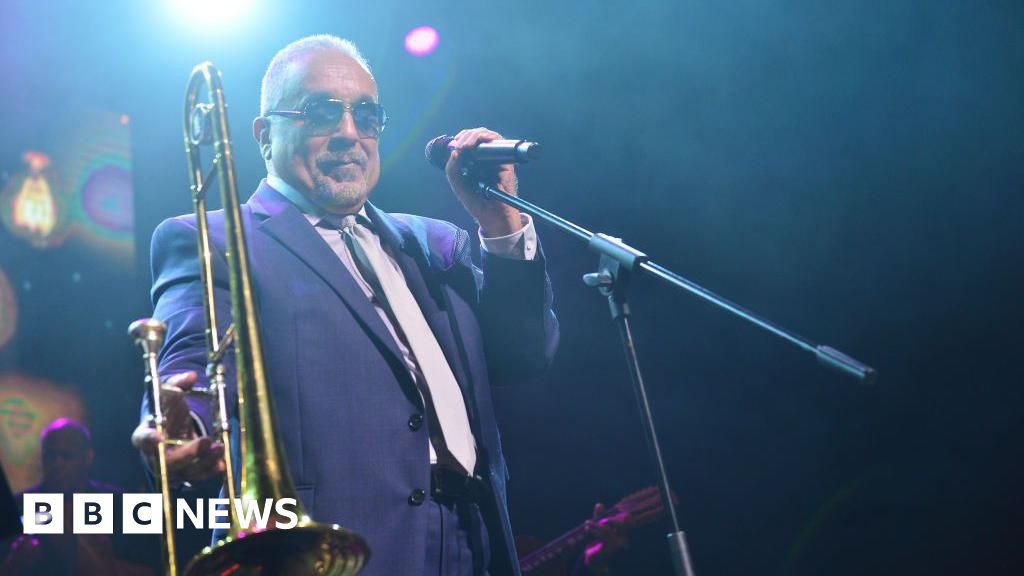
 BBC News
Willie Colón, trombonist and salsa music pioneer, dies aged 75

 Rolling Stone
Willie Colón: 10 Essential Songs From the Salsa Great
 Rolling Stone
Rubén Blades, Rauw Alejandro, More Honor Salsa Giant Willie Colón: 'Maestro, Thank You for Your Legacy'
 Associated Press
Willie Colón, architect of urban salsa music, dies at 75
Overview
Willie Colón died on Saturday, Feb. 21, at age 75, his family said, and they said he "passed away peacefully" surrounded by his loving family.
Colón helped define urban salsa with trombone-led arrangements and collaborations like 1967's El Malo and 1978's Siembra, which sold more than 3 million records worldwide.
His manager Pietro Carlos praised Colón for expanding and politicizing salsa, and fellow musicians including Rubén Blades and Rauw Alejandro posted condolences and tributes on social media.
Colón released more than 40 productions, sold roughly 30 million copies, earned 15 gold and five platinum records and received 10 Grammy nominations and a 2004 Latin Recording Academy Musical Excellence Award.
The family asked for privacy and prayers and did not disclose a cause of death, and tributes and retrospectives on his work are spreading across the music community.
Analysis
Center-leaning sources present this obituary neutrally, combining factual career highlights (albums sold, Grammy nominations), sourced quotes (manager, Rubén Blades), and acknowledged controversies (lawsuit, political remarks). Editorial praise is limited to contextual accolades; reporting emphasizes verifiable accomplishments and diverse viewpoints rather than pushing a partisan narrative.
FAQ
Willie Colón is credited with redefining salsa as a movement through his innovative trombone-led arrangements and stylistic blending of salsa with jazz, rock, and Afro-Caribbean traditions[1][2]. His role in helping to popularize salsa music in the United States during the 1970s was fundamental to the genre's development, and his landmark collaborations—particularly with Héctor Lavoe and Rubén Blades—shaped the sound of Latin music for decades[1][2]. Blades' album *Siembra* (1978) remains one of the best-selling salsa albums of all time[1].
Willie Colón sold approximately 30 million records worldwide throughout his career[1]. He released more than 40 productions and earned 15 gold and five platinum records, reflecting his enormous commercial success and influence in the Latin music industry[1].
Willie Colón received the Latin Recording Academy's Lifetime Achievement Grammy Award in 2004[1]. Additionally, in 2015, *Billboard* magazine named him one of the 30 Most Influential Latin Artists of All Time[1]. He accumulated 10 Grammy nominations throughout his career, demonstrating his enduring artistic excellence and influence[1].
Willie Colón's most significant collaborations were with vocalist Héctor Lavoe in the late 1960s through mid-1970s, and with vocalist and songwriter Rubén Blades beginning in 1975, whose partnership produced the iconic album *Siembra*[2]. He also worked extensively with Cuban salsa singer Celia Cruz, Venezuelan vocalist Soledad Bravo, and rock musician David Byrne[2]. These collaborations helped shape the sound of Latin music and expanded salsa's reach across genres[1].
A central theme throughout Willie Colón's work was an exploration of Puerto Rican identity and the diasporic experience in the United States[1]. His music depicted and investigated the problems of living in the U.S. as a Puerto Rican while also highlighting the cultural contributions that Puerto Ricans bring to American society[3]. This thematic focus reflected his upbringing in the South Bronx and his role as a community activist[1].