Trump Threatens Tariffs; Carney Calls It Negotiation Prepositioning
Trump threatened a 100% tariff on Canadian goods after Canada struck a Jan. 15, 2025, partnership with China that caps Chinese EVs at 49,000 annually, officials said.
 Associated Press
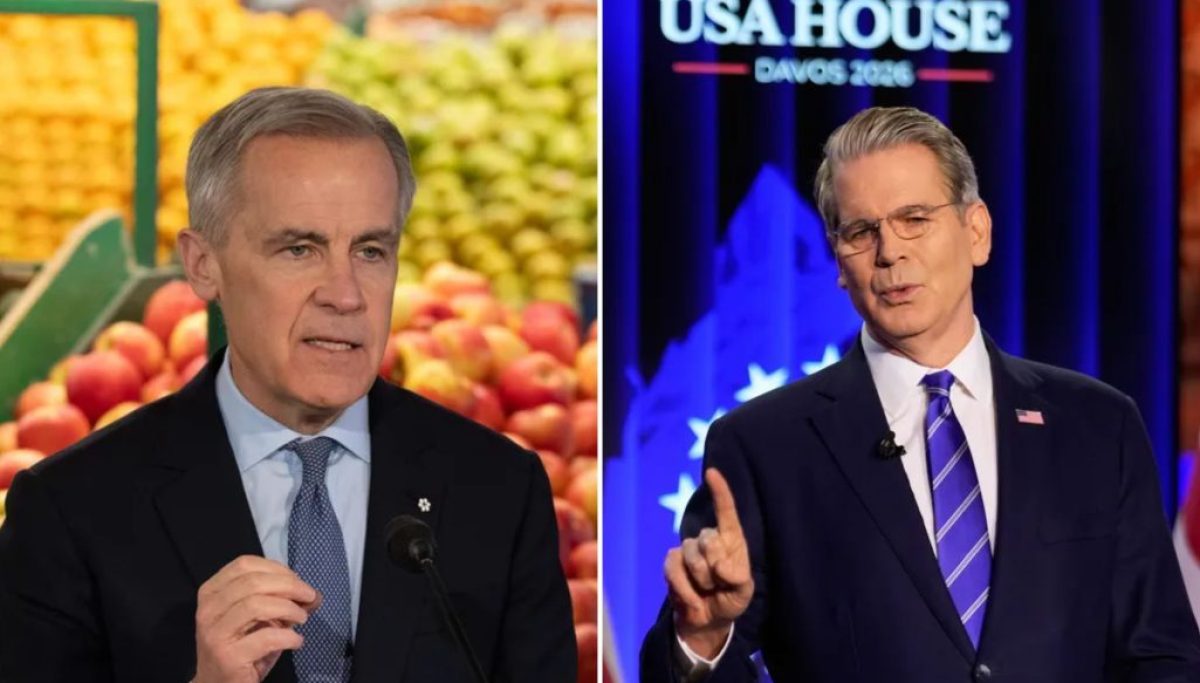
Carney rolls his eyes at US Treasury secretary, telling Trump he meant what he said at Davos
 Washington Examiner
Carney walked back Davos comments in call with Trump: Bessent

 FOX News
Bessent warns Canada breaking from the US on trade would be a ‘disaster’
Associated PressCarney calls Trump's tariff threats bluster ahead of US-Canada free trade talks
Overview
President Donald Trump threatened a 100% tariff on Canadian imports in Truth Social posts, a move Canadian Prime Minister Mark Carney called negotiation prepositioning ahead of a mandatory USMCA review scheduled for 2025.
Carney said his Jan. 15, 2025, strategic partnership with China caps Chinese EVs at 49,000 annually at 6.1% and will cut canola levies from 85% to 15% by March 2025.
Chinese Foreign Ministry spokesperson Guo Jiakun said the strategic partnership "does not target any third party" and "serves the common interests" of both countries, a ministry news conference transcript shows.
Canada imposed 100% tariffs on Chinese EVs and 25% on steel and aluminum in 2024, and China retaliated with 100% tariffs on Canadian canola oil and meal and 25% on pork and seafood, records show.
Carney said Canada would notify the United States before any free-trade pact with a non-market economy under USMCA rules, a requirement that could trigger formal talks and potential U.S. enforcement measures during the 2025 review.
Analysis
Center-leaning sources frame the story as a diplomatic reassurance and U.S. political posturing: lead with China's denial, foreground Canada's official denials and USMCA rules, and highlight Trump's tariff threats alongside a Treasury clarification. Language like "surprised" and sequencing privileges official denials and context, softening the tariff narrative.
FAQ
Canada will allow up to 49,000 Chinese EVs annually at a 6.1% tariff rate, equivalent to pre-2024 levels and less than 3% of the Canadian market, with the quota rising to 70,000 by year five; China will reduce tariffs on Canadian canola from 85% to 15% by March 2026; the deal includes commitments for Chinese joint-venture investments in Canada's EV supply chain.