House Democrats Demand Full Access After DOJ Releases 3 Million Epstein Pages
House Judiciary Democrats seek unredacted Epstein materials after DOJ released about 3 million pages and identified over 6 million potentially responsive pages.
 The Guardian
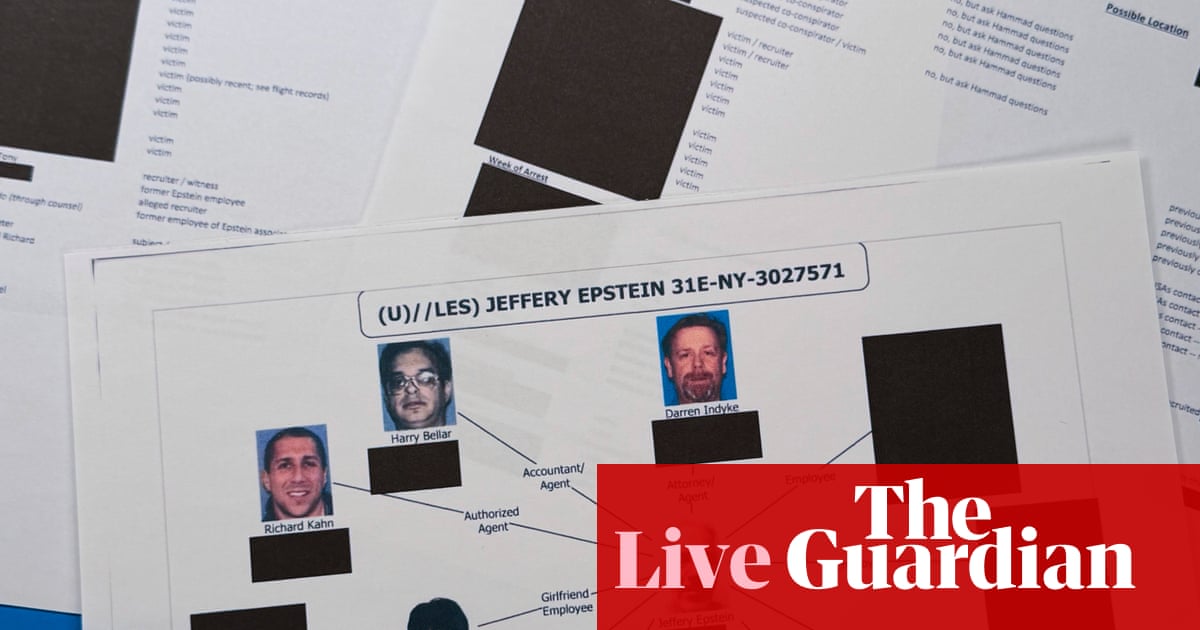
Democrat slams US justice department’s release of Epstein files: ‘we are witnessing a full-blown coverup’ – live

 Breitbart News
Raskin: This Is a 'Cover-Up,' 3 Million Epstein Files Released 'Close to Nothing'

 CBS News
Amid allegations of cover-up, House Judiciary Committee members seek access to full Epstein case files

 TIME Magazine
DOJ Drops Over 3 Million Pages of Epstein Files
Overview
House Judiciary Committee members led by Rep. Jamie Raskin sent a Jan. 31, 2026 letter demanding access to unredacted Jeffrey Epstein case files after the Department of Justice released roughly 3 million pages, according to the committee.
The demand follows Deputy Attorney General Todd Blanche’s Jan. 30, 2026 statement that the DOJ had complied by publishing about 3 million pages and that members of Congress could request unredacted materials, remarks the Democrats dispute.
The Judiciary Committee said DOJ identified more than 6 million potentially responsive pages, redacted or withheld over 200,000 pages and applied more than 10,000 redactions, a tally included in the Jan. 31 letter.
Survivors Annie Farmer and Dani Bensky said the Justice Department “cannot claim it is finished,” while a Justice Department spokesperson deferred to Todd Blanche’s Jan. 30, 2026 remarks, the committee said.
The Judiciary Committee warned it may issue subpoenas or demand in-person review of unredacted files if DOJ denies access ahead of a planned public hearing with Attorney General Pam Bondi.
Analysis
Center-leaning sources frame the story as a contested DOJ accountability matter, emphasizing allegations of a cover-up and survivors’ outrage through loaded verbs and front‑loading Democratic demands. They highlight missing/redacted pages and curate Blanche’s defensive lines, producing institutional skepticism while treating DOJ denials and procedural claims as source content.
FAQ
The Epstein Files Transparency Act is a law signed by President Trump on November 19, 2025, requiring the DOJ to publicly release all unclassified documents related to Jeffrey Epstein within 30 days, with exceptions for protecting victims' privacy and sensitive materials.
House Judiciary Democrats, led by Rep. Jamie Raskin, demanded unredacted files after the DOJ released about 3 million pages out of over 6 million potentially responsive pages, claiming over 200,000 pages were withheld and more than 10,000 redactions applied, disputing DOJ's claim of full compliance.
Todd Blanche stated on January 30, 2026, that the DOJ released about 3 million pages, including 2,000 videos and 180,000 images, marking the end of the review process, with some materials withheld for victims' privacy, child abuse material, and legal privileges; he noted Congress could request unredacted materials.
The released files include 3-3.5 million pages of documents such as photos, videos, court records, FBI and DOJ documents, news clippings, emails, Epstein's personal emails, a new mugshot of Ghislaine Maxwell, and FBI agent interviews from cases in Florida, New York, and the U.S. Virgin Islands.
The House Judiciary Committee warned it may issue subpoenas or demand in-person review of unredacted files if DOJ denies access, ahead of a planned public hearing with Attorney General Pam Bondi.

