Trump Praises Dollar Drop as Markets React and Officials Push Back
Trump welcomed the dollar's decline after the ICE U.S. Dollar Index fell to its weakest level since 2022; Treasury Secretary Scott Bessent reaffirmed a strong-dollar policy.
 Fortune
Down Arrow Button Icon
 Washington Examiner
'America First' requires dominance of King Dollar
 NPR
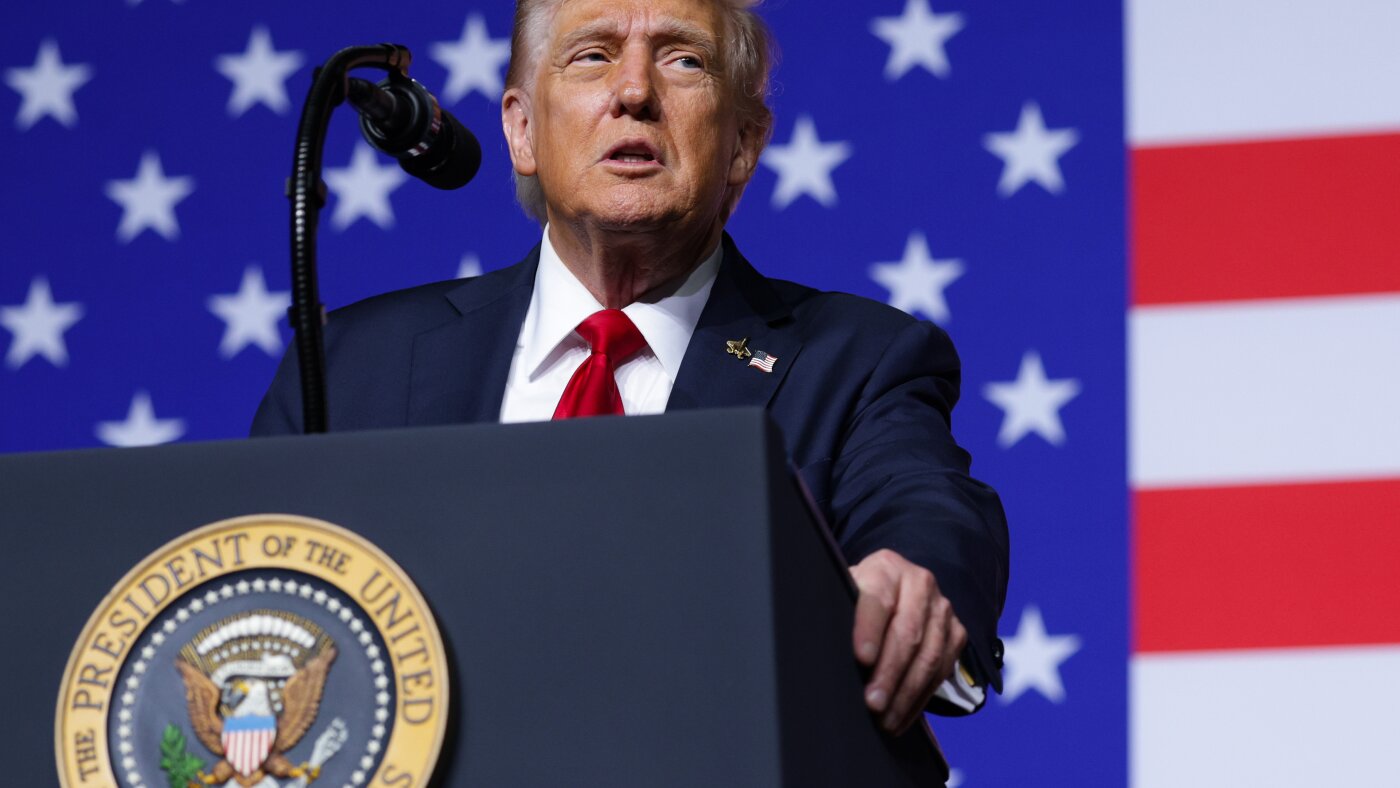
NPRTrump thinks a weaker dollar is great for America. Is he right?
 CBS News
The U.S. dollar just fell to its lowest level in 4 years. Here's why.
 El Pais
Why Trump isn’t worried about a weaker dollar as markets (and the ECB) grow uneasy
Overview
President Donald Trump said "I think it's great" on Jan. 27 in Iowa after the ICE U.S. Dollar Index fell to its weakest level since 2022, down about 10% over the past 12 months, according to the Intercontinental Exchange.
The slide has accelerated amid the Federal Reserve's three rate cuts in late 2025, renewed tariff threats from the White House and concerns about U.S. public debt of $38.57 trillion, the Peter G. Peterson Foundation reports.
Treasury Secretary Scott Bessent told CNBC on Jan. 28 that the administration maintains a "strong dollar" policy and denied any currency-market intervention, remarks that briefly lifted the currency, according to the interview.
Investors have shifted into alternatives and hedges as gold rose to nearly $5,500 per ounce and trading volumes in U.S. dollar futures surged, with the DTCC reporting one in 10 bets on the dollar/euro pair targeting beyond $1.25, according to DTCC data.
FXPro chief market analyst Alex Kuptsikevich said derivatives and positioning suggest the dollar could fall another 7% to 8% without policy support, a projection contested by Treasury officials who insist on a strong-dollar policy, analysts said.
Analysis
Center-leaning sources frame the dollar's decline as a policy-driven risk tempered by limited benefits. Editorial choices use evaluative language ('unpredictable', 'unorthodox', 'erosion of confidence'), foreground Trump's celebratory quote then emphasize investor concerns and inflationary drawbacks, while including Treasury defenses and examples of export and tourism gains to appear balanced.
FAQ
The ICE U.S. Dollar Index measures the value of the U.S. dollar against a basket of foreign currencies and fell to its weakest level since 2022, down about 10% over the past 12 months, and below 97.0 in January 2026, a four-year low.
The decline is driven by Federal Reserve rate cuts, renewed tariff threats, concerns over $38.57 trillion U.S. public debt, geopolitical disruptions, global de-dollarization, and capital outflows to emerging markets and Eurozone.[1][2]
President Trump said 'I think it's great' regarding the dollar's drop on Jan. 27 in Iowa, welcoming the decline which aligns with policy aims to boost U.S. competitiveness.[1]
Treasury Secretary Scott Bessent reaffirmed a 'strong dollar' policy on Jan. 28, denying any currency-market intervention, which briefly lifted the dollar.[1]
Analysts like Alex Kuptsikevich predict another 7-8% fall without policy support; Deutsche Bank forecasts a 3% drop in 2026 to around 99 on the USDX.[1]