House Votes to Overturn Trump's Canada Tariffs
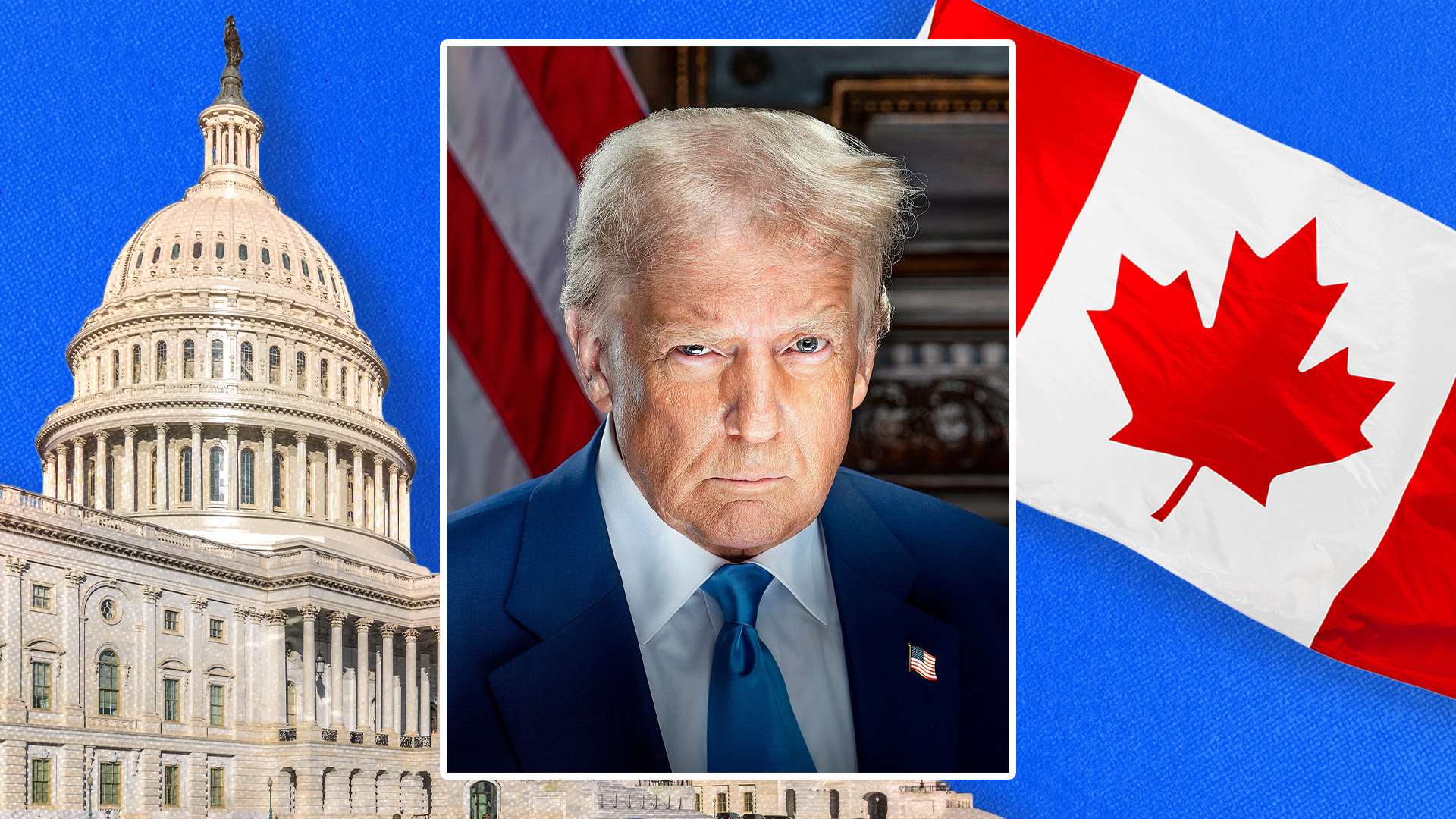
House approved a resolution on Feb. 10, 2026 to terminate President Donald Trump's national emergency tariffs on Canadian imports, 219-211.

 Al Jazeera
Breaking with Trump, US House votes to pass a bill ending Canada tariffs

 The Guardian
US House backs bid to block Canada tariffs in rebuke of Trump
 Reason
The U.S. House just voted to stop Trump's 'emergency' tariffs on imports from Canada

 CBS News
House votes to rescind Trump's Canada tariffs, with 6 Republicans joining Democrats
Overview
On Feb. 10, 2026 the U.S. House of Representatives passed a joint resolution 219-211 to terminate the national emergency President Donald Trump used to impose tariffs on Canadian imports, according to congressional records.
Rep. Gregory Meeks, D-N.Y., forced the floor vote as Democrats challenged Republicans amid the 2026 midterm calendar, with primaries beginning in March 2026 and the Nov. 5, 2026 general election looming, Democrats said.
President Donald Trump wrote on Truth Social that "Any Republican, in the House or the Senate, that votes against TARIFFS will seriously suffer the consequences come Election time," and Kevin Hassett, director of the White House National Economic Council, told reporters the president would make sure the tariffs remain, according to those statements.
Six House Republicans—Thomas Massie of Kentucky, Don Bacon of Nebraska, Brian Fitzpatrick of Pennsylvania, Dan Newhouse of Washington, Kevin Kiley of California and Jeff Hurd of Colorado—joined nearly all House Democrats to pass the resolution, while Rep. Jared Golden of Maine was the sole Democrat to oppose it, congressional roll call shows.
The resolution now goes to the U.S. Senate where passage is likely but the measure faces a probable presidential veto requiring two-thirds majorities in both chambers to override, and the U.S. Supreme Court is expected to rule on the tariffs' legality by the end of June or the beginning of July 2026, legal analysts and court schedules show.
Analysis
Center-leaning sources present the coverage neutrally, emphasizing procedural facts, competing viewpoints, and expert context rather than editorial judgment. They quote Democrats (Meeks) and Republicans (Johnson, Mast, Bacon), note legal constraints and procedural votes, and include expert context on fentanyl—using actions and quotes rather than loaded descriptors or selective omission.
FAQ
The U.S. House passed the joint resolution 219-211 on February 10, 2026, to terminate the national emergency tariffs on Canadian imports.