Federal Judges Block Trump's Birthright Citizenship Order Amid Legal Challenges
Federal judges have ruled against Trump's executive order on birthright citizenship, siding with a class-action lawsuit that argues it violates constitutional rights.

 World News Group
Federal judge blocks enforcement of Trump’s birthright citizenship…
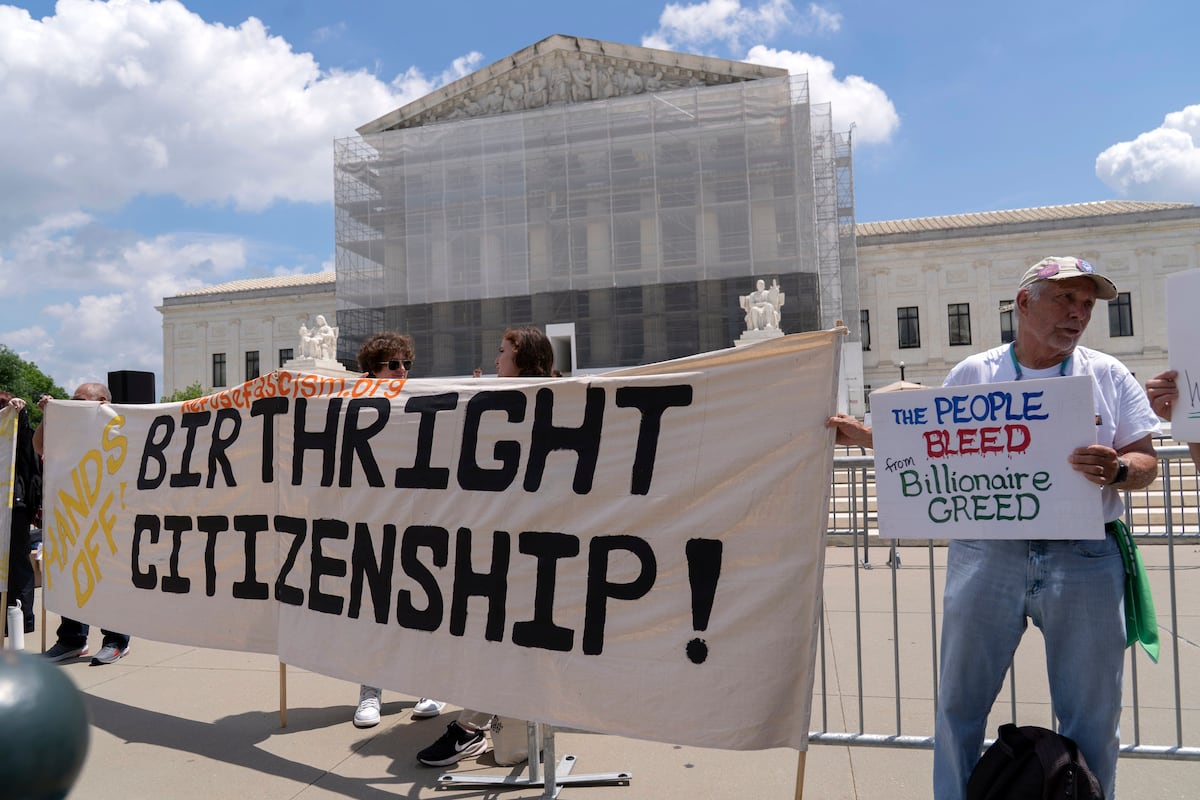
 El Pais
A judge circumvents Supreme Court ban and blocks Trump’s order against birthright citizenship

 Western Journal
Fed Judge Blocks Trump's Birthright Citizenship Order After SCOTUS Decision
 Breitbart News
Judge Blocks Trump from Ending Birthright Citizenship for Children of Illegals
Overview
A New Hampshire federal judge has blocked President Trump's executive order on birthright citizenship, siding with a class-action lawsuit led by the ACLU.
The ruling estimates that over 150,000 babies could lose citizenship annually if the order is enforced, prompting significant legal concerns.
The court found a likelihood of success on the merits of the class petitioners' claims, emphasizing the constitutional implications of the order.
The judge's decision circumvents a previous Supreme Court ruling, highlighting ongoing judicial challenges to the executive order.
The Justice Department maintains the order's constitutionality, despite the growing number of legal obstacles and judicial interventions.
Analysis
Center-leaning sources frame the judge's ruling as a significant legal pushback against the Trump administration's immigration policies, emphasizing the role of immigrant rights advocates. The tone reflects a critical stance towards the executive order, highlighting the implications for affected families while maintaining a focus on judicial authority and legal processes.
FAQ
The judge blocked the executive order based on constitutional grounds, finding a likelihood of success on the merits of the class petitioners' claims that the order violates the 14th Amendment of the U.S. Constitution, which guarantees citizenship to all persons born or naturalized in the United States and subject to its jurisdiction.
The order applies to children born in the U.S. to mothers who are unlawfully present and fathers who are neither U.S. citizens nor green card holders, potentially denying citizenship to those children born after February 19, 2025.
It is estimated that over 150,000 babies could lose U.S. citizenship each year if the executive order is enforced.
The Trump administration interprets the phrase 'subject to the jurisdiction thereof' to mean that children born to parents living in the U.S. illegally or temporarily are not automatically citizens, thereby justifying the denial of birthright citizenship in such cases.
The Justice Department maintains that the executive order limiting birthright citizenship is constitutional despite the judicial interventions and legal challenges it has faced.