President Trump Directs Exclusion of Undocumented Immigrants from US Census Count
President Trump directs Commerce Department to exclude undocumented immigrants from the US Census count, a major policy shift from historical practice, impacting congressional representation.

 Western Journal
Leftists Lose It After Trump Announces Plan for New Census With Very Different Rules

 Al Jazeera
Trump says undocumented immigrants will not be counted in new US Census
 Associated Press
Q&A: Can Trump hold a census in the middle of a decade and exclude immigrants in the US illegally?
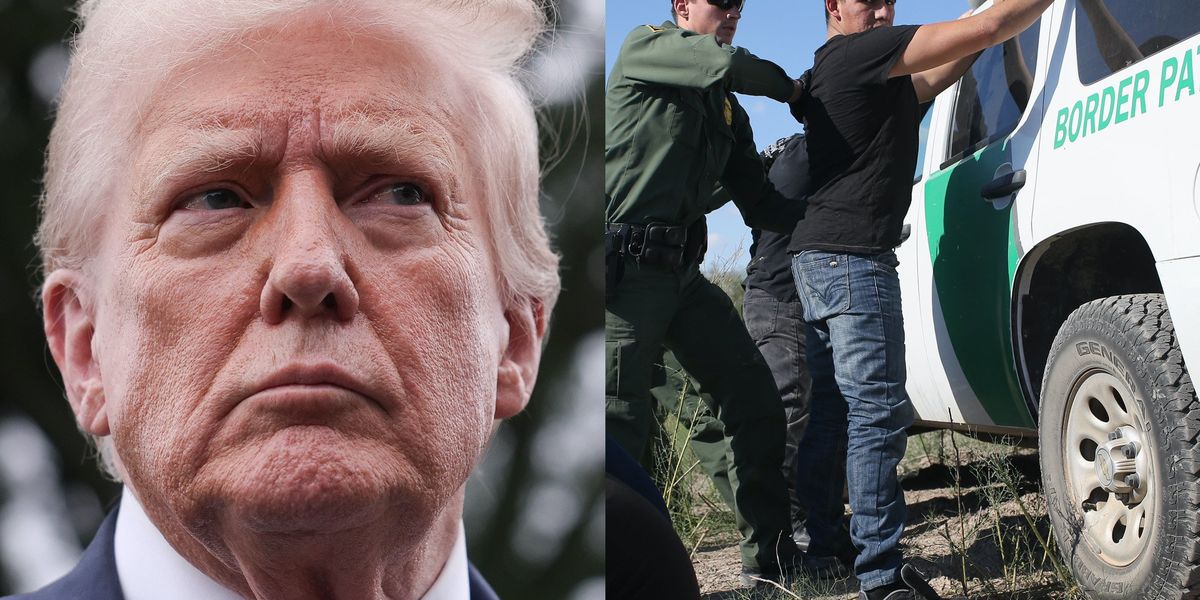
 The Blaze
Trump orders new US census to exclude illegal aliens
Overview
President Trump has directed the Commerce Department to modify the US Census, aiming to exclude undocumented immigrants from the official population count, marking a significant policy change.
This directive represents a major departure from the long-standing historical practice of the U.S. Census, which has consistently included all residents regardless of their immigration status.
The U.S. Constitution mandates a decennial census for congressional representation, explicitly requiring the inclusion of all persons residing within the United States.
Trump's controversial decision ignited widespread debate, raising serious concerns about its potential impact on future congressional representation and the fairness of political districting.
The change is viewed as a strategic maneuver to influence the redrawing of congressional maps in Republican-led states, potentially benefiting GOP candidates in upcoming elections.
Analysis
Center-leaning sources collectively frame this story by immediately contextualizing Trump's proposal within established constitutional requirements and past legal challenges. They emphasize the unlikelihood of the proposal succeeding due to legal precedent and the practical complexities of the census, often highlighting the "all persons" clause and previous Supreme Court rejections.
FAQ
The directive was challenged as unconstitutional because the U.S. Constitution and the Fourteenth Amendment require that all persons residing in the U.S. be counted for congressional apportionment. The exclusion was argued to violate the Enumeration Clause, the Apportionment Clause, and to discriminate against non-white immigrants in violation of the Fifth and Fourteenth Amendments.
A three-judge panel in the U.S. District Court ruled the executive memorandum unconstitutional, stating that excluding undocumented immigrants would harm voting representation, federal funding, and redistricting, reaffirming the constitutional mandate to count all residents.
As of 2022, about 11 million undocumented immigrants lived in the U.S., a 4.6% increase since 2020 but still below the 2010 peak of 11.6 million. Nearly 80% have lived in the country for over a decade, with a steady decline in arrivals from Mexico and an aging undocumented population.
Research indicates excluding undocumented immigrants would have negligible impact on the Electoral College or congressional apportionment since 1980, with changes to electoral votes being minimal and not consistently favoring one political party.
The directive was seen as a strategic political maneuver aimed at influencing the redrawing of congressional districts in Republican-led states, potentially benefiting GOP candidates by altering population counts used for representation and electoral map drawing.


