Project 2025's Agenda Takes Shape with Federal Cuts and Clean Energy Cancellations
Project 2025, a 900-page policy document backed by Trump, proposes dramatic federal cuts, expanded presidential authority, and a nationwide abortion ban, impacting clean energy and federal jobs.
 BBC News
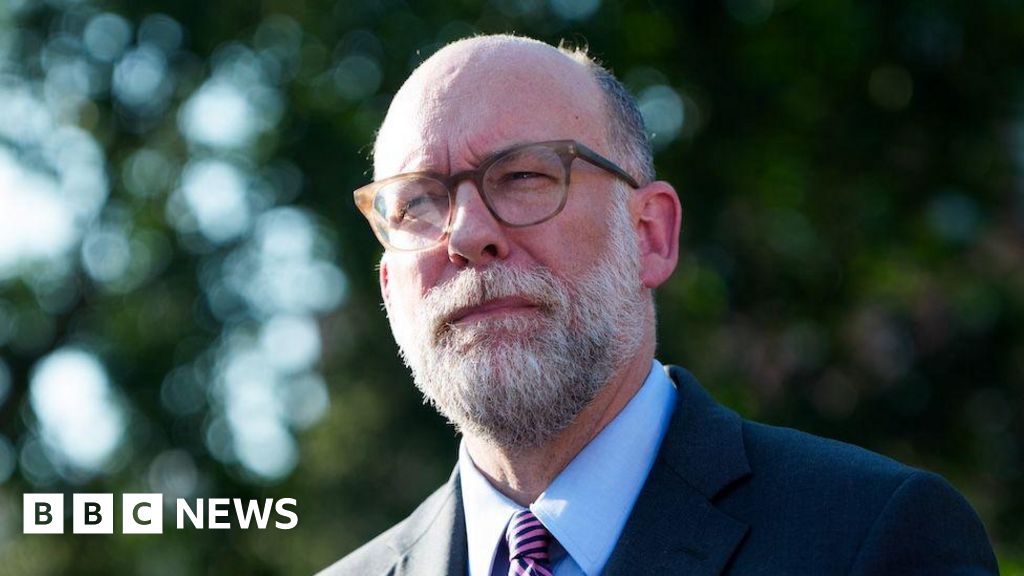
Russell Vought - from Project 2025 to Trump's shutdown enforcer

 TIME Magazine
Trump Is No Longer Denying Support for Project 2025
 CNN
CNNAnalysis: Trump is finally ready to talk about Project 2025 | Politics
 Associated Press
Trump no longer distancing himself from Project 2025 as he uses shutdown to further pursue its goals
Overview
A 900-page policy document, Project 2025, outlines proposals for dramatic federal government reductions, expanded presidential authority, and a nationwide abortion ban, signaling a significant shift in governance.
President Trump has shifted his stance, now openly supporting Project 2025 after initially distancing himself during his campaign, indicating a clear endorsement of its agenda.
Vought announced the cancellation of nearly $8 billion in clean energy projects across 16 states, primarily targeting 'blue states' where President Trump did not win in the 2024 election.
The policy document has already led to cuts in federal employees, with plans for further reductions during a potential government shutdown, aligning with Project 2025's goal of shrinking federal size.
These actions represent a substantial withdrawal of funding from renewable energy efforts and a broader move towards reducing federal government size and expanding presidential power.
Analysis
Center-leaning sources frame the story by portraying Russell Vought as Trump's aggressive 'shutdown enforcer,' leveraging the government shutdown as an 'unprecedented opportunity' to implement Project 2025's 'far-right' agenda. They emphasize Trump's 'dramatic about-face' on the plan, highlighting the administration's intent to slash 'Democrat agencies' and 'punish Democratic states' through executive power.
FAQ
Project 2025 proposes dramatic cuts to the federal workforce and the elimination or restructuring of key agencies, including plans to abolish the Department of Homeland Security (DHS) and replace it with a new immigration agency, privatize certain government tasks, and reduce funding for renewable energy projects. It also advocates for dismantling social safety net programs and reversing civil rights protections, broadly aiming to shrink the federal government’s size and scope.
Project 2025 seeks to concentrate more power in the executive branch by dismantling guardrails that limit presidential authority, enabling expanded use of warrantless surveillance, and threatening to withhold federal disaster relief funds from states that do not comply with federal policies. These changes could significantly weaken checks and balances, increasing the risk of executive overreach and reducing oversight from Congress and the judiciary.
The cancellation of nearly $8 billion in clean energy projects primarily targets 'blue states' where President Trump did not win in the 2024 election, signaling a politicized approach to federal funding. The rationale appears to align with Project 2025’s broader goal of reducing federal intervention in energy markets and favoring states aligned with the administration’s political base, though no explicit policy justification is detailed in the summary.
Project 2025 advocates for a nationwide abortion ban, which would override state laws and eliminate access to abortion across the United States. This represents a significant reversal of reproductive rights protections and aligns with the document’s broader aim to roll back decades of progress on civil rights and social issues[3].
Project 2025’s planned federal workforce reductions are expected to lead to cuts in vital government services, including those related to health, safety, environmental protection, and social welfare. These cuts could result in job losses for federal employees, reduced capacity to deliver services, and potential disruptions during government shutdowns, reflecting the project’s goal to significantly shrink the size and role of the federal government[3].