Government Shutdown Ends as Senate Pivots to Contentious Health Care Debate
The government shutdown ended, with the Senate now focusing on health care. Democrats did not extend Obamacare tax credits, and President Trump urged bolder action.
 PBS NewsHour
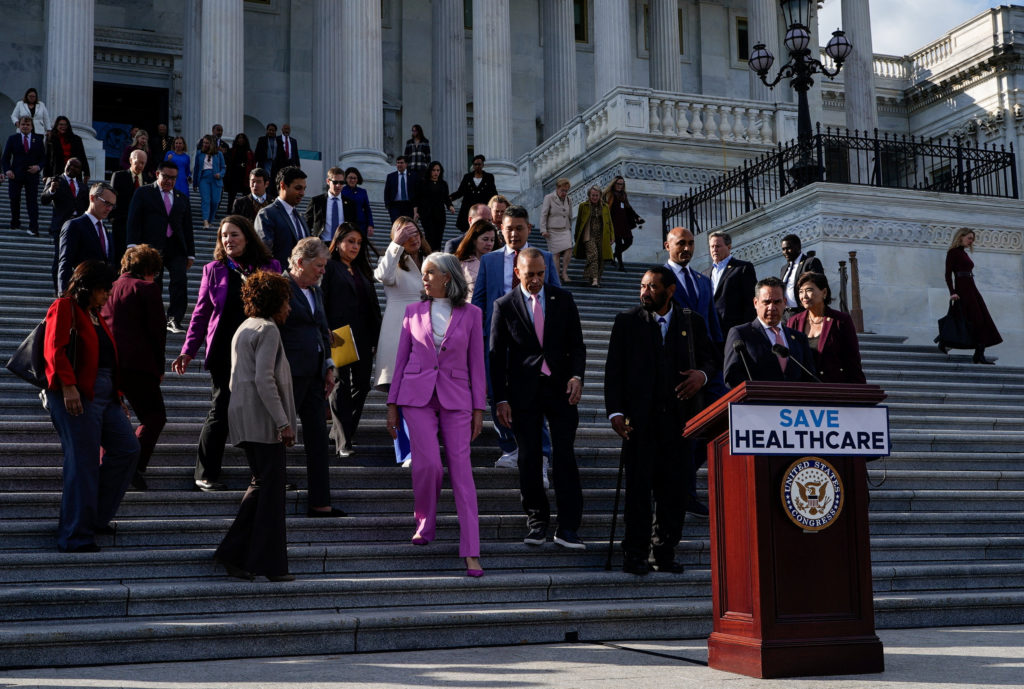
Democrats are wary of GOP promise to negotiate health care after end of shutdown
 CBS News
With government shutdown over, focus turns to upcoming Senate fight on health care

 NBC News
What the government shutdown's end means for Obamacare subsidies
 PBS NewsHour
'The worst time' to be a federal employee: Workers question whether the shutdown was worth their sacrifices
Overview
President Trump signed a Republican bill, officially ending the 43-day government shutdown, the longest in US history, after the House passed the measure.
The bill immediately reopens federal agencies and ensures government funding is restored through the end of January, guaranteeing back pay for all affected federal workers.
Eight Senate Democrats joined Republicans to end the government shutdown, leading to an immediate shift in legislative focus towards health care reform.
The Senate is now focusing on health care, with Democrats not achieving their goal of extending Obamacare tax credits, setting the stage for a new legislative battle.
President Trump criticized the Affordable Care Act as a disaster and urged Republicans to take bolder action, emphasizing the need for 60 Senate votes for any new bill.
Analysis
Center-leaning sources frame this story by consistently highlighting the negative financial impact on millions of Americans due to the expiring Obamacare subsidies. They emphasize the slim chances of extension and the dire consequences of inaction, using language that underscores the severity of rising premiums and potential loss of coverage. The narrative focuses on consumer challenges and the lack of a clear Republican alternative.
FAQ
The bill immediately reopened federal agencies, restored government funding through the end of January, and guaranteed back pay for all federal workers affected by the shutdown.
With the government funding restored, the Senate turned to address health care reform, particularly amid ongoing debates about Obamacare tax credits and the Affordable Care Act, signaling a new legislative battle in that area.
President Trump criticized the Affordable Care Act as a disaster and urged Republicans to take bolder action, emphasizing that any new health care bill would require 60 votes in the Senate.
Eight Democratic senators joined Republicans to end the shutdown, a move that infuriated many in their party who felt the deal did not adequately address key Democratic priorities, especially regarding health care reform.
Senate Majority Leader John Thune committed to holding a vote by early December 2025 on separate legislation to extend the enhanced Affordable Care Act premium tax credits, which are set to expire at the end of 2025, although no comparable House commitment exists yet.
