Supreme Court Weighs Transgender Athletes Cases as Conservative Justices Signal Support for State Bans
The Supreme Court weighed challenges to Idaho and West Virginia bans on transgender girls competing in female sports; conservative justices signaled support for state restrictions.

 Breitbart News
SCOTUS Appears Sympathetic to State Laws Banning Men from Womens' Sports
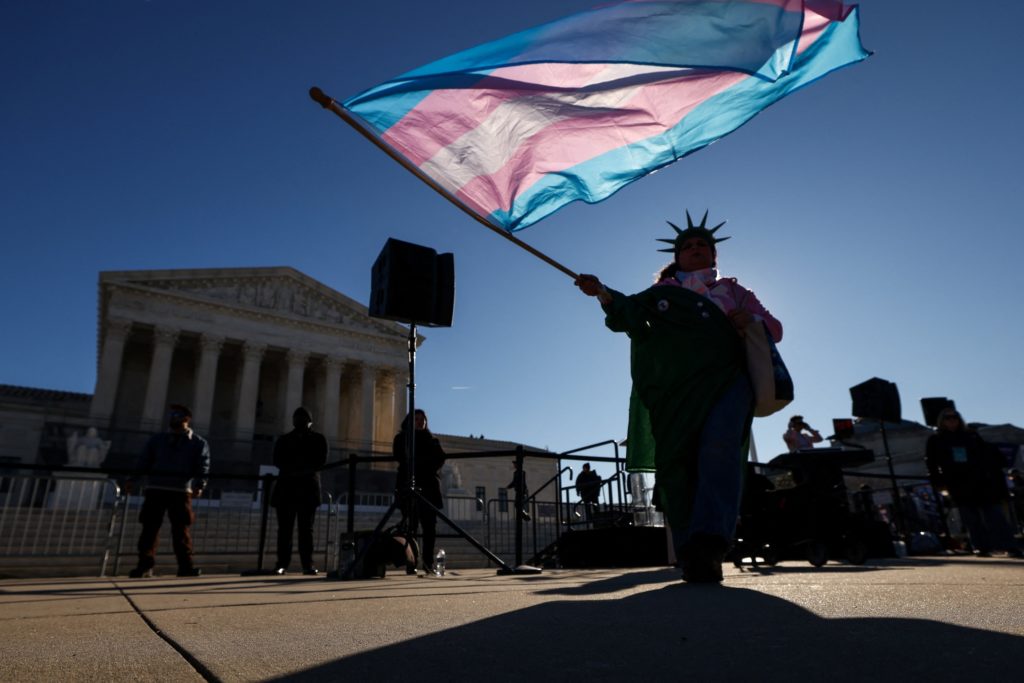
 PBS NewsHour
A look at the legal and political fight over trans athletes as cases reach Supreme Court

 Western Journal
Supreme Court Justice's Simple Question Blows Gaping Hole in Transgender Athlete's Case

 USA TODAY
'A kid who wants to play sports might not be able to.' Trans rights hits SCOTUS
Overview
The court heard Little v. Hecox and West Virginia v. B.P.J., addressing Idaho and West Virginia laws that bar transgender girls and women from female public-school and college sports.
Plaintiffs include Lindsay Hecox, who sought Boise State collegiate competition, and Becky Pepper-Jackson, a West Virginia student seeking middle/high school track participation.
Justices debated whether bans violate Title IX's sex‑discrimination prohibition or the Fourteenth Amendment’s Equal Protection Clause and how Bostock precedent applies to school athletics.
Arguments emphasized uncertain science about athletic advantages; attorneys urged fact records on puberty blockers and hormone therapy to determine individual competitive advantage.
Conservative justices appeared skeptical of striking down state bans and discussed limiting spillover effects; a decision is expected by end of June, potentially affecting many states.
Analysis
Center-leaning sources present largely neutral coverage: they balance conservative and liberal justices’ questioning, summarize plaintiffs’ and state arguments, and include on-the-record quotes and factual context (Title IX history, state laws, participation estimates). Editorial choices prioritize courtroom dynamics and legal stakes rather than loaded language, treating direct quotes as source content.
FAQ
The Supreme Court is hearing Little v. Hecox challenging Idaho's ban and West Virginia v. B.P.J. challenging West Virginia's ban on transgender girls competing in female sports.
Lindsay Hecox is the plaintiff in the Idaho case, seeking to compete in women's collegiate track at Boise State, and Becky Pepper-Jackson (B.P.J.) is the plaintiff in the West Virginia case, seeking to participate in middle and high school track.
The cases debate whether the state bans violate Title IX's prohibition on sex discrimination or the Fourteenth Amendment’s Equal Protection Clause, and how the Bostock precedent on sex discrimination applies to school athletics.
Conservative justices signaled support for the state bans, appearing skeptical of striking them down and discussing limiting spillover effects from transgender rights precedents.
A decision is expected by the end of June 2026.[6]