Bulletin Advances Doomsday Clock to 85 Seconds Amid AI and Nuclear Risks
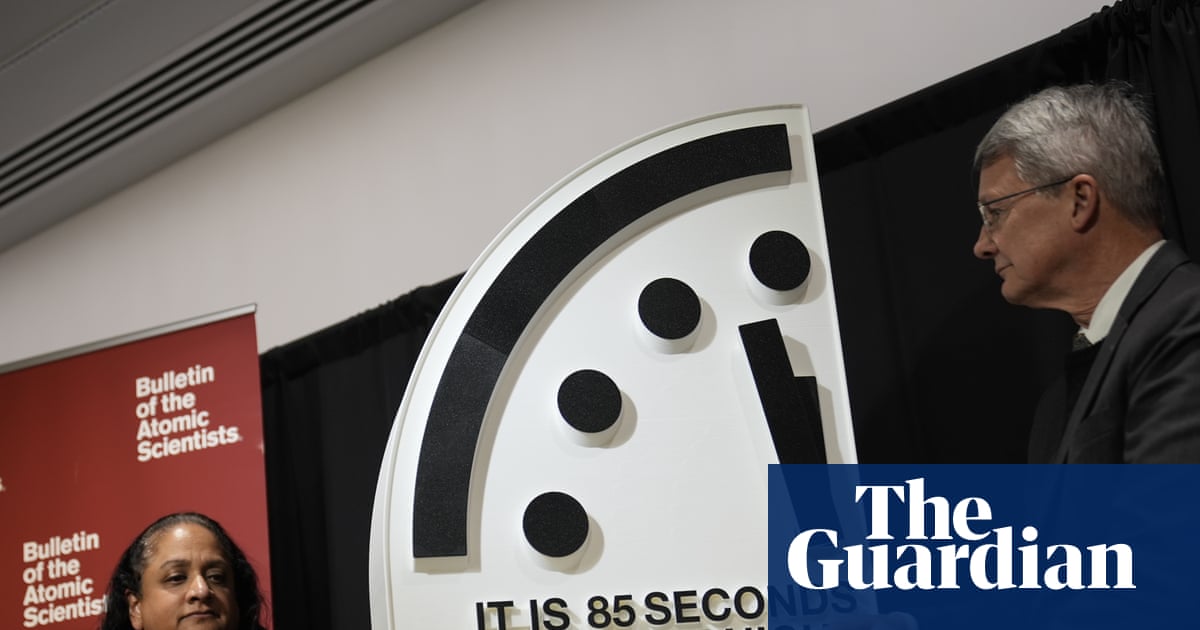
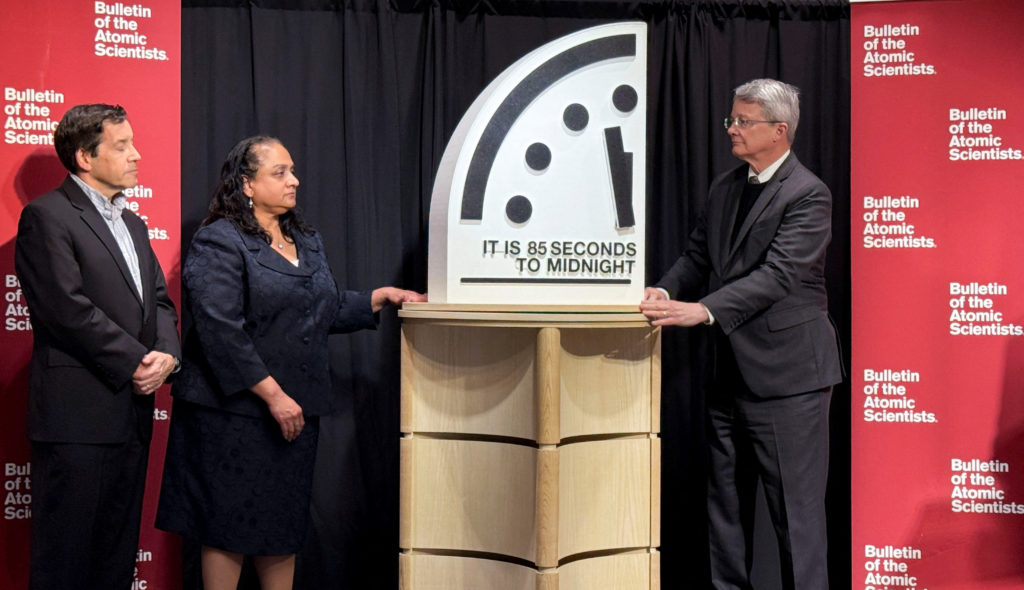
The Bulletin set the Doomsday Clock at 85 seconds to midnight, citing nuclear threats, climate crises and unregulated AI risks, the group said.
 The Guardian
Doomsday Clock at 85 seconds to midnight amid threats from climate crisis and AI

 CNET
CNETThe Doomsday Clock Jumps Closer to Midnight. AI Is a Big Reason Why
 PBS NewsHour
'Doomsday Clock' ticks closer to midnight amid threats from AI, climate change and nuclear war

 New York Daily News
Doomsday clock closer to midnight than ever due to ‘failure of leadership’
Overview
The Bulletin of the Atomic Scientists moved the Doomsday Clock to 85 seconds to midnight on Jan. 27, 2026, advancing it four seconds from 89 seconds in 2025, the group said.
The Science and Security Board cited escalating nuclear risks including the Russia-Ukraine war, the May India-Pakistan conflict and concerns about Iran's nuclear capability after U.S. and Israeli strikes last summer, according to the group.
Alexandra Bell, president and CEO of the Bulletin, said "Every second counts" in a Tuesday announcement and Daniel Holz, chair of the Science and Security Board, warned that AI-driven disinformation and unregulated military AI are accelerating existential risks.
The group noted climate-driven droughts, heat waves and floods and flagged the Feb. 4, 2026 expiration of a 2010 U.S.-Russia arms treaty as a near-term concern, records show.
The Bulletin urged renewed U.S.-Russia nuclear talks, multilateral limits on military AI and biotechnology safeguards as steps that could turn the clock back, the group said.
Analysis
Center-leaning sources frame the story through urgent, crisis-oriented editorial choices: alarmist headlines ("apocalypse is closer"), repeated Bulletin phrasing ("closest point to catastrophe," "running out of time"), and prioritizing Bulletin experts (Bell, Holz). Editorial choices emphasize leadership failures and policy fixes while largely amplifying source quotes with few skeptical voices.
FAQ
The Doomsday Clock is a symbolic clock maintained by the Bulletin of the Atomic Scientists since 1947, representing how close humanity is to global catastrophe from threats like nuclear war, climate change, and disruptive technologies; midnight symbolizes apocalypse.
In 2025, the Doomsday Clock was set at 89 seconds to midnight, advanced from 90 seconds in 2023.
Escalating nuclear risks from Russia-Ukraine war, India-Pakistan conflict, Iran's nuclear concerns after U.S.-Israeli strikes, climate crises like droughts and floods, unregulated AI in disinformation and military use, and the February 2026 expiration of the U.S.-Russia arms treaty.
Renewed U.S.-Russia nuclear talks, multilateral limits on military AI, and biotechnology safeguards.
Alexandra Bell, president and CEO of the Bulletin, said 'Every second counts' and emphasized it as a call to action; Daniel Holz, chair of the Science and Security Board, warned about AI-driven disinformation and unregulated military AI.