Rafah Crossing Reopens But Few Medical Evacuations Proceed
The Rafah crossing reopened Feb. 2 under a ceasefire, but U.N. data shows only 36 medical patients and 62 companions left Gaza in the first four days.
 Associated Press
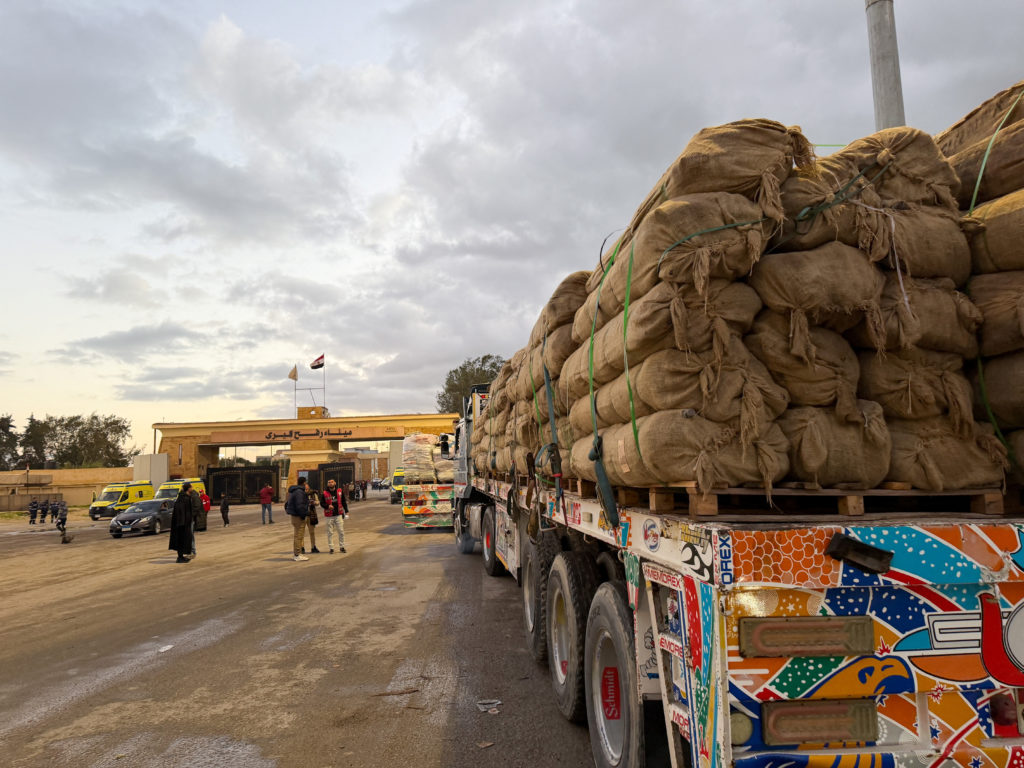
Palestinians attempt to cross between Gaza and Egypt at the Rafah border crossing
 PBS NewsHour
Gaza's Rafah border crossing has reopened but few are allowed through
Associated PressGaza's Rafah border crossing has reopened but few people get through

 CNN
CNNConfusion at reopening of Rafah crossing leaves Palestinians stranded
Overview
The Rafah crossing between Gaza and Egypt reopened on Feb. 2 under a ceasefire, but United Nations data shows only 36 medical patients and 62 companions were allowed to exit during the first four days.
Officials who negotiated the reopening said negotiators set daily limits of 50 returnees and 50 medical patients leaving with two companions each as a pilot that could expand if operations succeed.
The Israel Defense Forces denied any mistreatment, while U.N. human rights chief Ajith Sunghay said there is a "consistent pattern of ill-treatment, abuse and humiliation by Israeli military forces," marking conflicting accounts.
Palestinian officials said nearly 20,000 Gazans had medical referrals pending for evacuation, and World Health Organization coordinators arranged only 12 transports on the first day, a person briefed on operations said.
The Rafah reopening followed retrieval of the last hostage and a fragile ceasefire, and Prime Minister Benjamin Netanyahu is expected to visit Washington this week to discuss Iran, his office said.
Analysis
Center-leaning sources emphasize a humanitarian frame, highlighting Palestinian suffering and access barriers. Language choices like "war-shattered territory" and "essential lifeline," selection of patient and family quotes, and prominence given to allegations of mistreatment shape the narrative, while Israeli responses are minimal and presented mainly as procedural denials.
FAQ
Negotiators set daily limits of 50 returnees entering Gaza and 50 medical patients leaving with two companions each as a pilot program that could expand.
United Nations data shows 36 medical patients and 62 companions left Gaza in the first four days, with WHO confirming five patients on the first day.
Palestinian officials reported nearly 20,000 Gazans with pending medical referrals, while UN estimates indicate over 18,500 patients, including 4,000 children, awaiting evacuation.
The Israel Defense Forces denied mistreatment, while U.N. human rights chief Ajith Sunghay reported a consistent pattern of ill-treatment, abuse, and humiliation by Israeli forces.