Justice Department Allows Congress to Review Unredacted Epstein Files
DOJ will allow members of Congress to review more than 3 million unredacted Epstein documents starting Feb. 9 with 24 hours' notice.





Overview
Assistant Attorney General Patrick Davis wrote in a letter that members of Congress will be allowed to review unredacted copies of the more than 3 million Epstein-related documents beginning Feb. 9, provided they give at least 24 hours' notice.
The access follows passage of the Epstein Files Transparency Act, which President Donald Trump signed into law on Nov. 19 after lawmakers including Reps. Ro Khanna and Thomas Massie criticized DOJ delays and redactions, records show.
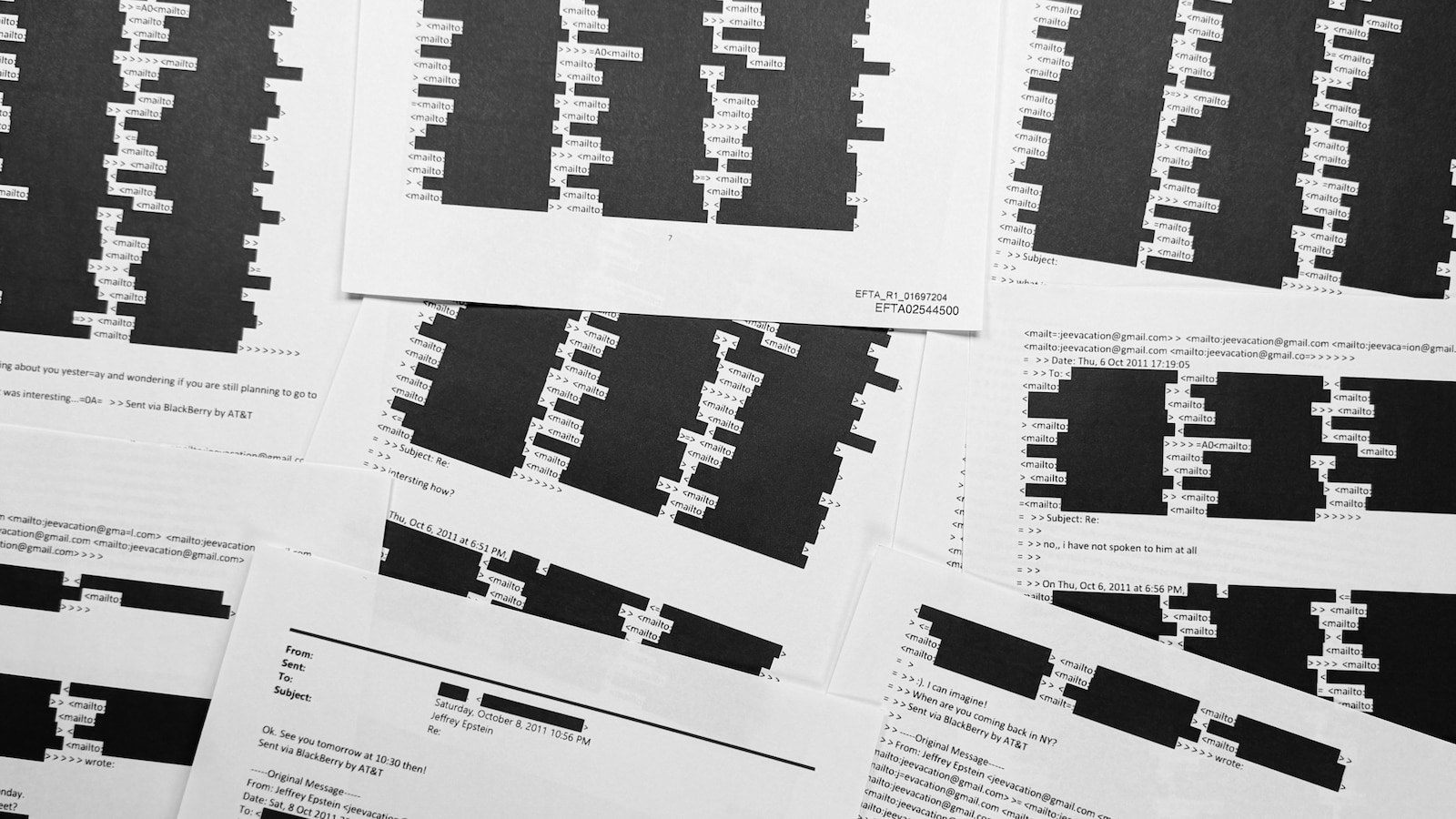
The Justice Department said it has withheld or redacted roughly 200,000 pages citing deliberative process privilege, the work-product doctrine and attorney-client privilege, according to a DOJ letter to lawmakers.
The review will be limited to the more than 3 million documents already publicly released and will not include the broader trove of more than 6 million documents DOJ says it possesses, the letter states.
House and Senate Judiciary committee leaders will be given priority for early review but the Justice Department said all members of Congress will have access at some point, the letter shows.
Analysis
Center-leaning sources present this coverage in a neutral, factual manner, emphasizing logistics of access, legal context, and competing viewpoints. They report procedural details, include lawmakers' criticism and the DOJ's explanation for redactions, and attribute evaluative language to quoted sources rather than using loaded editorial terms, limiting editorial framing.
FAQ
The Epstein Files Transparency Act is a law passed by the 119th United States Congress and signed by President Donald Trump on November 19, 2025, requiring the Attorney General to publicly release unclassified DOJ records related to Jeffrey Epstein, Ghislaine Maxwell, flight logs, and associated individuals, with prohibitions on withholding based on embarrassment or political sensitivity.
Congress members can review unredacted copies of more than 3 million Epstein-related documents already publicly released, with 24 hours' notice; this excludes the broader trove of over 6 million documents held by DOJ.
The DOJ withheld or redacted roughly 200,000 pages citing deliberative process privilege, the work-product doctrine, and attorney-client privilege.
House and Senate Judiciary committee leaders have priority for early review, but all members of Congress will have access at some point.