Treasury Deflects As Court Narrows Tariff Authority
After a 6-3 Supreme Court ruling, Treasury says refunds await lower courts while vowing to replace tariffs using other trade statutes.
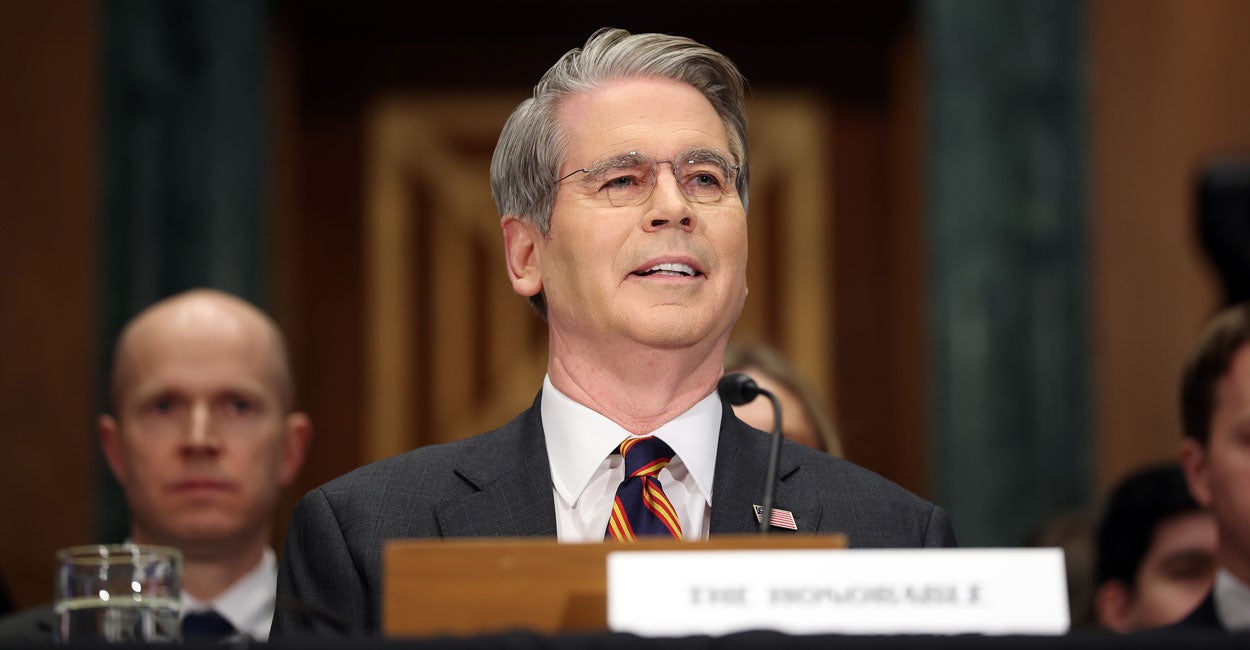
 Daily Signal
Scott Bessent Lays Out Future of Trump’s Tariffs, Trade Deals

 Joe.My.God.
Bessent Predictably Dodges On Refunds For Tariffs - Joe.My.God.

 Daily Caller
Scott Bessent Lays Out Future Of Trump's Tariffs, Trade Deals

 Daily Beast
Treasury Secretary Gets Testy When Asked if Trump Will Refund Tariffs
Overview
A 6-3 Supreme Court ruling on Friday said the president exceeded his authority under the International Emergency Economic Powers Act to collect tariffs.
The ruling raised questions about refunds for roughly $134 billion in tariff revenue and prompted reporters to press Treasury Secretary Scott Bessent on whether funds will be returned.
Bessent repeatedly declined to commit to refunds, telling CNN the issue is for lower courts to decide and saying the administration will follow court directions.
Senators Elizabeth Warren and Chuck Schumer publicly demanded refunds on February 20, 2026, while a dissenting justice warned that returning collected duties could be a legal "mess."
The administration plans to replace the struck-down IEEPA tariffs with Section 122 and other authorities within three days, and Commerce and USTR studies could take 30, 60, or 90 days.
Analysis
Analysis unavailable for this viewpoint.
FAQ
In a 6-3 decision on February 20, 2026, the Supreme Court ruled that the president exceeded his authority under the International Emergency Economic Powers Act (IEEPA) by using it to impose tariffs, as IEEPA does not authorize tariffs which are a form of taxing power reserved for Congress.
Treasury Secretary Scott Bessent stated that refunds are a matter for lower courts to decide, and the administration will follow court directions; a dissenting justice warned it could create a legal mess.
The administration plans to use Section 122 and other trade statutes within three days, with Commerce and USTR investigations under Section 301 potentially taking 30-90 days; President Trump imposed 10% (later raised to 15%) global tariffs under new authorities.
Section 122 allows tariffs to address trade deficits but has a 150-day limit and revenue cap; Section 301 permits tariffs after investigations into unfair trade practices without caps but requires reviews; unlike IEEPA, both have specific procedural limits and were intended for tariffs.


