Venezuela Frees Over 3,200 Under New Amnesty Law
National Assembly commission says 4,203 applications led to 3,052 house-arrest releases and 179 prison releases since the amnesty took effect on Feb. 20.

 Al Jazeera
Venezuela reports over 3,200 people fully released under new amnesty law
 ABC News
Venezuela says more than 3,200 people have been fully released since Amnesty Law took effect
 Associated Press
Venezuela says more than 3,200 people have been fully released since amnesty law took effect
Overview
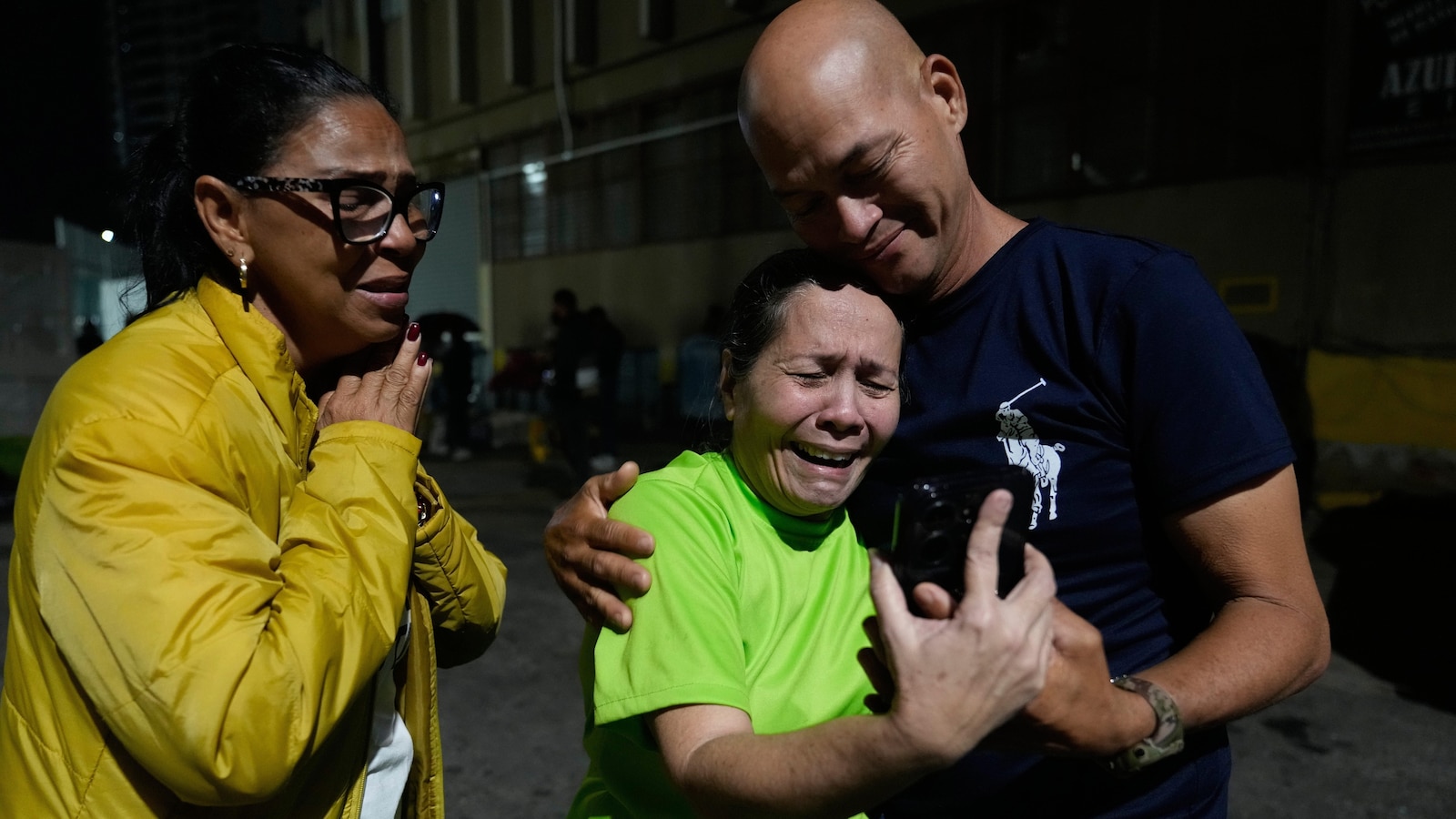
A special commission of Venezuela’s National Assembly said more than 3,200 people have been fully released under the amnesty law that took effect on Feb. 20, commission head Jorge Arreaza said.
The law was unanimously adopted by the National Assembly and signed by interim President Delcy Rodriguez to ease political tensions and accelerate the release of political prisoners, authorities said.
United Nations human rights experts welcomed the amnesty "with caution," while opposition figures criticized carve-outs that exclude those prosecuted for promoting or facilitating armed actions by foreign actors, critics said.
Authorities received 4,203 applications, and after evaluation the commission said 3,052 people previously under house arrest or other restrictive measures were granted freedom and 179 imprisoned individuals were released.
Venezuela-based prisoners’ rights group Foro Penal said it has verified only 91 "political releases," has requested review of 232 excluded cases, and that nearly 600 people remain in detention.
Analysis
Center-leaning sources present the government's release figures alongside independent counters, avoiding loaded language and attributing claims to named sources. They balance official statements (Jorge Arreaza's numbers) with watchdog data (Foro Penal's verified releases and remaining detainees), and note exclusions and criticisms to let readers weigh competing accounts.
FAQ
The amnesty law explicitly excludes those convicted or prosecuted for serious human rights violations, crimes against humanity, war crimes, homicide, corruption, drug trafficking, and actions promoting or facilitating foreign military intervention against Venezuela[1][3]. The law covers political violence between 1999 and 2026 but only applies to specific listed contexts including the 2002 coup, the 2014 and 2017 opposition protests, and events following the July 2024 elections[1]. Union leaders, workers prosecuted for labor rights defense, and military personnel are among the largest groups excluded[3].
Since the amnesty law took effect on February 20, 2026, the National Assembly's Special Monitoring Commission reported that 3,052 people previously under house arrest or restrictive measures were granted freedom and 179 imprisoned individuals were released, stemming from 4,203 total applications[1]. However, the Venezuelan prisoners' rights group Foro Penal has verified only 91 of these as genuine political releases[1].
Critics argue the law is selective and cannot address the broader human rights violations reported over 27 years of Chavismo[3]. Key criticisms include that military personnel and their families are excluded, which some view as unconstitutional discrimination[3]; that charges like crimes against humanity and homicide have been used arbitrarily against political prisoners[3]; and that the exclusion of those prosecuted for promoting foreign actions provides discretionary power to the government[3]. The UN welcomed the amnesty "with caution" while opposition figures criticized these carve-outs[1].
According to the Venezuelan prisoners' rights group Foro Penal, nearly 600 people remain in detention[1]. Additionally, Amnesty International reports that hundreds of people remained arbitrarily deprived of their liberty at the end of 2025, including three children, with detention conditions continuing to deteriorate and impunity prevailing for human rights violations[4].

