Tejero Dies as Spain Releases 1981 Coup Files
Antonio Tejero, leader of the Feb. 23, 1981 coup attempt, died at 93 the same day Spain published 153 declassified files about the uprising.



Overview
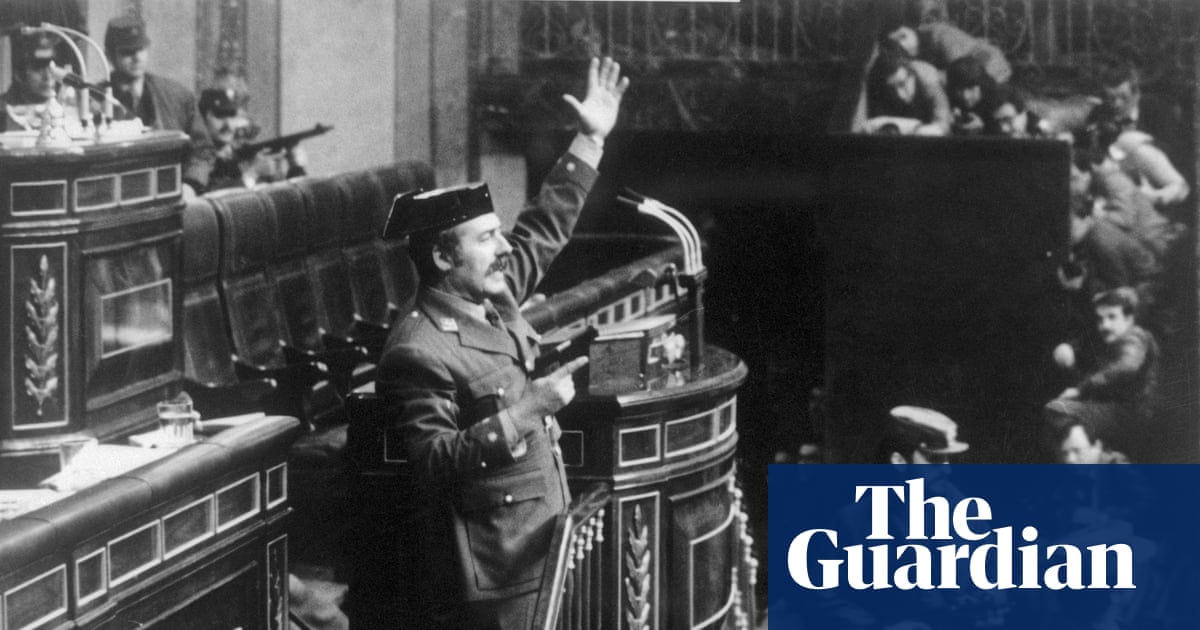
Antonio Tejero, who led the Feb. 23, 1981 armed seizure of Spain's parliament, died at 93, his family's law firm A. Cañizares Abogados said.
His death coincided with the government's publication of 153 declassified files about the 1981 coup, which the Socialist-led administration said was intended to dispel conspiracy theories.
The declassified documents include police and judicial reports, transcriptions and foreign reactions, and show that six members of the intelligence services were involved or had knowledge of the plot.
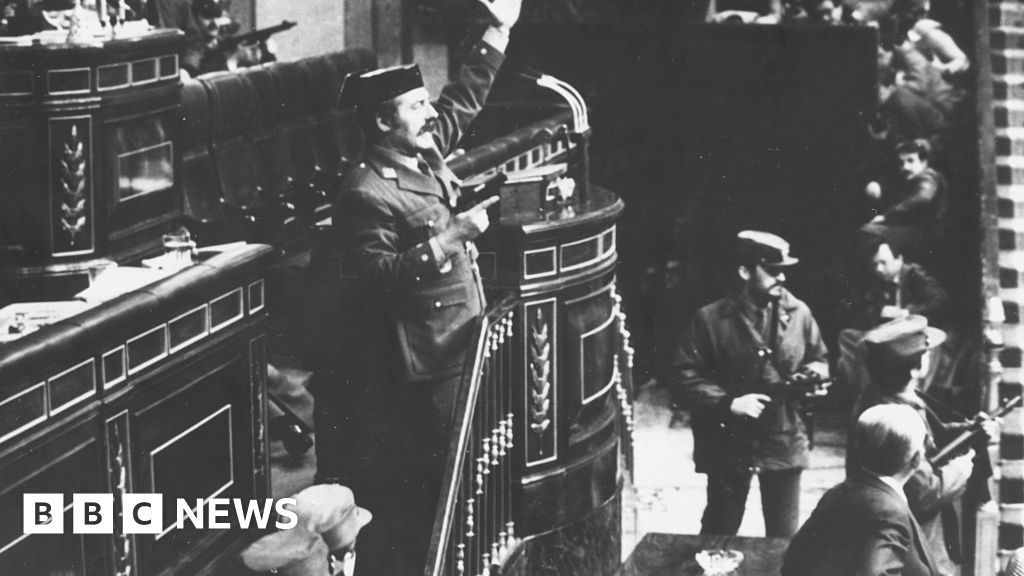
About 200 armed civil guards burst into parliament on Feb. 23, 1981, and Tejero was sentenced to 30 years for his role, serving about half that term after his conviction.
The government's upload of the 153 files briefly crashed the web page, and officials described declassification as a move to promote 'truth, memory and democracy,' Prime Minister Pedro Sánchez wrote on X.
Analysis
Center-leaning sources present the story neutrally, focusing on factual chronology, legal outcomes and public reactions. They use strong descriptive verbs (stormed, seized) tied to verifiable events, cite official statements and historical context, and include family remarks. The coverage avoids moralizing language or selective omission of significant viewpoints.
FAQ
On February 23, 1981, Lieutenant-Colonel Antonio Tejero led 200 armed Civil Guard officers to storm Spain's Congress of Deputies during a vote, holding parliamentarians hostage for 18 hours in an attempt to overthrow the democratic government.[1]
King Juan Carlos denounced the coup in a public television broadcast, calling for adherence to the rule of law and the continuation of the democratic government, which fatally undermined the plot.[1]
The 153 declassified files include police and judicial reports, transcriptions, and foreign reactions, revealing that six members of the intelligence services were involved or had knowledge of the plot.[1]
Tejero was sentenced to 30 years in prison for his role in the coup and served about half that term before being pardoned in 1988 by the government of Felipe González.[1]