Judge Lets White House Ballroom Construction Continue For Now
Judge Richard Leon denied a preservation group's injunction, allowing construction to continue while inviting an amended legal challenge; the National Capital Planning Commission will review the project on March 5.

 NPR
NPRTrump's ballroom project can continue for now, court says
 Washington Examiner
Judge clears White House ballroom construction

 PJ Media
Trump Racks Up Another Victory Over Leftist Crazies Trying to Stop His Ballroom

 RedState
The Answer Is No: Federal Judge Slaps Down Preservation Group's Bid to Halt White House Ballroom Project
Overview
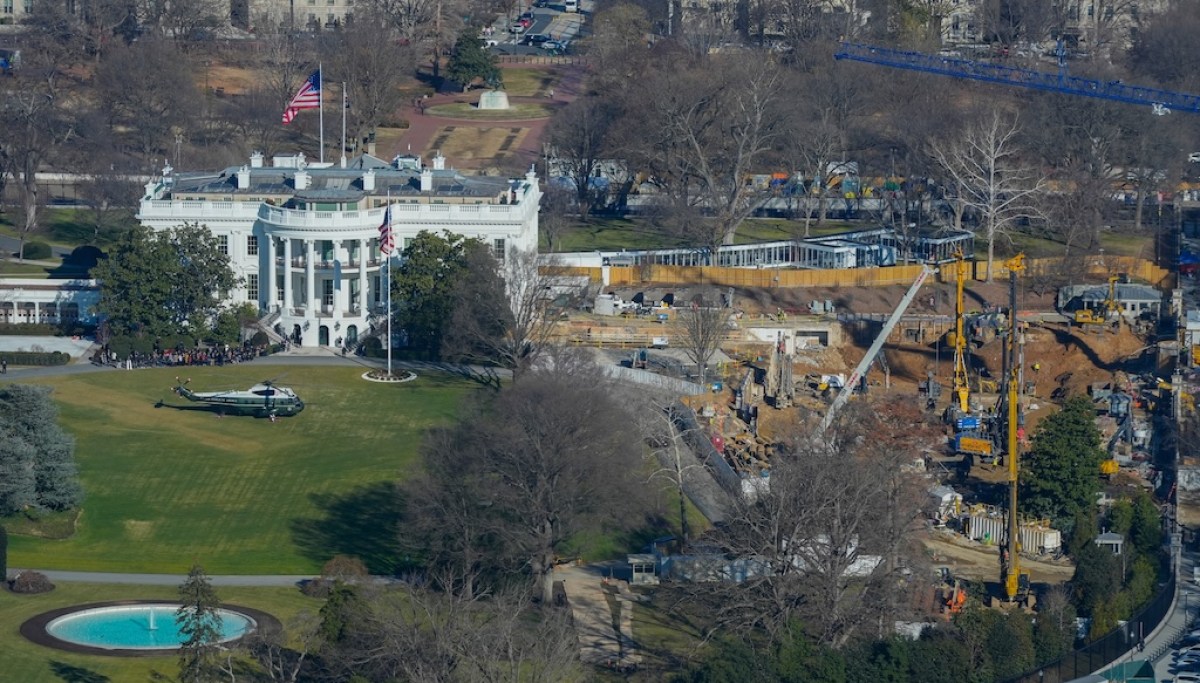
U.S. District Judge Richard Leon on Thursday denied the National Trust for Historic Preservation's request to pause construction of the White House ballroom, allowing work to continue for now.
The Trust sued after the East Wing was demolished, alleging the project proceeded without required reviews or congressional approval and challenged its private funding mechanism.
President Trump hailed the ruling on social media, while Carol Quillen, president and CEO of the National Trust, said the group was disappointed but will amend its complaint.
Filings describe the planned ballroom as roughly 89,000 to 90,000 square feet seating about 999 to 1,000 guests, with estimated costs ranging roughly $250 million to $400 million.
Leon said the Trust had invoked the wrong cause of action under the Administrative Procedure Act but invited an amended complaint, and the National Capital Planning Commission is set to review the project on March 5.
Analysis
Center-leaning sources frame the story as a legal and preservation conflict, emphasizing procedural rulings and process over broader policy debate. Editorial choices — verbs like “demolished,” noting commissions were “stocked…with allies,” and foregrounding the judge’s procedural reasoning while highlighting preservationists’ disappointment — produce a cautious, slightly critical narrative. Plaintiffs’ quotes remain source content.
FAQ
The project involves constructing a 90,000-square-foot ballroom in a new East Wing, replacing the original demolished in October 2025, to seat 900-1,000 guests at a cost of $250-400 million, funded privately.
Judge Leon ruled that the National Trust invoked the wrong cause of action under the Administrative Procedure Act, as the White House Office of the Executive Residence is exempt, but invited an amended complaint.
Construction continues, with underground work starting this month and above-ground in April; the National Capital Planning Commission reviews on March 5, 2026, after public comments due March 4.
Groups argue the project proceeded without required reviews by NCPC and CFA, congressional approval, and that demolition of the historic East Wing occurred without public notice, potentially overshadowing the White House.
Submit written comments on the East Wing Modernization Project to the NCPC by March 4, 2026, at noon ET via their participation page.