Trump Denies Reviewing Draft Emergency Order On Elections
Trump said he "never heard about" a circulated draft order that would seek emergency powers over election administration ahead of the 2026 midterms.
 PBS NewsHour
Trump says he's not mulling a draft executive order to seize control over elections. Here’s what we know
 TPM
TPMRead: The ‘Emergency’ Executive Order Proposal That Trump Activists are Rallying Behind
![Trump Claims He "Never Heard About" Draft Executive Order To Seize Power Over Midterm Elections [VIDEO] - Joe.My.God.](https://www.joemygod.com/wp-content/uploads/2026/02/tenev.png)
 Joe.My.God.
Trump Claims He "Never Heard About" Draft Executive Order To Seize Power Over Midterm Elections [VIDEO] - Joe.My.God.
 Newsmax
Trump 'Never Heard About' Plan to Declare National Emergency Before Midterms
Overview
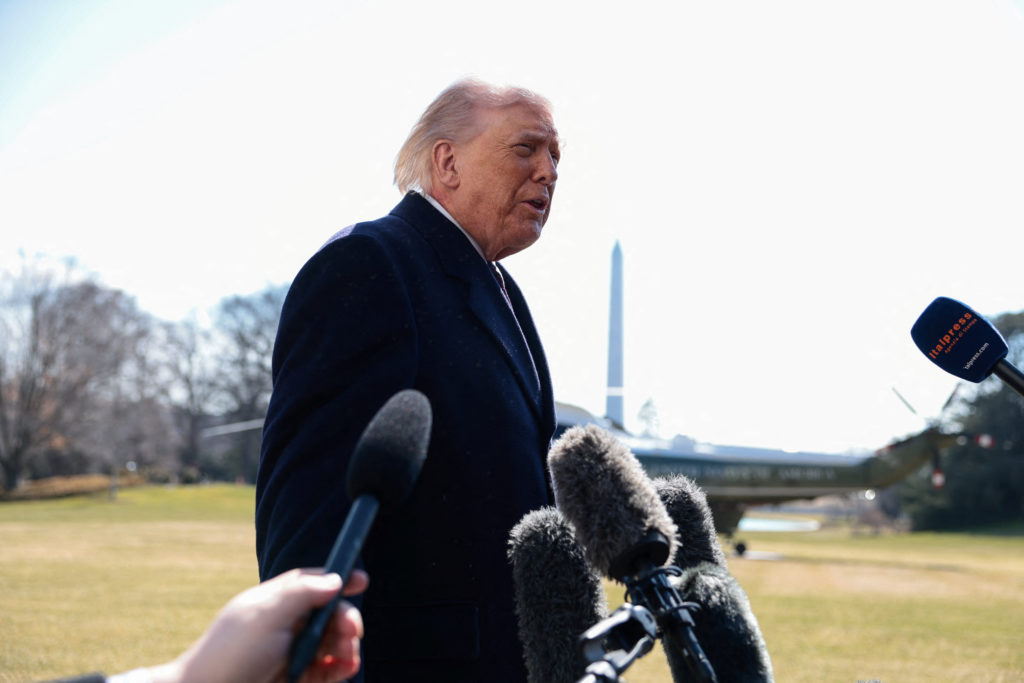
On February 27, 2026, President Donald Trump told reporters, "Who told you that?" and said he had "never heard about" a draft order to declare a national emergency around the midterm elections.
The Washington Post reported pro-Trump activists circulated a draft executive order seeking emergency powers to reshape election administration and to ban mail voting and electronic voting machines.
Florida lawyer Peter Ticktin said he had "certain coordination" with White House officials, and reports said he contacted Michael Flynn, Mike Lindell and Patrick Byrne; a White House spokeswoman defended the president.
Election law experts said such an order would likely face immediate court challenges because the Constitution leaves election administration to states and gives Congress authority over federal contests.
Trump has urged Congress to pass the House-approved Safeguard American Voter Eligibility Act, or SAVE America Act, and said he may act unilaterally if it is not approved.
Analysis
Analysis unavailable for this viewpoint.
FAQ
The draft order would grant President Trump sweeping powers over election administration, including the ability to ban mail-in ballots and electronic voting machines by classifying them as 'vectors of foreign interference,' require voter identification at polls, and mandate hand-counting of ballots.[1][2][5] The order claims to invoke the National Emergencies Act and the International Emergency Economic Powers Act as legal justification for these powers.[2]
Peter Ticktin and other advocates argue that alleged Chinese interference in the 2020 election constitutes a national emergency that justifies presidential action under the National Emergencies Act and the International Emergency Economic Powers Act.[1][2] However, the claims of Chinese interference are described as 'disproven allegations,' and legal experts have stated that neither of the two laws cited actually provide the emergency powers claimed.
The U.S. Constitution reserves primary authority over elections to the states, giving them control over 'the times, places, and manner' of holding elections, while Congress has limited oversight of federal elections.[5] Voting rights experts and legal scholars have stated that the president does not have constitutional authority to take control of state-run elections by declaring an emergency, and any attempt would be 'blatantly unconstitutional.'
Trump has publicly stated he will implement voter ID requirements for the midterm elections 'whether approved by Congress or not,' and has been pushing Congress to pass the SAVE Act (Safeguard American Voter Eligibility Act) to mandate voter identification.[1][3] The draft emergency order appears to be a mechanism Trump's allies developed to bypass Congress and implement voting restrictions that Congress has not approved.