China Lowers 2026 Growth Target, Pushes Tech Self-Reliance
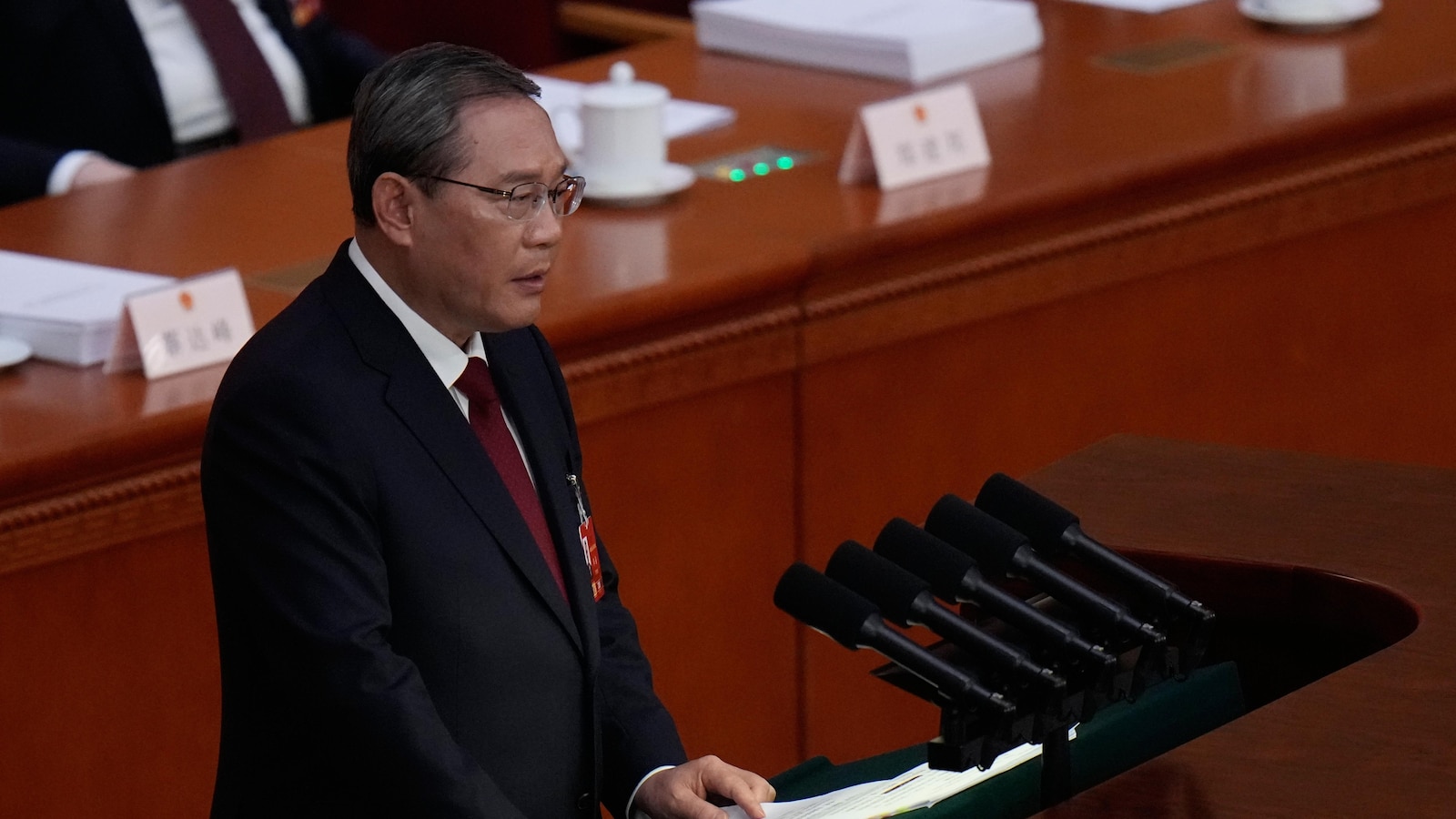
Premier Li Qiang set a 4.5%–5% 2026 growth target and released a draft 2026–2030 plan stressing tech self-reliance, with defense spending rising about 7% to roughly 1.9 trillion yuan.

 The Gateway Pundit
China Quietly Admits Economic Trouble — Slashes Growth Target to 35-Year Low | The Gateway Pundit | by Ben Kew

 Semafor
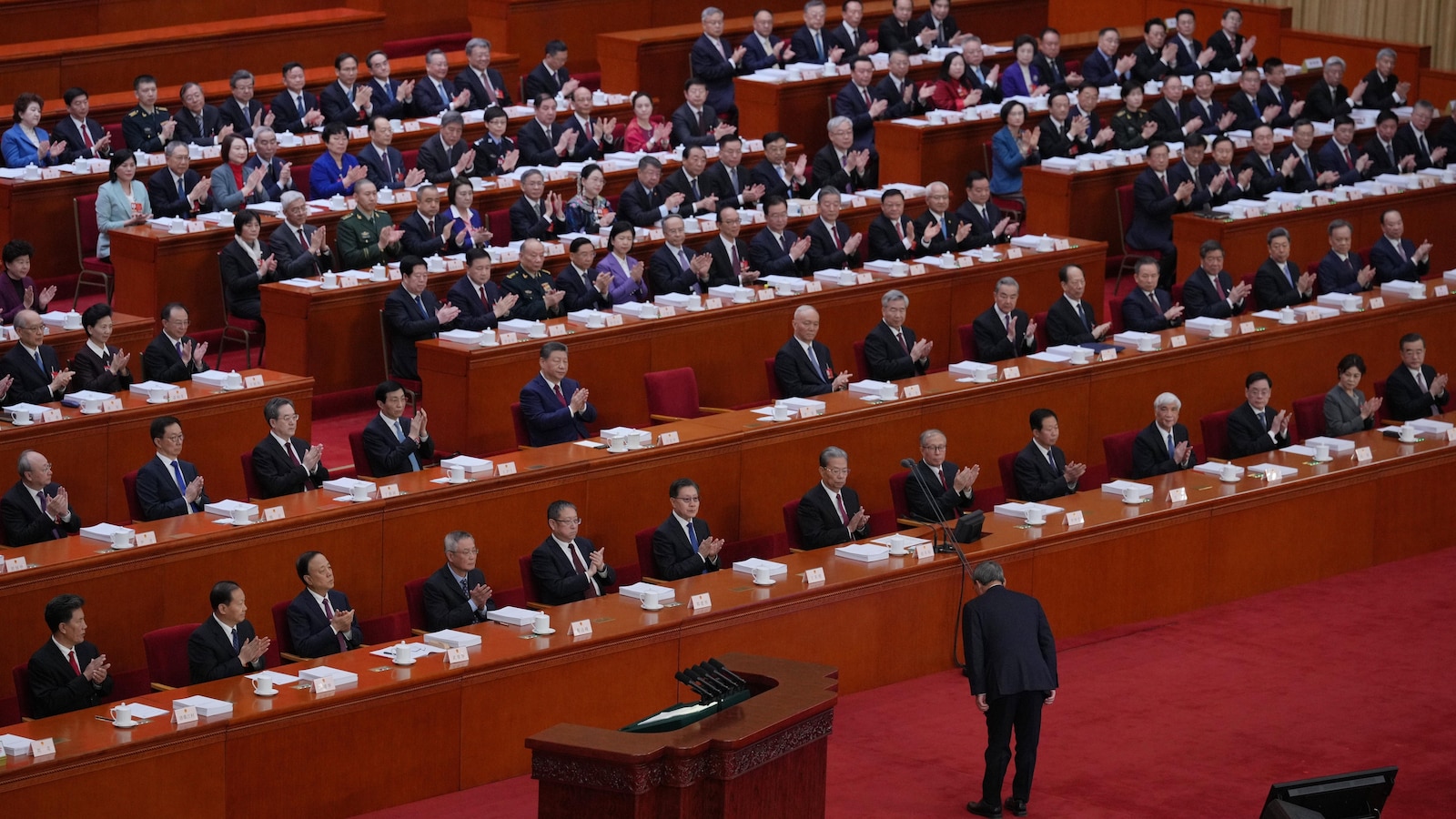
China cuts growth target to lowest ever
 ABC News
Key takeaways from China's new 5-year economic blueprint and growth target
 ABC News
China sets a lower economic growth target of 4.5% to 5% for 2026 as challenges loom
Overview
Premier Li Qiang announced a 4.5% to 5% economic growth target for 2026, the lowest since 1991.
China released the full draft of its five-year plan to 2030 outlining goals for technological self-reliance in AI, semiconductors, robotics, biomedicine, quantum and aerospace.
An Asia Society Policy Institute expert said Beijing prioritizes strengthening industrial self-reliance over boosting household consumption.
The government proposed 250 billion yuan in consumer trade-in bonds, projected at least 7% annual R&D spending growth, and budgeted defense at about 1.9 trillion yuan after a record trade surplus of nearly $1.2 trillion last year.
The nearly 3,000-member National People's Congress is due to vote on the work report, budget and the five-year plan at its closing session next week.
Analysis
Center-leaning sources present the story as cautious and problem-focused, emphasizing continuity over change. Editorial choices use evaluative terms ('doldrums', 'slump', 'grave and complex landscape'), prioritize economic-risk experts and a struggling real-estate anecdote, and foreground institutional critiques (calling the Congress 'largely ceremonial') while downplaying optimistic policy detail.
FAQ
China set a 4.5%–5% economic growth target for 2026, the lowest since 1991.
The plan stresses self-reliance in AI, semiconductors, robotics, biomedicine, quantum, and aerospace.
Defense spending is rising about 7% to roughly 1.9 trillion yuan.
The government proposed 250 billion yuan in consumer trade-in bonds; an expert notes prioritization of industrial self-reliance over household consumption.
The IMF projects 4.5% growth for 2026, up 0.3 percentage points from their October forecast.