House Rejects War Powers Bid to Curb Trump After Iran Strikes
House and Senate votes leave Congress unable to block President Trump's military campaign after strikes that killed Iran's leader and have caused heavy casualties.

 The Gateway Pundit
Iran War Powers Resulution Voted Down in House - 219 to 212 | The Gateway Pundit | by Jim Hoft
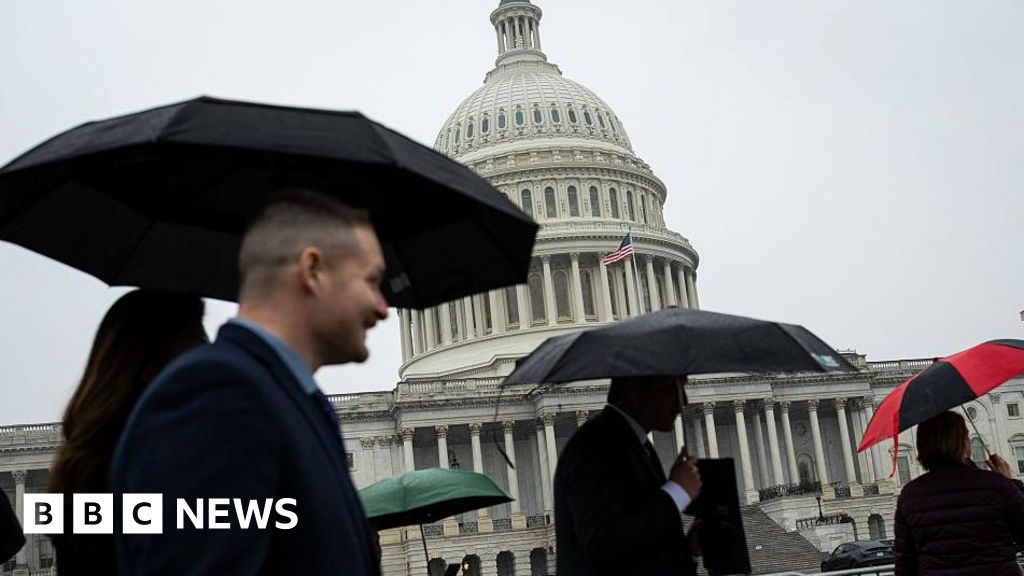
 BBC News
White House welcomes Congress' green light for Iran conflict
 Fortune
House votes 219-212 to halt Trump's attacks on Iran. "Donald Trump is not a king," says top Dem on Foreign Affairs Committee | Fortune

 Joe.My.God.
Four House Democrats Help Sink War Powers Bill - Joe.My.God.
Overview
The House rejected a war powers resolution to restrict President Donald Trump's authority to use U.S. military force in Iran by a 212-219 vote, after the Senate blocked a similar measure 47-53.
The votes followed President Trump's bombardment of Iran that began on Saturday, which killed Ayatollah Ali Khamenei and has left more than 1,230 people dead in Iran, officials said.
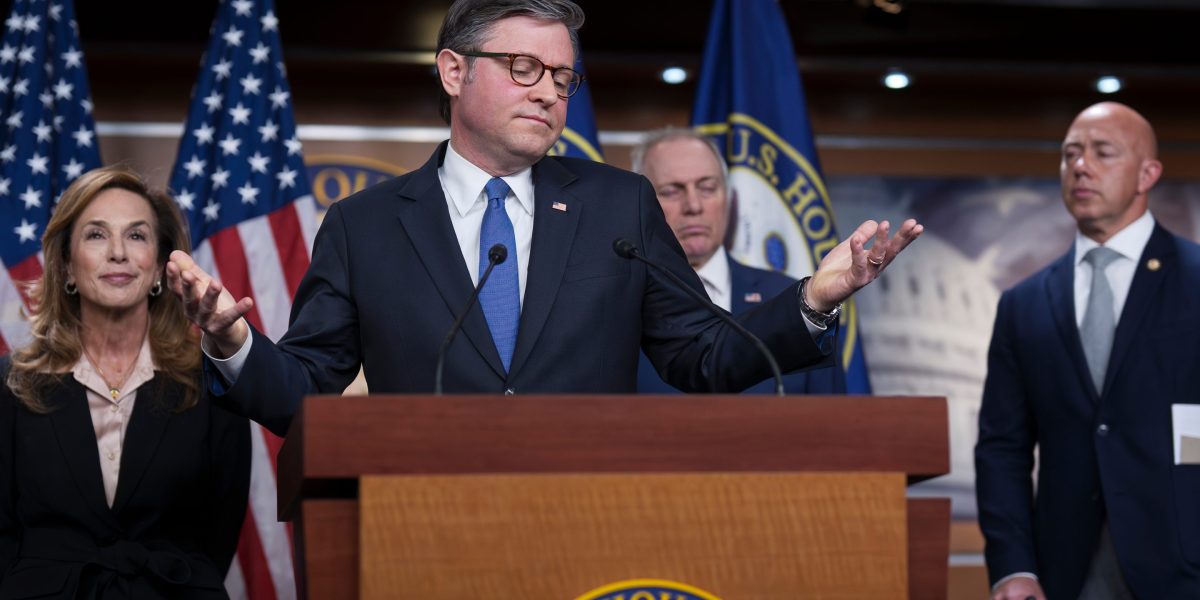
Democrats, including Rep. Gregory Meeks, said the Constitution requires congressional approval for war, while Speaker Mike Johnson and other Republicans warned that limiting the president would be dangerous.
Four Democrats—Jared Golden, Greg Landsman, Henry Cuellar and Juan Vargas—joined Republicans to defeat the resolution, while Reps. Thomas Massie and Warren Davidson were the only Republicans to back it.
Lawmakers have proposed an alternative giving the president 30 days before seeking congressional approval, but officials said Trump is almost certain to veto any bill that would curb his authority.
Analysis
Center-leaning sources frame the coverage as a clash over executive war powers, emphasizing congressional duty, public wariness, and risks of escalation. Editorial choices — loaded verbs, prominence for skeptical lawmakers, repeated notes about constitutional authority and polls, and placement of administration explanations late or qualified — collectively cast the vote as a rebuke of unilateral action.
FAQ
According to Trump's eight-minute video statement released on February 28, the stated purpose of the US strikes was effectively regime change, citing Iran's "menacing activities" that endangered the US and its allies, including the Iran hostage crisis, support for proxies such as Hamas and Hezbollah, killings of protesters, and alleged pursuit of nuclear weapons[1]. However, an anonymous US source claimed Trump authorized the strike after receiving intelligence that Iran was planning to preemptively launch missiles, though a Pentagon source told Congress in closed-door briefings that there was no intelligence suggesting Iran was planning to attack US forces first[1].
The House rejected the war powers resolution by a narrow vote of 212 to 219, with four Democrats (Jared Golden, Greg Landsman, Henry Cuellar, and Juan Vargas) and two Republicans (Thomas Massie and Warren Davidson) crossing party lines. The narrow margin and bipartisan defections suggest divided congressional opinion on the strikes. While Democrats argued the president launched strikes without congressional approval, the White House praised Congress for reaffirming the Commander-in-Chief's authority. Additionally, some Republicans indicated they could change course if the war expands or drags on, suggesting conditional support rather than strong conviction[1].
Trump stated that US operations were to be completed within a four-week timetable in an interview with the Daily Mail[1]. This timeline is significant given that some Republicans have indicated they could change their position and support a war powers resolution if military operations expand or drag on beyond this expected duration, suggesting that prolonged conflict could shift the congressional balance on continued authorization[1].
Democrats have proposed an alternative resolution that would allow the president 30 days of military action before requiring congressional approval[1]. This compromise position seeks to balance executive authority with congressional oversight by establishing a specific timeframe for military operations without requiring prior approval, while maintaining a mechanism for Congress to reassert control if operations continue beyond the initial 30-day period.
The House approved a resolution reaffirming that Iran is a state sponsor of terrorism by a substantial margin of 372-53[1], demonstrating broader congressional consensus on Iran's designation as a terrorism sponsor, even among those who voted against authorizing the military strikes. This indicates that opposition to the war powers resolution was not necessarily rooted in disagreement about Iran's threat status, but rather concerns about presidential authority and the scope of military action.