Trump Pushes SAVE Act as Senate Filibuster Looms
Trump demands the SAVE America Act — requiring proof of citizenship and photo ID that would take effect immediately if enacted — but the Senate lacks 60 votes to clear a filibuster.





Overview
President Donald Trump has vowed not to sign any bills until Congress enacts the SAVE America Act, escalating pressure on lawmakers to pass the bill.
The SAVE America Act would require documentary proof of citizenship to register to vote and photo identification to cast ballots, and those provisions would take effect immediately if the bill becomes law.
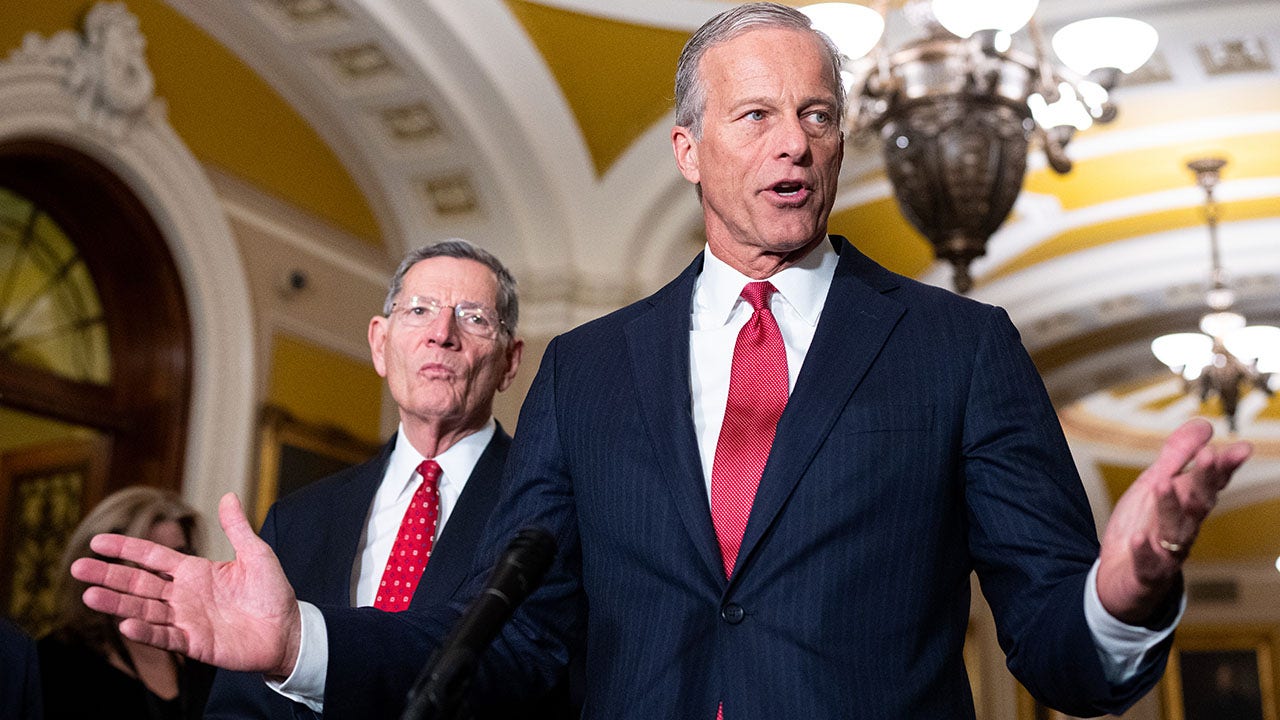
Senate Republicans are divided over how to pass the legislation, with some urging changes to filibuster practice or a "talking filibuster," while Senate Majority Leader John Thune said he opposes altering Senate rules and cannot guarantee an outcome.
The Senate requires 60 votes to invoke cloture and Republicans hold 53 seats, even as Utah and South Dakota approved citizenship-verification measures, Florida is considering similar bills, and California backers submitted more than 1.3 million signatures for a voter ID initiative.
A 2025 Pew survey found 83% of Americans favor government-issued voter ID, while a 2024 SSRS survey estimated roughly 9%, about 21 million eligible voters, would have difficulty obtaining required citizenship documents.
Analysis
Center-leaning sources cast the SAVE America Act skeptically by emphasizing implementation burdens and rare instances of voter fraud. Editorial choices—loaded terms like "vast" impacts and "extremely rare" fraud, prominence given to Brennan Center and Native American Rights Fund analyses, and noting Trump's misstated claims—frame the bill as problematic while including proponents' brief defenses as source content.
FAQ
The SAVE Act requires documentary proof of U.S. citizenship to register to vote, with acceptable documents including a valid U.S. passport, military identification with military service records showing U.S. birth, or photo identification consistent with the REAL ID Act of 2005 that indicates citizenship status.[1][2] For voting, the bill requires a photo ID that clearly indicates U.S. citizenship status.[3] Mail-in voters would also need to provide photocopies of their identification at both application and ballot submission stages.[3]
More than 21 million Americans lack ready access to the documents required under the SAVE Act.[4][6] This includes roughly half of Americans who don't have a passport and millions who lack a paper copy of their birth certificate.[4] People of color, married people who have changed their names, seniors, and young and elderly people are disproportionately affected and more likely to have difficulty accessing these documents.[6]
Records from the U.S. Citizenship and Immigration Services' Systematic Alien Verification for Entitlements program show that just 0.04% of voter verification cases are returned as noncitizens.[1] Furthermore, in Travis County, Texas, 25% of voters flagged as potential noncitizens had already provided proof of citizenship when registering, suggesting the actual rate of noncitizen voting is even smaller.[1] Noncitizen voting in federal elections is already prohibited under the Illegal Immigration Reform and Immigrant Responsibility Act of 1996.[1]
The Senate requires 60 votes to invoke cloture and overcome a filibuster, but Republicans hold only 53 seats.[1] Senate Republicans are divided over how to pass the legislation, with some urging changes to filibuster practice or a "talking filibuster," while Senate Majority Leader John Thune opposes altering Senate rules and cannot guarantee an outcome.[1]
The SAVE Act would prohibit universal mail voting and require all mail voters to submit an application to receive a mail ballots, ending the longstanding principal method of voting in eight states and Washington, DC.[4] Additionally, the bill would effectively eliminate popular registration methods including online voter registration (available in 42 states), mail registration, and voter registration drives by requiring in-person presentation of citizenship documents.[5]