Supreme Court Clears Cox in Major Music-Piracy Case
Unanimous ruling reverses lower-court findings and a $1 billion jury award, narrowing contributory copyright liability and raising questions for AI and content platforms.

 Straight Arrow News
In major copyright case, Supreme Court says internet provider not liable for music piracy

 Breitbart News
Supreme Court Tosses $1 Billion Jury Copyright Verdict in Record Label Battle over Illegal Internet Downloads
 ARS Technica
Supreme Court rejects Sony's attempt to kick music pirates off the Internet
 CBS News
Supreme Court sides with Cox Communications in copyright dispute over pirated music
Overview
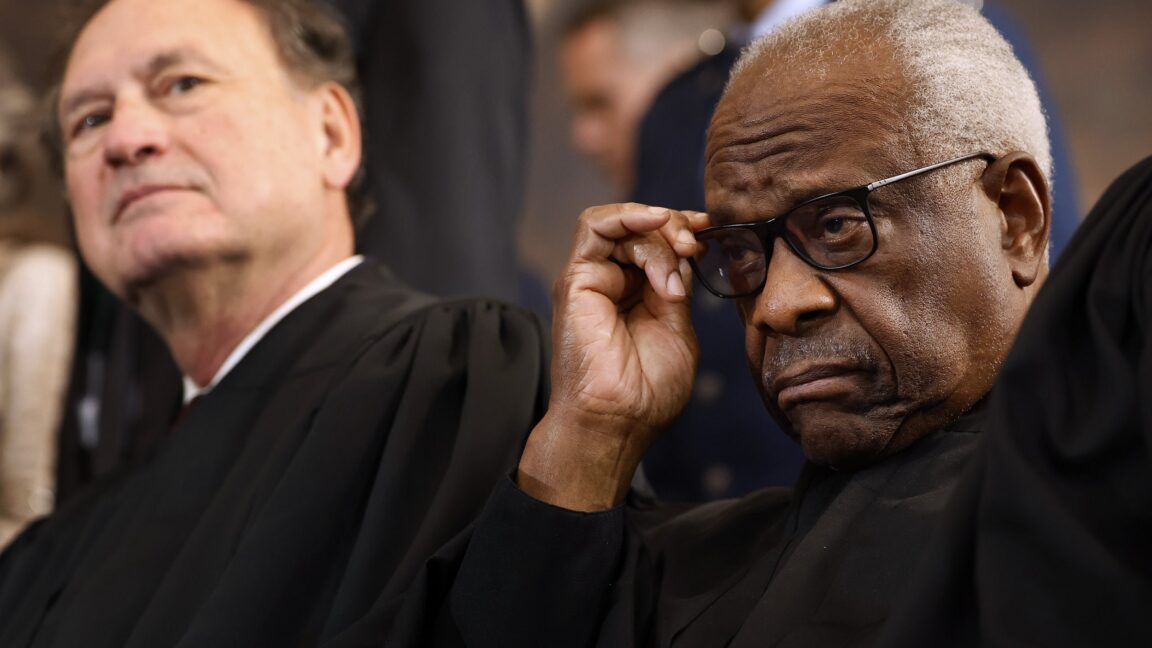
The Supreme Court unanimously ruled that Cox Communications cannot be held liable for subscribers' copyright infringement, with Justice Clarence Thomas writing that offering a public service does not make a company a copyright infringer.
Sony Music and other labels sued Cox in 2018, and a jury awarded $1 billion after finding Cox knowingly allowed users to redistribute songs; the 4th U.S. Circuit upheld liability but set aside the damages award.
Cox hailed the decision as preserving open internet access and said ISPs are not 'copyright police,' while the Recording Industry Association of America said it was disappointed and urged policymakers to study the ruling's impact.
Plaintiffs cited roughly 10,000 to hundreds of thousands of instances of customers sharing copyrighted works, Cox serves more than 6 million homes and businesses in more than a dozen states, and the justices decided 9-0.
Observers said the narrow holding could affect AI companies, a law professor said the music industry may need to go to Congress, and justices had warned a contrary ruling could force mass terminations at hospitals and universities.
Analysis
Center-leaning sources frame the Cox ruling as protecting open internet and free expression by emphasizing broader implications for internet access and AI while relying on neutral court language. Editorial choices—highlighting First Amendment advocates and systemic consequences, and leading with the reversal—steer readers toward civil‑liberties and platform‑liability framing; quotes are shown as source content.
FAQ
The Supreme Court ruled that Cox Communications did not meet the legal standards for contributory copyright infringement liability. Justice Clarence Thomas wrote that "Cox provided internet service to its subscribers, but it did not intend for that service to be used to commit copyright infringement" and that "merely failing to terminate internet service to infringing accounts would expand secondary copyright liability beyond our precedents."[1] The Court found that Cox had taken reasonable measures by contractually prohibiting subscribers from infringing copyrights, sending warnings, suspending services, and terminating accounts, which distinguished it from actively inducing infringement.[2]
In 2019, a jury in Alexandria, Virginia, found Cox owed $1 billion to music labels for user infringement of more than 10,000 copyrights, finding Cox liable for both contributory and vicarious infringement.[1] The 4th U.S. Circuit Court of Appeals partially overturned this in 2024, throwing out the vicarious infringement finding but affirming contributory infringement and ordering a retrial that could have reached damages of $1.5 billion.[2] The Supreme Court's unanimous decision on March 25, 2026, ended this litigation entirely by reversing the contributory infringement liability.
The music labels, including Sony Music, Universal Music Group, and Warner Music Group, argued that Cox should be held liable because the company received approximately 163,000 infringement notices about subscribers illegally downloading copyrighted songs and failed to adequately respond by terminating repeat infringers.[1][2] They presented evidence that a Cox manager overseeing piracy compliance told his team to "F the DMCA," demonstrating what they claimed was willful indifference to copyright infringement.[2]
Cox had contractually prohibited subscribers from using its service to infringe copyrights, sent warnings to users, suspended services for violators, and terminated accounts of repeat infringers.[2] These proactive measures were cited by the Supreme Court as evidence that Cox neither induced infringement nor provided a service tailored to infringement, distinguishing the company from scenarios where an ISP might be complicit in piracy.
The ruling significantly narrows secondary copyright liability for internet service providers and other platforms. Some observers noted the decision could affect AI companies facing similar copyright challenges, and a law professor suggested the music industry may need to pursue legislative solutions through Congress rather than the courts.[2] Justice concerns about the alternative outcome were also notable—justices warned that holding ISPs liable could force mass terminations at hospitals and universities that unknowingly host users committing infringement.

