Hungary’s 16-Year Orbán Era Ends as Magyar’s Tisza Wins Majority
Péter Magyar’s Tisza won 53% to Fidesz’s 39% on April 12 with 79.5% turnout, handing the opposition a two-thirds parliamentary majority and ousting Viktor Orbán.

 Reason
Hungary breaks free: How voters ended 16 years of Orbán's iron rule

 The Atlantic
What Viktor Orbán’s Opponents Sacrificed to Beat Him

 The Guardian
Hungary beware: authoritarianism can be checked, but it is rarely dismissed with a single blow | Blanche Leridon

 Foreign Affairs
How Orban Defeated Himself
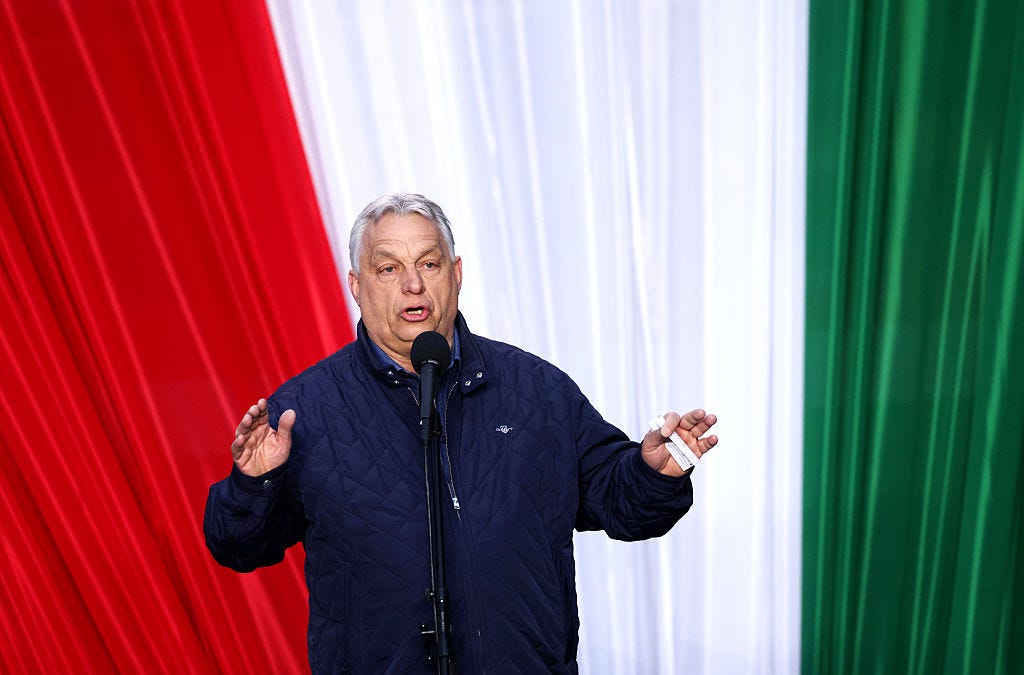
 The Free Press
What Kind of Autocrat Loses an Election?
Overview
Péter Magyar's Tisza won 53 percent of the vote to Viktor Orbán's Fidesz 39 percent in the April 12 election, securing a two-thirds parliamentary majority as Orbán conceded immediately.
The result ended 16 years of Orbán's rule and came with a 79.5 percent turnout, the highest the country has seen since the fall of the USSR.
Opposition parties set aside differences to unite behind Magyar, with rivals standing down to avoid splitting the anti‑Fidesz vote and investigative journalists publishing reports of corruption and patronage.
Orbán leaves a captured state with gerrymandered districts, concentrated media control, inflation exceeding 50 percent since 2020, and a democracy ranking of 55th on the Economist's index.
Magyar inherits entrenched loyalists and must rebuild checks on executive power, and analysts warn dismantling Orbán's legal and institutional legacy will be arduous and prolonged.
Analysis
Center-leaning sources frame Orbán’s defeat as a corrective victory against illiberalism, using evaluative labels (e.g., “right‑wing strongman,” “corrupt”), prioritizing critical commentators and experts, and foregrounding source content such as John Oliver’s quip and Kim Lane Scheppele’s coup analogy to emphasize institutional decay and democratic vindication.