Epstein Aide Lesley Groff Testifies to House Panel
Groff told the House Oversight Committee she was unaware of Epstein's crimes, called him a 'master manipulator,' and said she arranged calls and massage appointments during her 18 years with him.
 ABC News
Former Epstein executive secretary tells Oversight Committee he was a 'master manipulator'
 The Guardian
‘He was a master manipulator,’ Jeffrey Epstein assistant Lesley Groff testifies
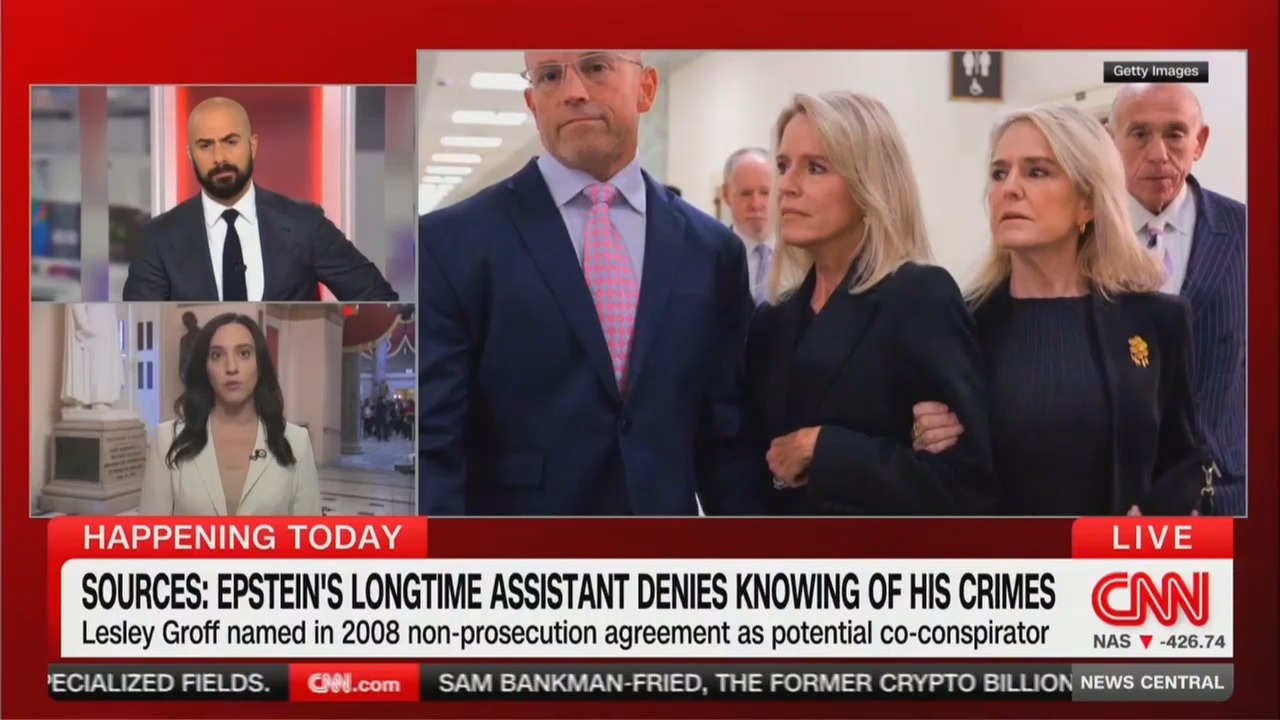
 MEDIAite
Epstein’s Exec Assistant Told Lawmakers She Arranged Calls Between Trump and Epstein ‘About Once a Quarter’ Before Their Falling-Out

 Joe.My.God.
Epstein's Assistant: I Arranged His Calls With Trump - Joe.My.God.
Overview
Lesley Groff told the House Oversight Committee on Tuesday that Jeffrey Epstein was a "master manipulator" and that she was unaware of his crimes, according to sources familiar with her closed-door testimony.
Groff's interview was conducted as part of the committee's inquiry into federal handling of investigations into Epstein and his alleged co-conspirators, which has included interviews with former Attorney General Pam Bondi and others, sources said.
Democrats on the committee, including Representative Yassamin Ansari, said they found aspects of Groff's testimony difficult to believe and urged public hearings, according to sources.
Groff worked for Epstein from 2001 until his July 2019 arrest and is mentioned more than 150,000 times in the Epstein files, and DOJ records show three $100,000 payments and one $110,000 payment to her between 2016 and 2018.
A transcript of Groff's interview is expected to be released at a later date, and House Oversight Chairman James Comer said the committee has referred two names to the Justice Department, according to committee statements.
Analysis
Center-leaning sources frame the story as an exposé of institutional proximity and possible cover-up, emphasizing Groff's long tenure, repeated file mentions, and political ties to Trump and DOJ figures. Editorial choices highlight suspicious details (Chaplain attendance, 'scheduling massages') while relying largely on denials without in-depth victim perspectives.