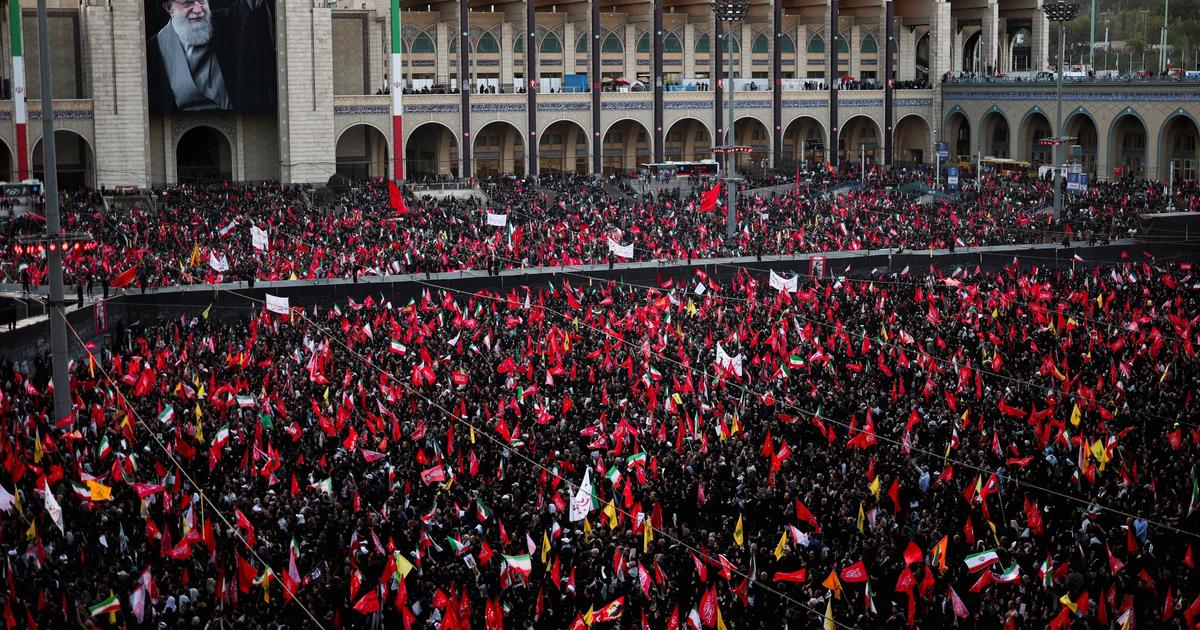
Khamenei Funeral in Tehran
Iran holds massive funeral ceremonies as succession questions swirl.
Summary
Iran began a dayslong funeral in Tehran for former Supreme Leader Ayatollah Ali Khamenei, whose burial was delayed for months after he was killed with family members in U.S. and Israeli airstrikes on Feb. 28. His body lay in state as senior clerics, officials, foreign dignitaries and large crowds attended ceremonies expected to run through a week. Three sons — Mostafa, Meysam and Masoud — appeared at funeral prayers, while his son and successor, Supreme Leader Mojtaba Khamenei, remained absent from public view.
Coverage Angles
Mass Mourning Ritual
BalancedIran is presented as staging a huge, dayslong national farewell for Khamenei, with prayers, lying-in-state ceremonies, and crowds in Tehran. The takeaway is that the funeral itself is the main event, showing the scale of public mourning and state ceremony after his death.
Succession Uncertainty
Left & CenterSeveral headlines turn the funeral into a test of who is actually in charge, noting that Mojtaba Khamenei or the new supreme leader has not appeared. That angle suggests the ceremonies are shadowed by secrecy, insecurity, and unanswered questions about Iran’s next ruler.
Anti-US Escalation
PolarizedSome coverage highlights calls for Trump’s death, fears around negotiators, and moves involving the Strait of Hormuz. The story becomes less about mourning and more about whether Khamenei’s funeral is feeding a broader confrontation with the United States and Israel.
Strength Or Weakness
Mostly CenterThe funeral is treated as a moment when Iran is trying to project unity and resilience after Khamenei was killed in war or by strikes. At the same time, the absent successor and wartime context make the display look fragile rather than fully convincing.