US Military Nearly Boards Chinese Ship
An AI-generated false report prompted a near US military operation against a Chinese ship.




10
Articles
10
Sources
Coverage mix
What happened
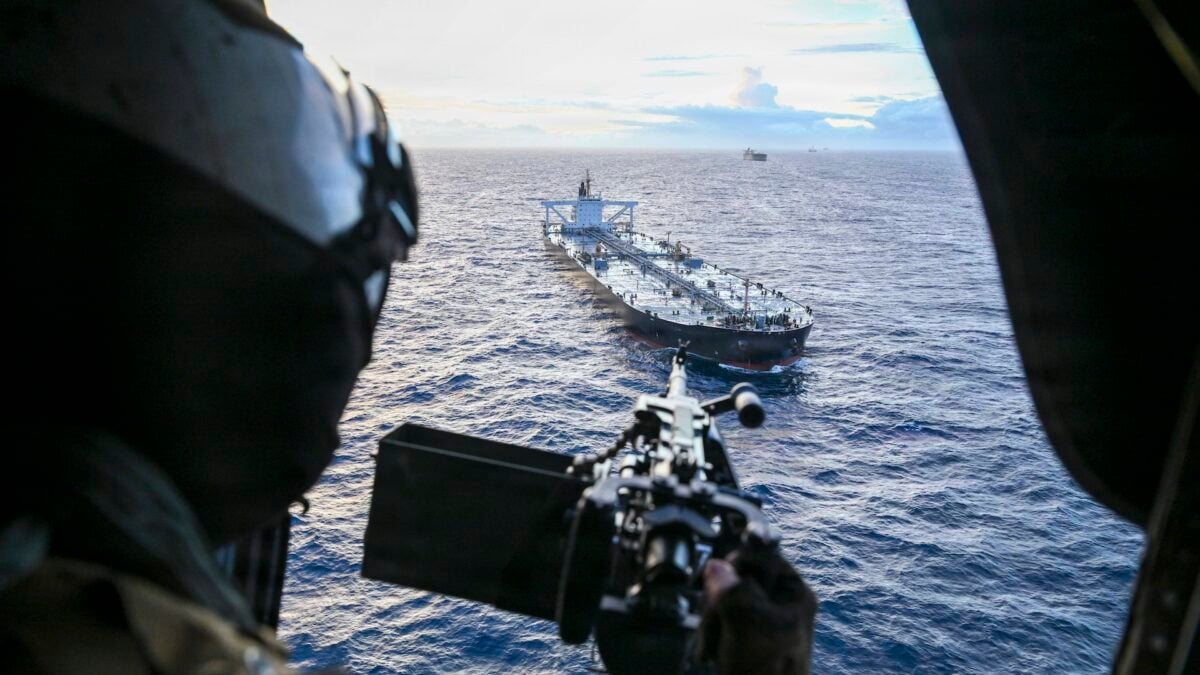
The U.S. military nearly intercepted and boarded a Chinese ship after an intelligence report falsely said it carried components for a nuclear weapons program. The report came from a Special Operations Command analyst who used an AI chatbot to synthesize the ship’s manifest; the chatbot misidentified the cargo. The episode unfolded during the U.S. war with Iran, when a clash with a Chinese vessel could have escalated into a U.S.-China armed conflict. The Pentagon has pushed AI into military intelligence, with Defense Secretary Pete Hegseth promoting AI acceleration and dominance. Armed personnel were preparing to board, and aircraft were airborne, before officials rechecked the report and canceled the mission. It remains unclear whether the chatbot was commercial or government-built.
Both sides
From the left
Left-leaning writers cast the episode as a near-war scare driven by a false AI intelligence report, also warning about hallucinations and unchecked chatbot reliance in national security decisions. CNN quoted one source who called the report “entirely false” and said it “almost started a war”. The Daily Beast treated Pete Hegseth’s AI push as reckless and dangerous, while New York Magazine described the case as an AI hallucination and overreliance warning.
From the right
Right-leaning writers treated the case less as an anti-AI indictment than as proof autonomous systems are not ready for command decisions. Townhall emphasized that a human analyst caught the false classification, using the episode to argue human judgment remains indispensable. It also framed the scare as a warning that faulty AI-assisted intelligence can bring Washington close to war with China.
Coverage•10 articles — 6 left, 3 center, 1 right
Get tomorrow's edition
Every side, every morning — free in your inbox.