Vera C. Rubin Observatory Releases First Images from World's Largest Digital Camera
The Vera C. Rubin Observatory has unveiled its first celestial images, showcasing billions of galaxies and asteroids, and enhancing our understanding of dark matter.

 PBS NewsHour
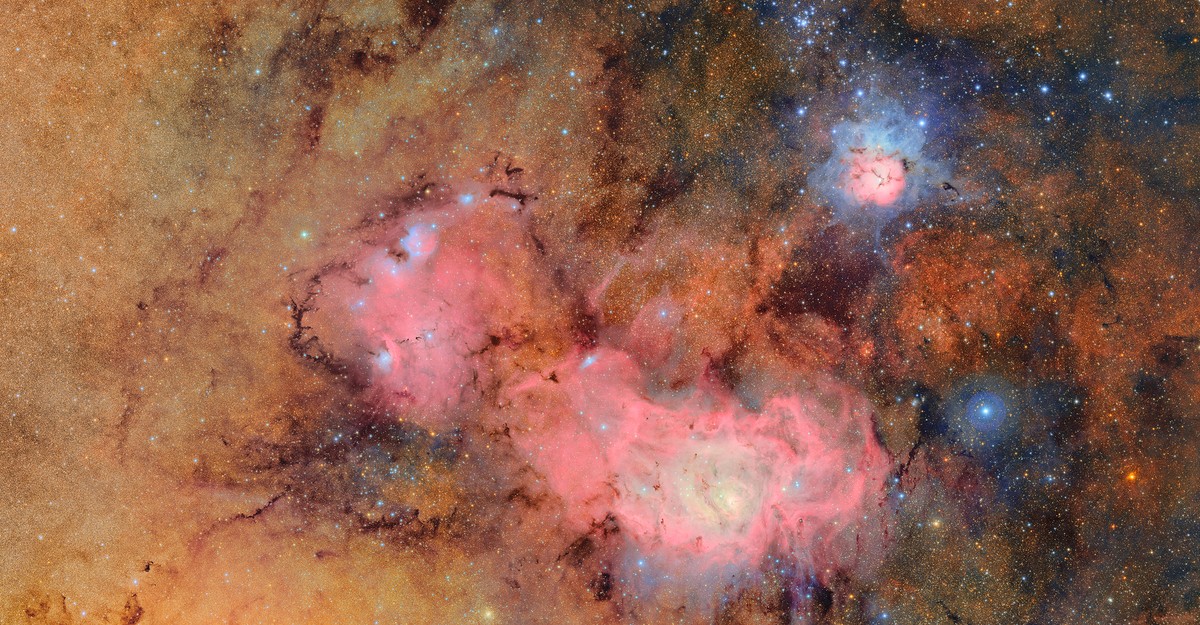
First images of universe taken by largest digital camera ever built shows colorful nebulas, stars and galaxies

 CNET
CNETVera C. Rubin Observatory Releases First Breathtaking Celestial Images

 Boston Herald
First images unveiled from world’s largest camera
 The Atlantic
A New View Into the Universe
Overview
The Vera C. Rubin Observatory, named after astronomer Vera Rubin, has released its first celestial images, focusing on dark matter evidence.
A physical data pipeline connects the observatory to SLAC National Accelerator Laboratory for image analysis, where the camera was developed.
The observatory's 3.2-gigapixel camera has captured 2,104 new asteroids and millions of galaxies within hours of operation.
The LSST camera will provide insights into dark energy and dark matter, contributing to our understanding of interstellar mysteries.
The observatory conducts full-sky scans every three to four days, capturing thousands of images each night to cover the entire sky.
Analysis
Center-leaning sources emphasize the groundbreaking nature of the Vera C. Rubin Observatory, highlighting its technological advancements and ambitious goals. They frame the observatory as a significant step in astronomical research, reflecting a sense of excitement and optimism about uncovering cosmic mysteries, while subtly acknowledging the legacy of dark matter research.
FAQ
The new images captured by the Vera C. Rubin Observatory provide unprecedented data on billions of galaxies, allowing scientists to map the distribution of dark matter through gravitational lensing and improve understanding of dark energy and dark matter evolution over time.
The Rubin Observatory's camera enables the discovery of thousands of new asteroids, including over 2,100 in just 10 hours, making it highly effective compared to other observatories which collectively find about 20,000 per year; it can also spot interstellar objects passing through the solar system.
The physical data pipeline connects the observatory to SLAC National Accelerator Laboratory, where the massive amounts of image data captured by the observatory’s camera are transmitted for analysis, enabling real-time processing and study of celestial objects.
The Rubin Observatory scans the entire visible southern sky every three to four days, capturing thousands of images each night to track changes and discover new celestial events, contributing to studies of dark matter, dark energy, and transient cosmic phenomena.
The LSST project is a decade-long mission using Rubin Observatory's wide field of view and high-resolution camera to repeatedly image the entire southern sky with unmatched detail and speed, providing a comprehensive chronicle of cosmic events to study dark matter, dark energy, and dynamic changes in the sky.

