Pioneering Quantum Mechanics Research Earns Three Scientists 2025 Nobel Prize in Physics
Three U.S. scientists, Clarke, Devoret, and Martinis, won the 2025 Nobel Prize in Physics for pioneering quantum mechanics research, advancing quantum computing and cryptography.
 BBC News
Physics Nobel: Three win prize for paving way for very powerful computers
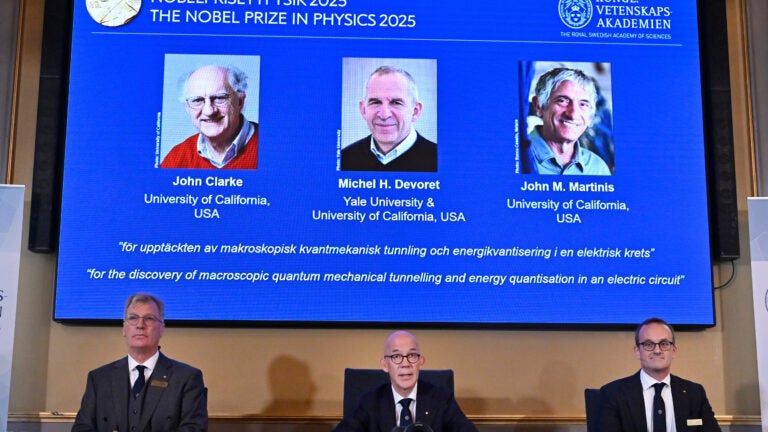
 Boston Globe
Nobel Prize in Physics goes to 3 scientists whose work advanced quantum technology

 USA TODAY
Nobel in Physics awarded to three American professors
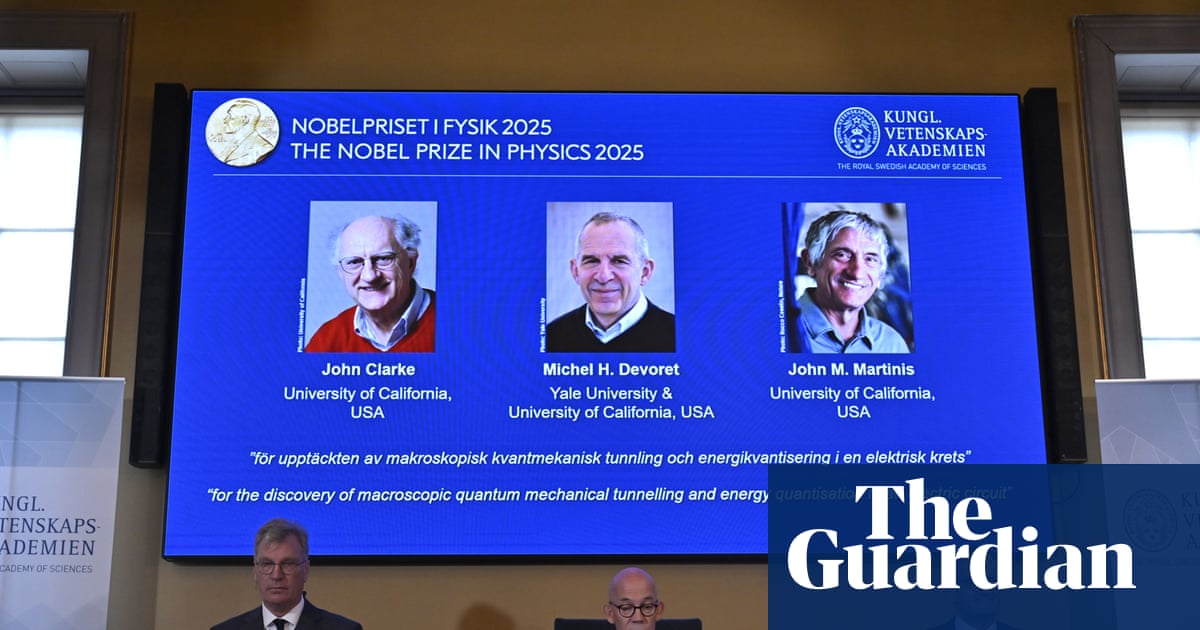
 The Guardian
Nobel prize in physics awarded to three scientists for work on quantum mechanics
Overview
John Clarke, Michel H. Devoret, and John M. Martinis, three U.S.-based scientists, were awarded the 2025 Nobel Prize in Physics for their groundbreaking work in quantum mechanics.
Their pioneering research focused on macroscopic quantum mechanical tunneling and energy quantisation in electric circuits, demonstrating quantum physics' impact on everyday-sized objects.
The laureates conducted their award-winning research in the 1980s at institutions like UC Berkeley, UC Santa Barbara, and Yale, laying foundational groundwork for future advancements.
This critical work has significant implications, paving the way for the development of powerful quantum computers, advanced quantum cryptography, and innovative sensors.
The three scientists will share a prize of 11 million Swedish kronor (approximately $1.17 million USD), with the award ceremony scheduled for December 10.
Analysis
Center-leaning sources cover the Nobel Prize in Physics with a neutral and informative approach. They focus on presenting the facts of the award, the laureates' scientific contributions, and the broader context of quantum mechanics and its technological impact. The reporting avoids loaded language or subjective interpretations, adhering to a straightforward journalistic style.
FAQ
They discovered macroscopic quantum mechanical tunneling and energy quantisation in an electric circuit, demonstrating quantum physics effects on a scale larger than individual particles.
They conducted their groundbreaking research in the 1980s at institutions including the University of California, Berkeley, University of California, Santa Barbara, and Yale University.
Their work laid foundational groundwork for the development of powerful quantum computers, advanced quantum cryptography, and innovative sensors.
It shows that quantum phenomena, previously observed only at atomic scales, can manifest on everyday-sized objects, bridging microscopic quantum behavior and macroscopic systems.
The laureates will share an award of 11 million Swedish kronor (approximately 1.17 million USD), with the ceremony scheduled for December 10, 2025.
