60,000-Year-Old Arrowheads Show Earliest Use of Plant Poison in Hunting
Chemical analysis of 60,000-year-old South African microliths identified Boophone disticha alkaloids, providing the earliest direct evidence of poisoned arrows and complex hunting planning and tracking.

 ARS Technica
These 60,000-year-old poison arrows are oldest yet found

 The Debrief
60,000-Year-Old Projectiles Are the World's First 'Poison Arrows,' Extending Earliest Use in Africa by Thousands of Years
 El Pais
Poison in arrows from 60,000 years ago: Oldest evidence of its use in human weapons discovered
Overview
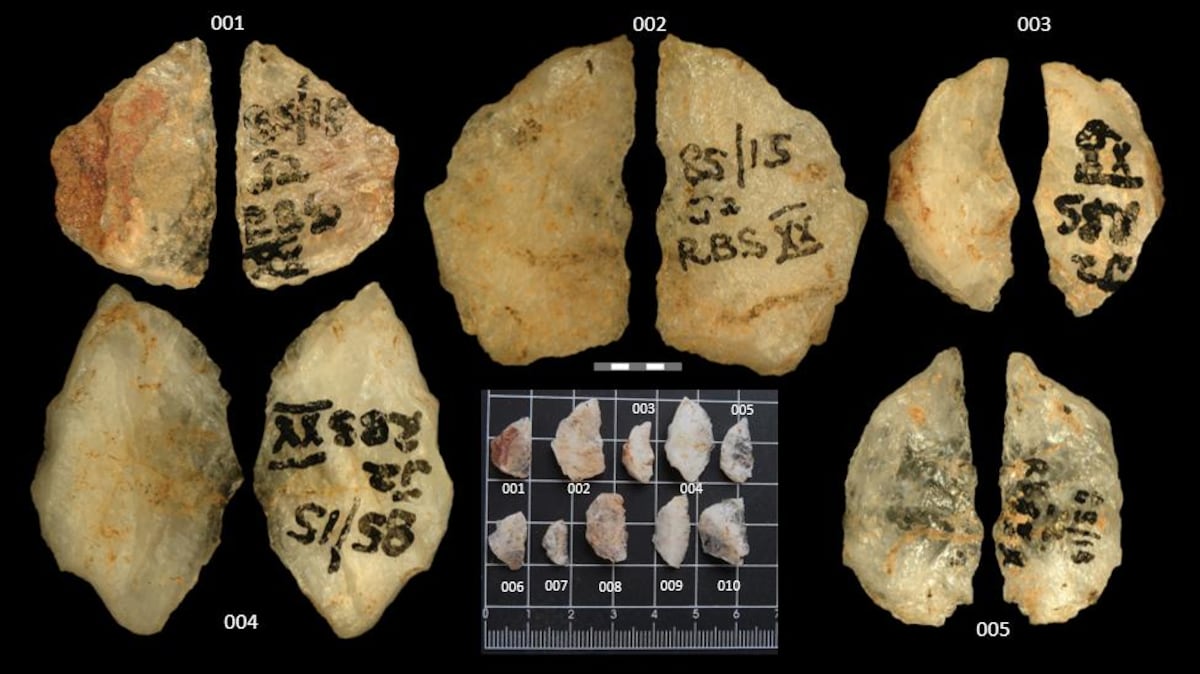
An international team analyzed 60,000-year-old quartz microlith arrowheads from Umhlatuzana Rock Shelter, KwaZulu-Natal, South Africa, finding plant-derived poison residues on several tips.
Chemical tests detected buphandrine and epibuphanisine alkaloids from Boophone disticha, confirming the presence of gifbol-based poison on five of ten sampled microliths.
This is the oldest direct evidence of poisoned projectile use, extending known use from mid-Holocene examples to roughly 60,000 years ago in the Pleistocene.
Researchers say poison arrows imply advanced cognition—knowledge of toxins, adhesive technology, delayed-action tactics, tracking, and coordinated hunting strategies over time and distance.
Comparative analysis found similar Boophone residues on 18th-century arrowheads, suggesting long continuity of botanical knowledge and preservation conditions aided chemical survival.
Analysis
Center-leaning sources frame the discovery as evidence of advanced prehistoric cognition by foregrounding researchers’ claims, emphasizing continuity and novelty, and omitting skeptical voices or methodological caveats. They highlight phrases like 'advanced understanding' and 'crucial,' prioritize team quotes and historical parallels, and structure the piece to link the find to human cognitive evolution.
FAQ
Boophone disticha is a highly toxic bulb-forming plant native to southern Africa whose bulb exudate contains potent alkaloids such as buphanidrine and epibuphanisine, which can cause severe symptoms including nausea, respiratory paralysis, and coma, making it effective for poisoning arrows by weakening or killing prey after a delay.[1]
Researchers used gas chromatography–mass spectrometry to analyze residues on ten quartz microlith arrowheads from Umhlatuzana Rock Shelter and detected the alkaloids buphanidrine and epibuphanisine, then compared these chemical fingerprints with modern Boophone disticha extracts and 18th-century poisoned arrows, confirming the presence of the same plant-derived poison.[1]
Using poisoned arrows required knowledge of toxic plants, methods to extract and apply their exudates, understanding that the poison acts with a delay, and the ability to plan tracking and coordinated hunting over time and distance, which indicates abstract causal reasoning and complex procedural knowledge comparable to modern human cognition.[1]
The Umhlatuzana Rock Shelter arrowheads are about 60,000 years old, providing the earliest direct evidence of poisoned projectiles and pushing back previously known cases, which were mainly from the mid-Holocene, by more than 50,000 years.[1]
Based on regional ecology and modern hunting practices in the area, the poisoned microlithic arrows were probably used to hunt medium to large game such as antelope, wildebeest, and possibly zebras or giraffes, which could be weakened over time by the toxin and then tracked and dispatched.