Woolly rhino genome sequenced from 14,400-year-old wolf pup's stomach
Scientists sequenced a 14,400-year-old woolly rhino genome from meat in a Siberian wolf pup's stomach, revealing a genetically healthy population before rapid, climate-linked extinction event.
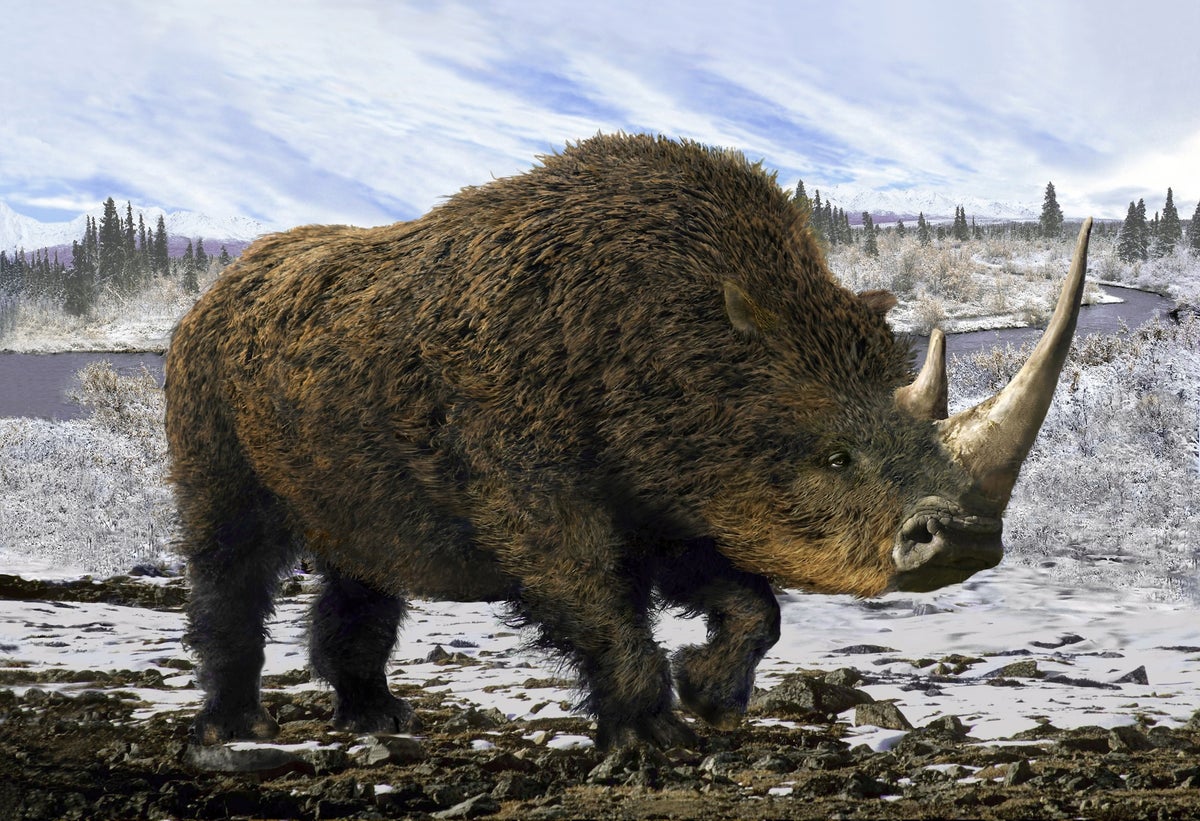
 Scientific American
Scientists Find Extinct Rhino DNA in Mummified Wolf Puppy’s Stomach
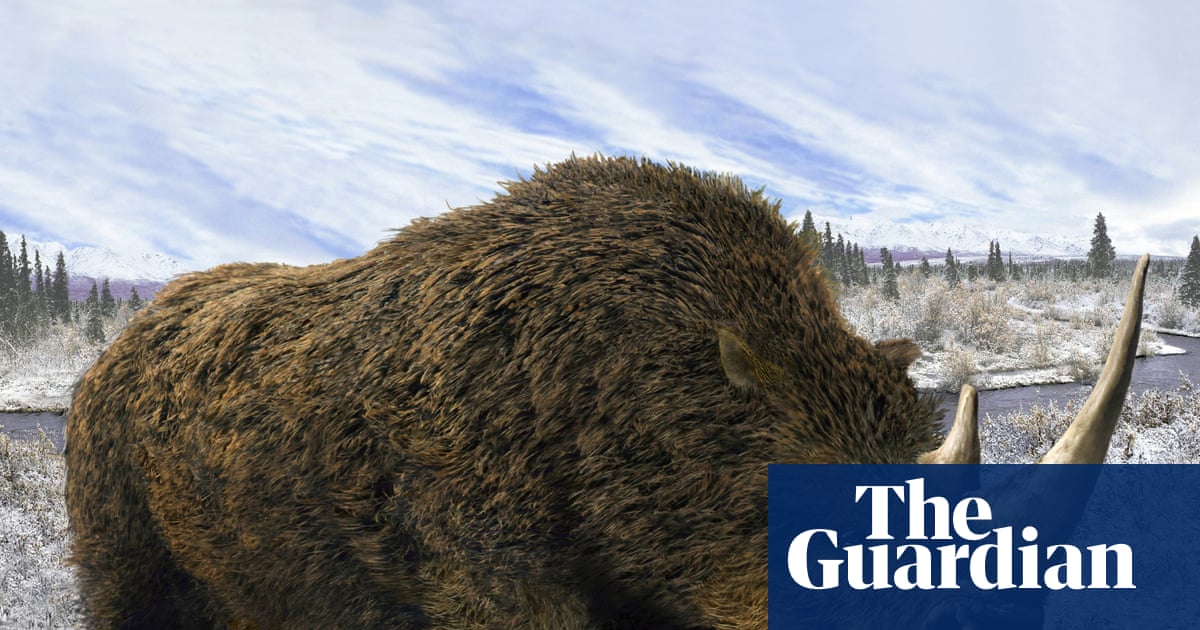
 The Guardian
Wolf’s dinner preserved in Siberia for 14,400 years sheds light on woolly rhino
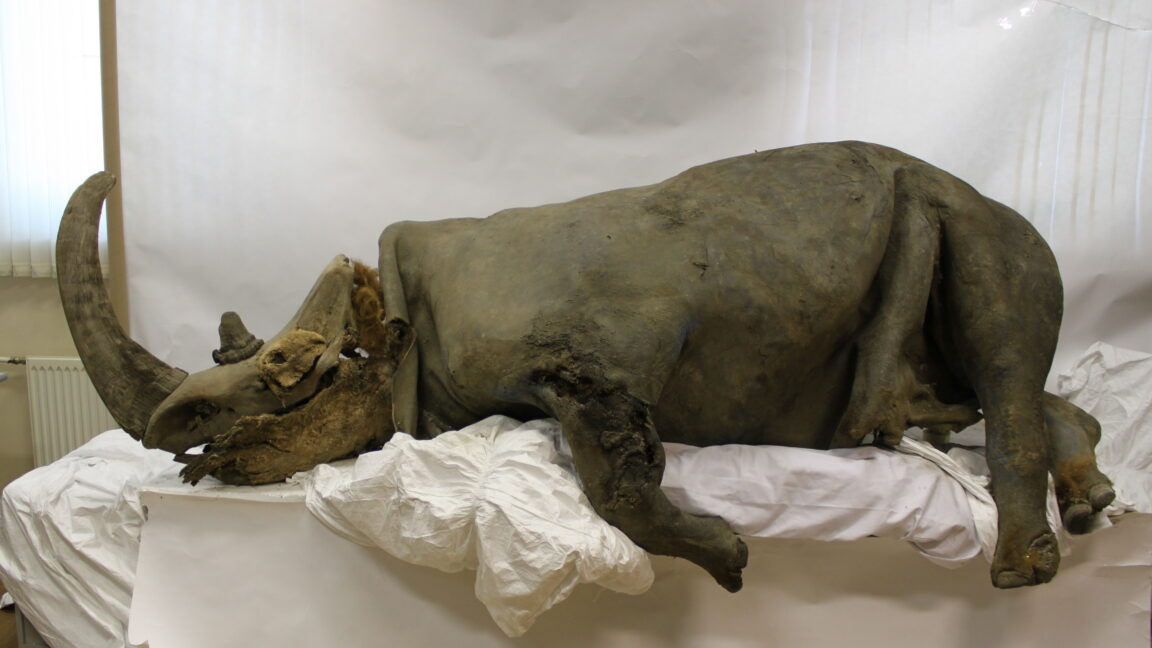
 ARS Technica
Scientists sequence a woolly rhino genome from a 14,400-year-old wolf’s stomach

 Gizmodo
You Won't Believe Where Scientists Found a 14,400-Year-Old Woolly Rhino Genome
Overview
Researchers sequenced a complete woolly rhinoceros genome extracted from partially digested meat in a mummified wolf pup found near Tumat, northeastern Siberia, dated about 14,400 years old.
This is the first full genome recovered from an Ice Age animal found inside another animal's stomach, demonstrating new paleogenomic techniques for low-quality ancient samples.
Comparison with genomes dated 18,000 and 49,000 years ago showed no increased inbreeding or genomic erosion, indicating a genetically healthy population shortly before extinction.
Researchers infer a rapid species collapse over a few hundred years, likely linked to abrupt warming during the Bølling–Allerød interstadial around 14,700–12,800 years ago.
The study highlights permafrost-preserved specimens' value for extinction research and suggests implications for understanding modern biodiversity loss under anthropogenic climate change.
Analysis
Center-leaning sources frame the discovery as a decisive, climate-driven extinction narrative, using sensational language and selective sourcing. Editorial choices—clickbait headline, playful metaphors ("yesterday’s lunch"), and exclusive reliance on the study team’s quotes—amplify certainty while omitting independent expert critique and alternative explanations or broader context.
FAQ
Scientists extracted and sequenced a complete woolly rhinoceros genome from partially digested meat found in the stomach of a 14,400-year-old mummified wolf pup discovered in permafrost near Tumat, northeastern Siberia.
The analysis showed no signs of inbreeding or genomic erosion compared to older genomes from 18,000 and 49,000 years ago, indicating a genetically healthy and viable population shortly before extinction.
The study suggests a rapid population collapse over a few hundred years, linked to abrupt warming during the Bølling–Allerød interstadial (14,700–12,800 years ago), rather than human hunting, as the population remained viable for 15,000 years after humans arrived in Siberia.
It is the first full genome recovered from an Ice Age animal found inside another animal's stomach, demonstrating new techniques for sequencing low-quality ancient DNA samples from permafrost-preserved specimens.
The study highlights the value of permafrost specimens for understanding past extinctions and provides insights into how rapid climate change can lead to biodiversity loss, with relevance to modern anthropogenic climate impacts.