Baby Chicks Show Bouba-Kiki Sound–Shape Links
Study in Science finds one- to three-day-old chicks link 'bouba' to round shapes and 'kiki' to spiky shapes, challenging theories that the effect uniquely explains human language origins.



Overview
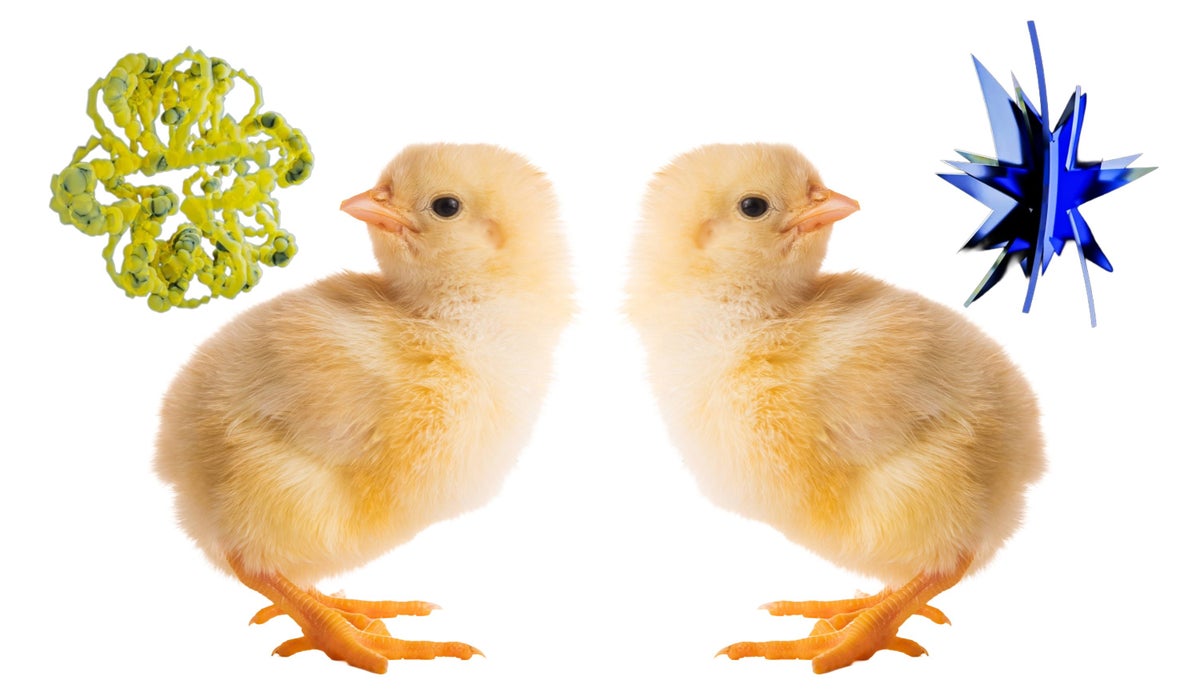
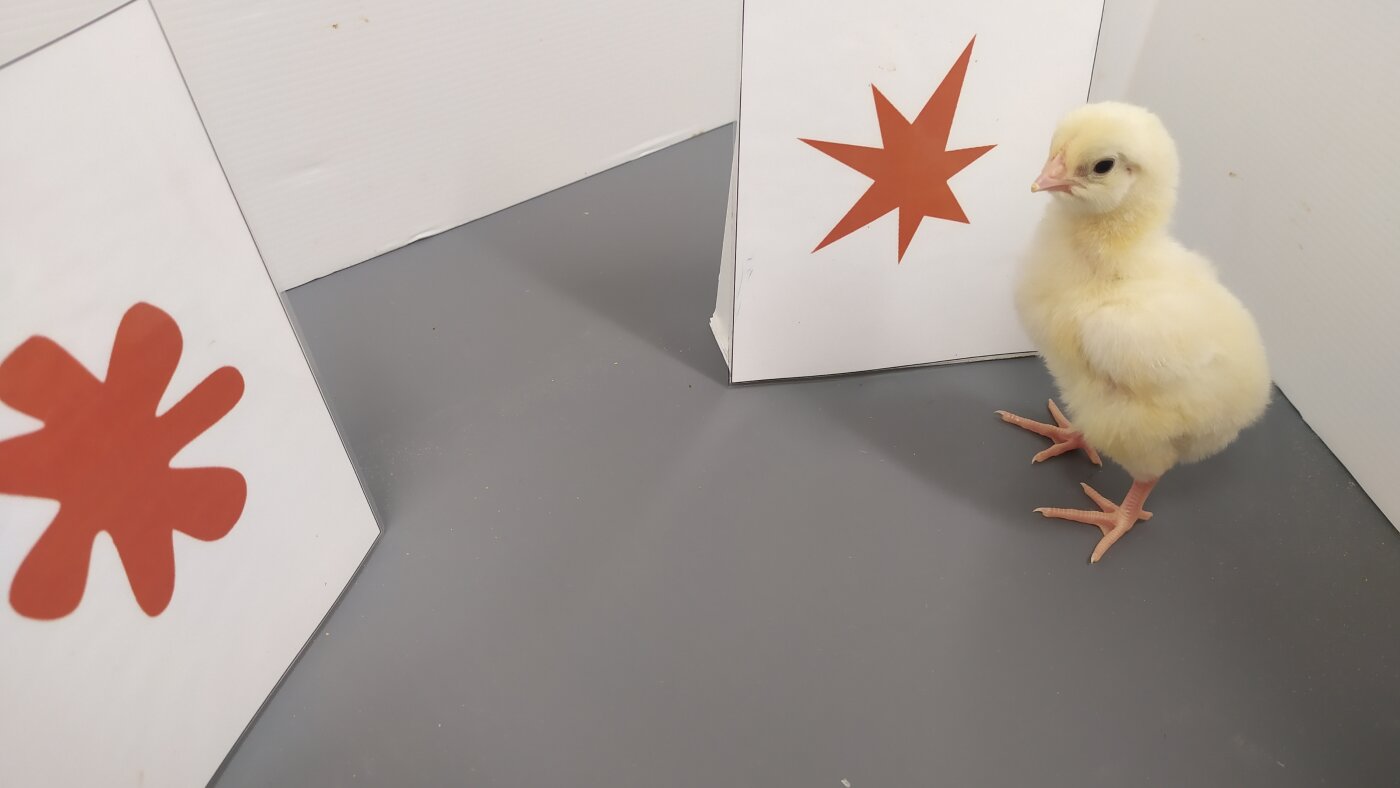
A study published in Science found one- to three-day-old chickens associated the sound "bouba" with rounded shapes and "kiki" with spiky shapes.
The experiments tested chicks within their first hours and days of life to rule out learned experience, using panels and moving video objects while researchers played the sounds, researchers said.
Researchers Maria Loconsole, Silvia Benavides-Varela and Lucia Regolin reported the results, and linguist Marcus Perlman said he was surprised by the chicks' performance.
The finding echoes human infant results first noted in 1947, contrasts with failed great ape tests in 2019 and 2022, and one commenter noted birds and mammals parted 300 million years ago.
The authors argue the bias may reflect an ancient perceptual linkage that informed but did not uniquely cause human language, and they say further comparative tests are needed.
Analysis
Center-leaning sources present this as neutral science reporting, grounding claims in named researchers, prior studies and methods (e.g., newly hatched chickens, ages). Language is largely descriptive and cautious; direct quotes provide source content. Only mild colloquial/sensational wording ("weirdest bit") appears, but it doesn't alter the balanced, evidence-focused narrative.
FAQ
The bouba-kiki effect is the tendency to associate the nonsense word 'bouba' with rounded shapes and 'kiki' with spiky shapes, observed across cultures and ages in humans.
One- to three-day-old chicks spontaneously chose spiky shapes when hearing 'kiki' and round shapes when hearing 'bouba', tested shortly after hatching to control for learning.
Unlike great apes, which showed no bouba-kiki effect in 2019 and 2022 tests, newborn chicks exhibited it, suggesting the effect predates human language evolution.
The effect likely reflects an ancient perceptual mechanism shared across species, informing but not uniquely causing human language, with further comparative tests needed.
Researchers Maria Loconsole, Silvia Benavides-Varela, and Lucia Regolin reported the results, with linguist Marcus Perlman commenting on the findings.