Rubin Observatory Issues 800,000 Night-Sky Alerts, Eyes Millions
Rubin's Alert Production Pipeline sent 800,000 notifications on February 24 and is designed to scale to as many as seven million alerts per night.

 Gizmodo
Astronomers Wake Up to 800,000 Notifications From Observatory Watching the Night Skies

 The Debrief
Real-Time Night-Sky Surveillance: Millions of Nightly Signals from Space Expected as Rubin Observatory Comes Online
 Scientific American
Rubin Observatory has started paging astronomers 800,000 times a night
Overview
The Vera C. Rubin Observatory's Alert Production Pipeline issued about 800,000 notifications to astronomers on February 24, the observatory said.
The automated alerts arrive within minutes of an image and are designed to let researchers request time-critical follow-up observations, according to pipeline lead Eric Bellm and software operations lead Hsin-Fang Chiang.
NSF program director Luca Rizzi and DOE program manager Kathy Turner said the alerts will let scientists follow transient events and reflect the observatory's research infrastructure value.
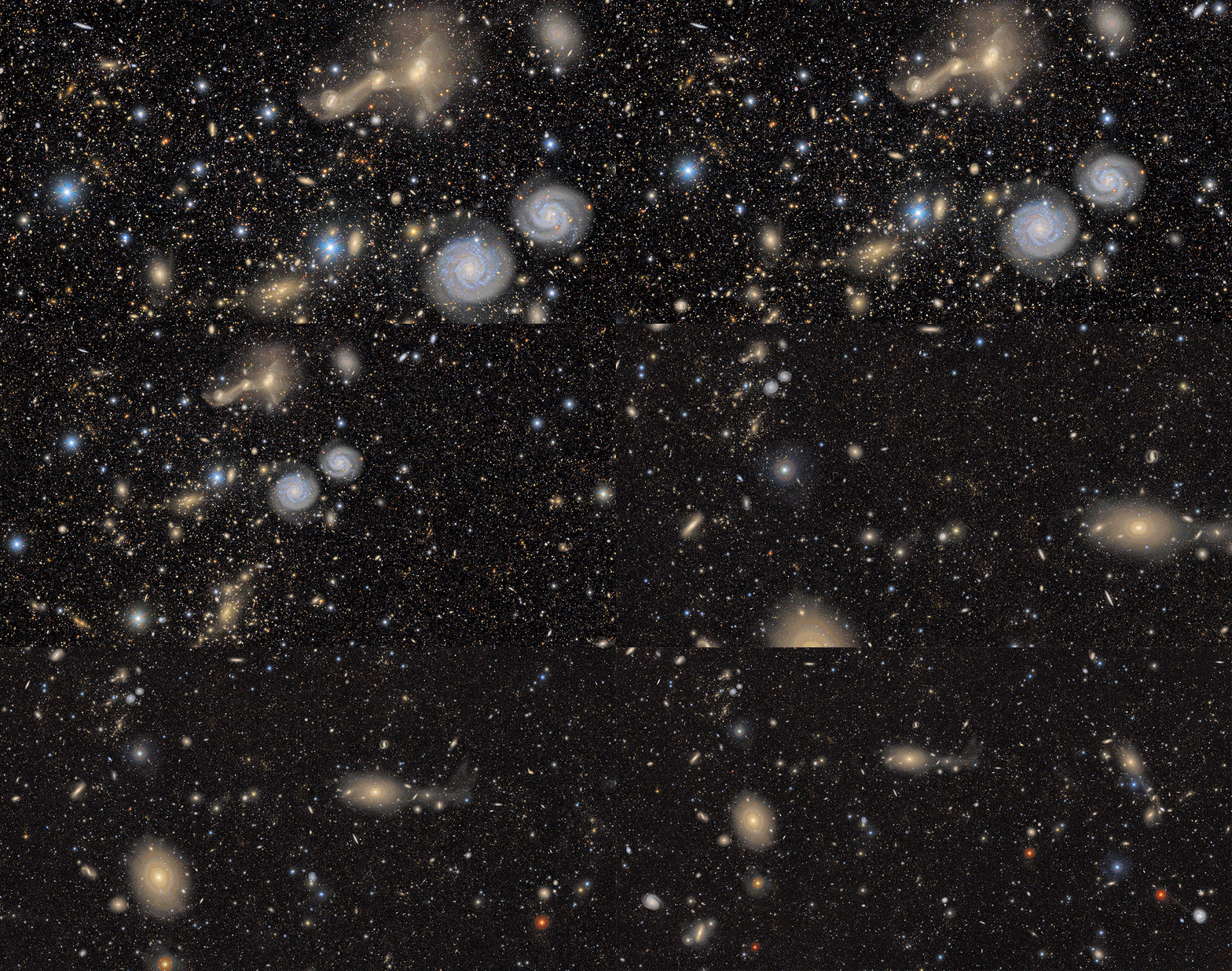
Rubin's system pairs a 3,200-megapixel camera with an 8.4-meter (28-foot) primary mirror, developers built the pipeline to process 10 terabytes of images per night, and early images captured millions of galaxies and 2,104 new asteroids.
The alert release precedes the Legacy Survey of Space and Time, which is slated to begin later in 2026 and will create a ten-year time-lapse of the southern sky.
Analysis
Center-leaning sources frame Rubin’s launch as a triumph: editorial framing uses celebratory language ("unprecedented," "groundbreaking") and prioritizes institutional voices (NSF, DOE, university leads). Source content consists of optimistic quotes about scale and speed; editorial choices spotlight those positives while omitting critical perspectives (operational limits, data overload, cultural/environmental concerns).
FAQ
The Alert Production Pipeline is an automated software system that processes images from the Rubin Observatory, detects changes like new asteroids or exploding stars by comparing to templates, and sends public alerts within 60 seconds to enable time-critical follow-up observations.
The pipeline issued about 800,000 alerts on February 24, and it is designed to scale up to seven million alerts per night.
Alerts notify about transient events such as new asteroids, exploding stars (supernovae), changes in brightness, actively feeding black holes, and other night-sky variations.
It features a 3,200-megapixel camera paired with an 8.4-meter primary mirror, processing 10 terabytes of images per night, with alerts generated within two minutes of detection.
The LSST is slated to begin later in 2026 and will create a ten-year time-lapse movie of the southern sky over its duration.