Artemis II Returns After Record-Breaking Lunar Flyby; Budget Cuts Loom
Four astronauts splashed down after a 10-day lunar flyby that set distance records and yielded rare photos, even as proposed deep cuts to NASA's budget raise questions about the program's future.
 Salon
SalonBack from the moon: Artemis astronauts safely return to Earth

 New York Post
Artemis II crewmembers struggle to walk after experiencing Earth’s gravity again following historic moon mission
 The Post Millennial
Artemis II crew safely splashes down after successful mission around the moon

 CNET
CNETArtemis II Astronauts Are Home Safe
Overview
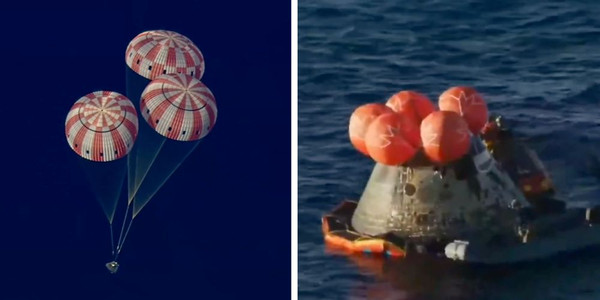
The Artemis II Orion capsule splashed down in the Pacific Ocean off San Diego at 8:07 p.m. ET after a nearly 10-day mission, NASA and mission briefings confirmed.
The mission sent Reid Wiseman, Victor Glover, Christina Koch and Jeremy Hansen around the far side of the moon, breaking Apollo 13's distance record by about 4,100 miles during a 252,756-mile outbound peak, and included a seven-hour lunar flyby with rare photos and an in-space solar eclipse.
NASA officials and the crew hailed the mission as a success that tests Orion's life support and prepares Artemis III, but mission teams reported issues including a toilet that sometimes failed, faulty sensors, and a propellant leak in the service module that must be fixed for future flights.
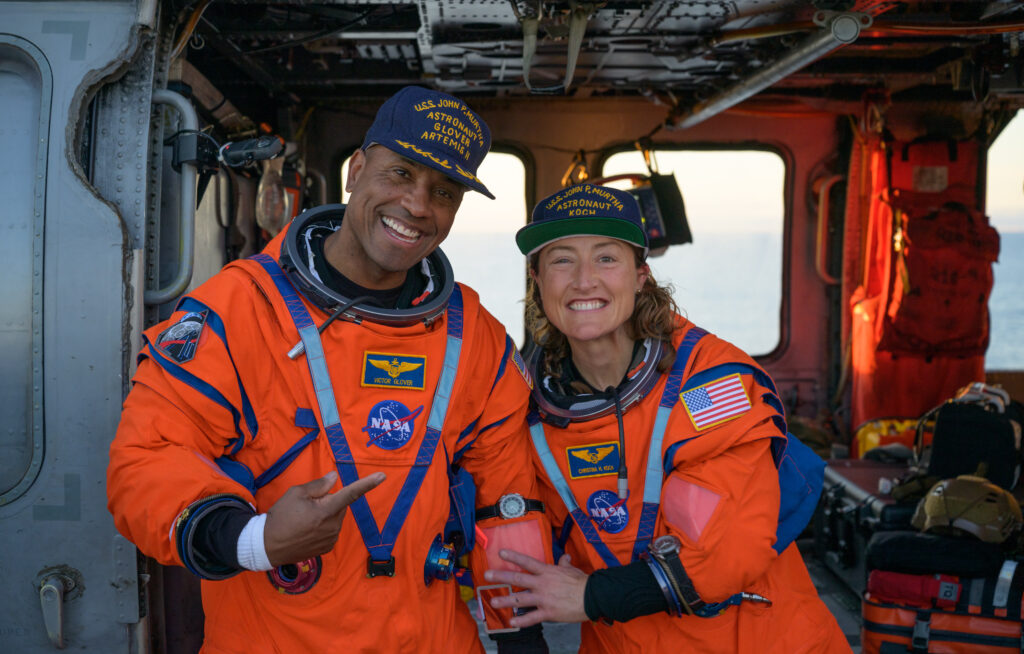
The four astronauts were airlifted to the USS John P. Murtha for medical checks and celebrated by officials and members of the public, while President Donald Trump congratulated the crew and said he would welcome them to the White House soon.
Despite the triumph, the White House proposed cuts of roughly 23% to NASA's budget, including a 46% cut for space science, which analysts and space policy experts warned could imperil future Artemis goals such as a 2028 lunar landing.
Analysis
Center-leaning sources frame the Artemis II return as an unambiguous triumph, using celebratory language, selective official sources, and forward-looking momentum. Editorial choices highlight NASA quotes and technical successes ("amazing people", "perfect accomplishment"), emphasize next missions, and omit independent critics, costs, or program risks, producing a confidently optimistic narrative.