Lyrid Meteor Shower Peaks With Favorable Moon
Comet Thatcher debris will produce roughly 5–20 meteors per hour at peak as a waxing crescent moon sets before viewing, officials said.
 Boston Globe
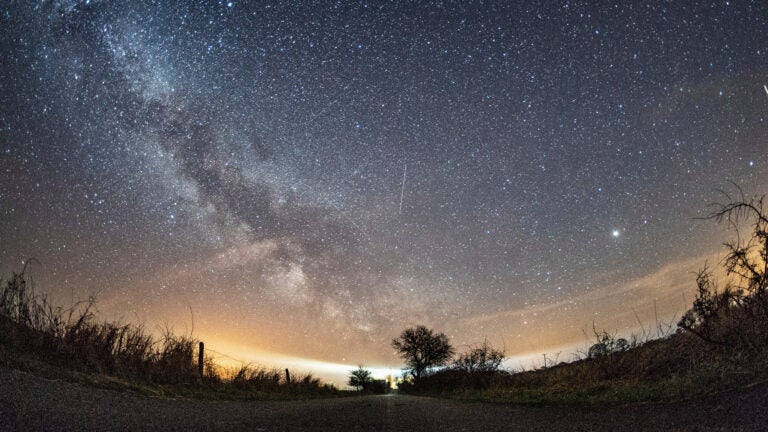
The Lyrid meteor shower is visible now and peaking soon. Here's how to spot it.
 PBS NewsHour
How to spot the Lyrid meteor shower that is peaking this week

 CNET
CNETDouble Dazzle: This Weekend, There Are 2 Meteor Showers in the Night Sky
 Associated Press
The Lyrid meteor shower is visible now and peaking soon. Here's how to spot it

 World News Group
Lyrid meteor shower expected to peak Wednesday
Overview
The Lyrid meteor shower is expected to peak on April 22, and the American Meteor Society said a waxing crescent moon will set before peak viewing.
The display occurs because Earth is passing through debris left by comet Thatcher, which returns about every 415 years, according to a researcher who studies meteorites.
NASA and meteor groups advised observers to go out after midnight, move away from city lights, and allow 15 to 30 minutes for eyes to adjust before watching.
Under dark skies observers can expect roughly 5 to 20 meteors per hour at peak, views will be best in the Northern Hemisphere, and the shower runs through April 30, officials said.
The next major meteor shower is the Eta Aquarids, which meteor groups expect to peak between May 5 and May 6.
Analysis
Center-leaning sources present this coverage neutrally: they use factual, plain language, cite the American Meteor Society for meteor rates, and offer practical, nonjudgmental viewing advice (timing, radiant, moon phase). The piece favors informational detail over opinion, lacks loaded terms or selective perspective, and does not omit relevant counterpoints.