OpenAI Releases GPT-5.3‑Codex, Calls It Instrumental in Its Own Development
OpenAI released GPT-5.3‑Codex, a 25% faster agentic coding model available via CLI, IDE, web and a macOS app; API access is not yet available.


Overview
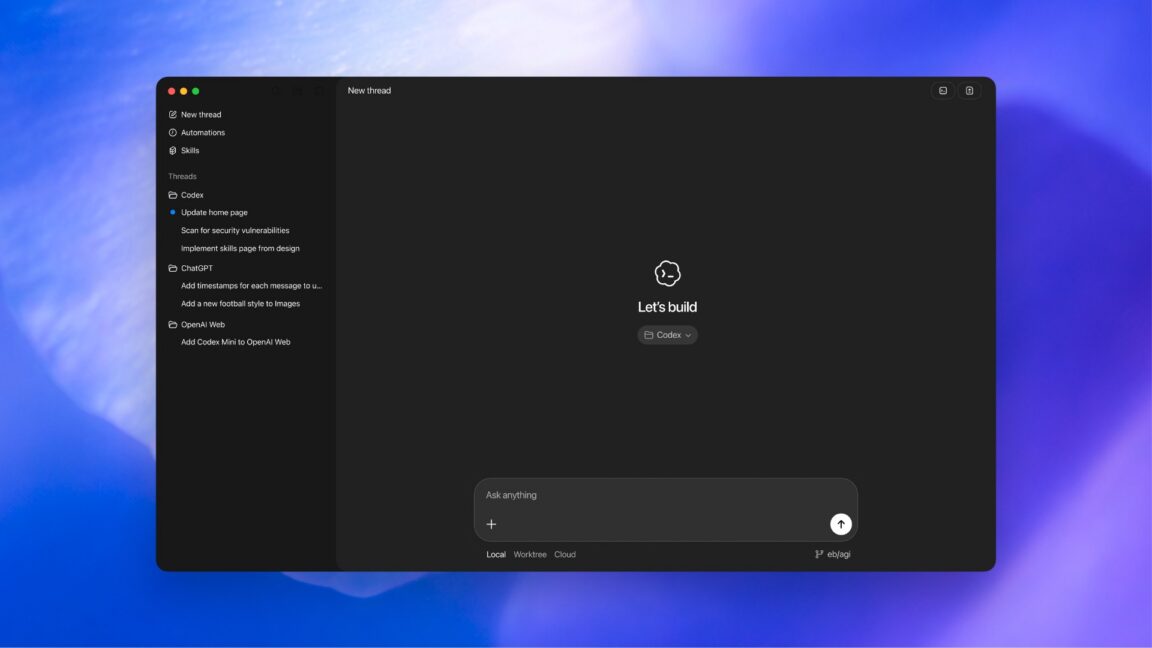
OpenAI released GPT-5.3‑Codex, available via command line, IDE extension, web interface and a macOS desktop app, with API access not yet available, OpenAI said.
OpenAI said GPT-5.3‑Codex outperformed GPT‑5.2‑Codex and GPT‑5.2 on SWE‑Bench Pro and Terminal‑Bench 2.0 and runs about 25% faster in company testing.
Anthropic released a competing agentic coding model about 15 minutes before OpenAI after moving its timetable, according to company release logs and OpenAI statements.
OpenAI said the Codex desktop app has more than 500,000 downloads and that the company designated GPT‑5.3‑Codex as 'high‑capability' for cybersecurity under internal risk guidelines.
OpenAI said it will offer API access later and aims to expand Codex to operate computers end‑to‑end, while independent researchers cautioned claims the model 'built itself' overstate human roles.
Analysis
Center-leaning sources present the OpenAI launch as competitive tech news, leaning on company claims ('turbo-charge', 'transform', '25 percent faster', 'instrumental in creating itself') without critical context. They emphasize timing against Anthropic, amplifying a race narrative while offering limited independent assessment or skeptical sourcing.
FAQ
GPT-5.3-Codex is available via the macOS app, CLI, IDE extension, and web interface for paid ChatGPT plans. API access is not yet available but is planned soon.
It outperforms GPT-5.2-Codex and GPT-5.2 on SWE-Bench Pro and Terminal-Bench 2.0 benchmarks and runs 25% faster due to infrastructure improvements.
It is the first model classified as 'high-capability' in cybersecurity under OpenAI's Preparedness Framework, with layered safeguards activated.
Early versions assisted in debugging training, managing deployment, and diagnosing tests, accelerating its development, though independent researchers note this overstates human roles.
Released on February 5, 2026; API access is coming in the following weeks with no exact date announced.