Zuckerberg Testifies in Landmark Youth Addiction Trial
Zuckerberg denied ordering teams to boost 'time spent' while plaintiffs use Meta internal documents showing targeting of tweens and teens.

 Wired
WiredMark Zuckerberg Tries to Play It Safe in Social Media Addiction Trial Testimony
 Business Insider
Parents showed up to face Mark Zuckerberg as he took the stand in a social media addiction trial

 Epoch Times
Meta Chief Zuckerberg Testifies in High-Stakes Social Media Addiction Trial in Los Angeles
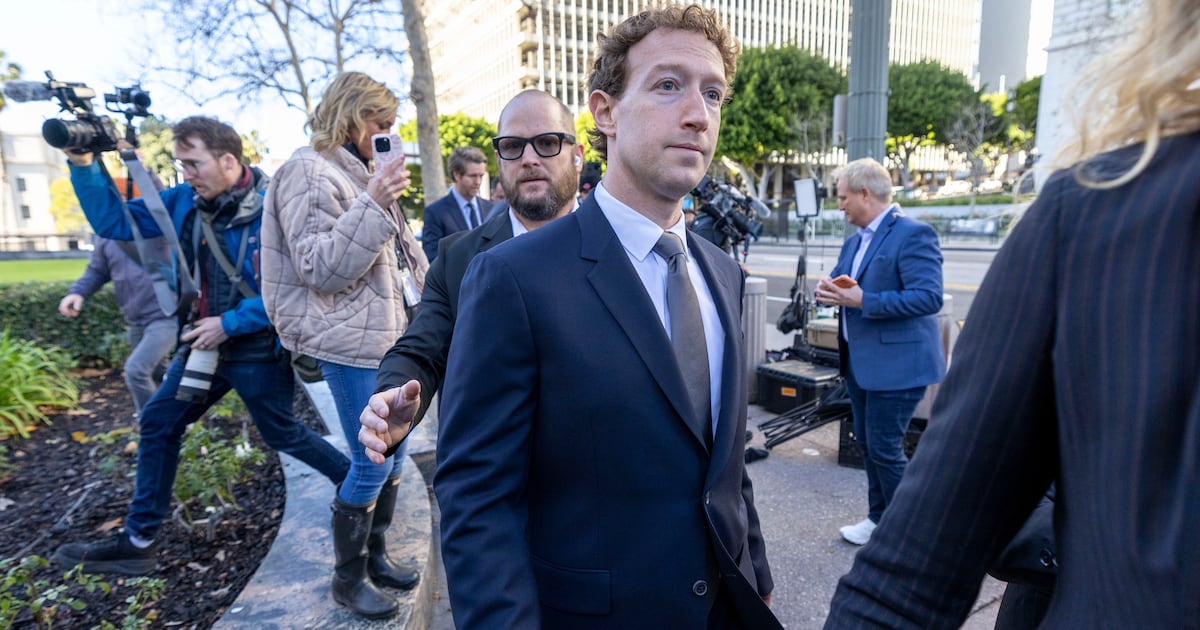
 Daily Beast
Billionaire Zuck Arrived at Landmark Trial in Ill-Fitting Suit
Overview
Mark Zuckerberg testified Wednesday in Los Angeles in a landmark trial accusing Meta of designing Instagram and other apps to addict children, and he denied setting company-wide orders to increase "time spent," according to courtroom exchanges.
The case is a bellwether drawn from roughly 1,600 similar lawsuits and could influence settlement talks across those pending cases, according to court filings and trial coverage.
Parents who say their children were harmed attended the hearing, including Lori Schott who said she stared at Zuckerberg after losing her daughter Annalee to suicide in 2020, according to reporting.
Court evidence includes a 2015 email referencing a 12% "time spent" increase goal and a 2018 document estimating about four million Instagram users under 13, roughly 30% of U.S. 10- to 12-year-olds.
The trial, described as expected to run six weeks, will include more expert testimony and the plaintiff K.G.M., and jurors will determine liability with implications for thousands of related lawsuits.
Analysis
Center-leaning sources frame the story toward the plaintiffs' perspective by foregrounding emotional parent testimonials and confrontational verbs ('stared down,' 'showed up to face'), while including but downplaying Meta's defenses later. Editorial choices emphasize harm narratives and omit scientific or expert skepticism about causation, creating sympathy and a presumption of corporate responsibility.
FAQ
Plaintiffs have submitted internal documents and emails as evidence of Instagram's engagement targets. A 2016 email from Zuckerberg referenced a goal to increase time spent on apps by 12% over three years[2]. Additionally, a 2022 document from Instagram head Adam Mosseri stated that Instagram's "primary goal" is to ensure people stay engaged with the app, especially among teens[2]. Court evidence also includes a 2018 document estimating about four million Instagram users under 13, roughly 30% of U.S. 10- to 12-year-olds[1]. Despite these documents, Zuckerberg testified that the company does not set goals for time spent on Instagram for team execution, characterizing such metrics as industry measurement tools rather than directives[1].
