Massive 8.8 Magnitude Earthquake Triggers Pacific Tsunami Warnings
An 8.8 magnitude earthquake off Russia's Kamchatka Peninsula triggered widespread tsunami warnings across the Pacific, prompting evacuations in Hawaii and Japan, with waves already observed.
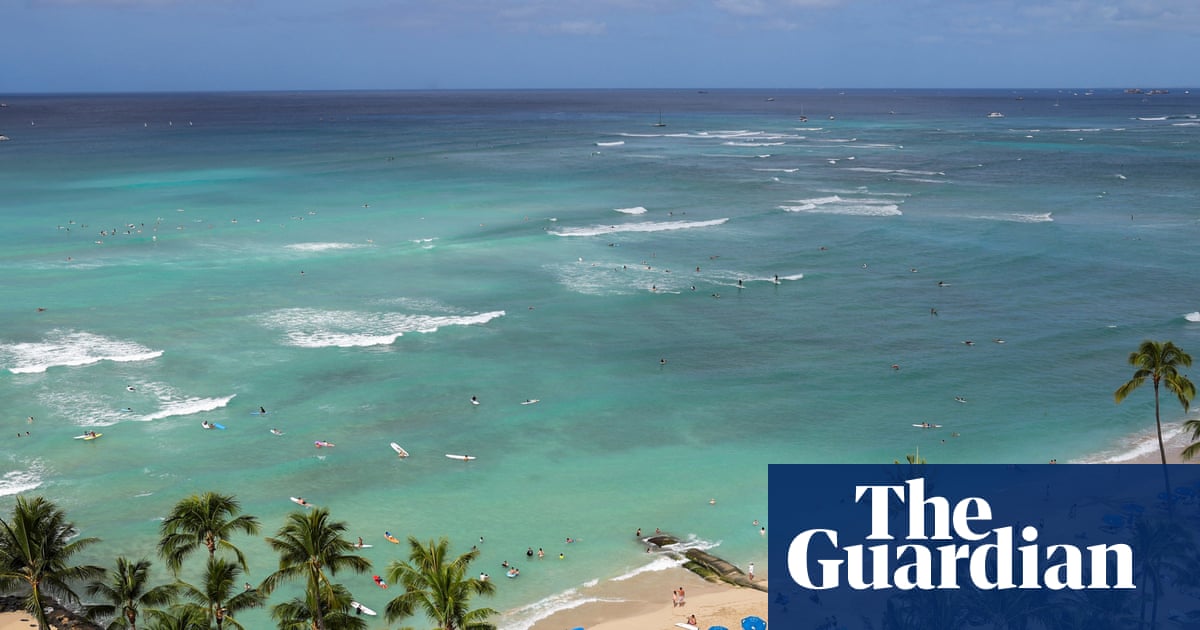
 The Guardian
With tsunami warnings lifted, millions return home after powerful Pacific earthquake

 NPR
NPRWhat makes a tsunami — and what to do if one comes

 USA TODAY
What is the largest tsunami to hit the US? See where it struck.

 PBS NewsHour
Hawaii avoids major damage after massive earthquake triggers tsunami
Overview
An 8.8 magnitude earthquake, one of the strongest since 2011, struck approximately 85 miles off Russia's Kamchatka Peninsula, initiating a major seismic event in the Pacific region.
This powerful earthquake immediately triggered extensive tsunami warnings and watches across the Pacific, impacting Alaska, Hawaii, Japan, and the entire US West Coast, raising widespread alert levels.
Tsunami waves were forecasted for Hawaii after 7:15 p.m. local time, with initial 30-centimeter waves already observed reaching Nemuro, Japan, indicating an immediate threat.
Coastal communities in Hawaii and Japan, including Hokkaido, initiated urgent evacuations to higher ground, with sirens blaring in Honolulu to urge residents to move to safety.
Authorities warned of possible 1 to 3 meter waves along affected coastal areas, while New Zealand also cautioned about strong and unusual currents, highlighting the broad Pacific impact.
Analysis
Center-leaning sources provide factual, informative coverage of the tsunami advisory, focusing on current impacts and scientific explanations. They prioritize clarity and context, avoiding sensationalism while offering historical comparisons and expert insights into the nature of tsunamis and earthquake magnitudes, demonstrating a commitment to objective reporting.
FAQ
The 8.8 magnitude earthquake near Kamchatka is one of the strongest since 2011 and ranks within the top 10 largest earthquakes ever recorded, being the largest since the 2011 Magnitude 9.0 Tohoku, Japan earthquake and likely the joint sixth largest ever recorded by seismometers.
A large earthquake magnitude alone does not guarantee a massive tsunami; tsunami size depends on vertical displacement of the seafloor. The earthquake's rupture pattern did not create sufficient vertical seafloor deformation to generate very large waves, resulting in smaller-than-expected tsunami waves reaching affected areas.
Tsunami warnings and evacuations were issued for multiple Pacific regions including Russia's Kamchatka Peninsula and Kuril Islands, Japan (notably Hokkaido), Hawaii, Alaska, Chile, the US West Coast, and New Zealand, due to the risk of significant waves and unusual currents.
Tsunami waves of 3 to 4 meters (10 to 13 feet) were recorded around Russia's Kamchatka and Kuril Islands, about 30 centimeters (1 foot) waves reached Nemuro, Japan, and waves of 1 to 3 meters were forecast along certain coastal areas. Despite this, some locations like Hawaii reported waves of no significant consequence, and damage was limited though some buildings and a kindergarten were affected near Kamchatka.
The earthquake was a 'megathrust' event caused by the subduction of the Pacific Plate beneath the North American Plate at a major tectonic boundary, where accumulated strain released suddenly as the locked megathrust fault slipped over a large area, producing a major rupture.