FAA's Oversight Leads to Potential Airliner and Helicopter Collision
The FAA neglected to alert an airliner about a possible collision with a helicopter, despite having issued prior warnings and recommendations.




Overview
The FAA did not inform an airliner of a potential collision risk with a helicopter.
Prior warnings and recommendations about the risk were issued but not acted upon.
The incident raises concerns about air traffic safety protocols.
The failure to communicate effectively could have led to a serious accident.
This oversight highlights the need for improved FAA communication and response measures.
Analysis
FAQ
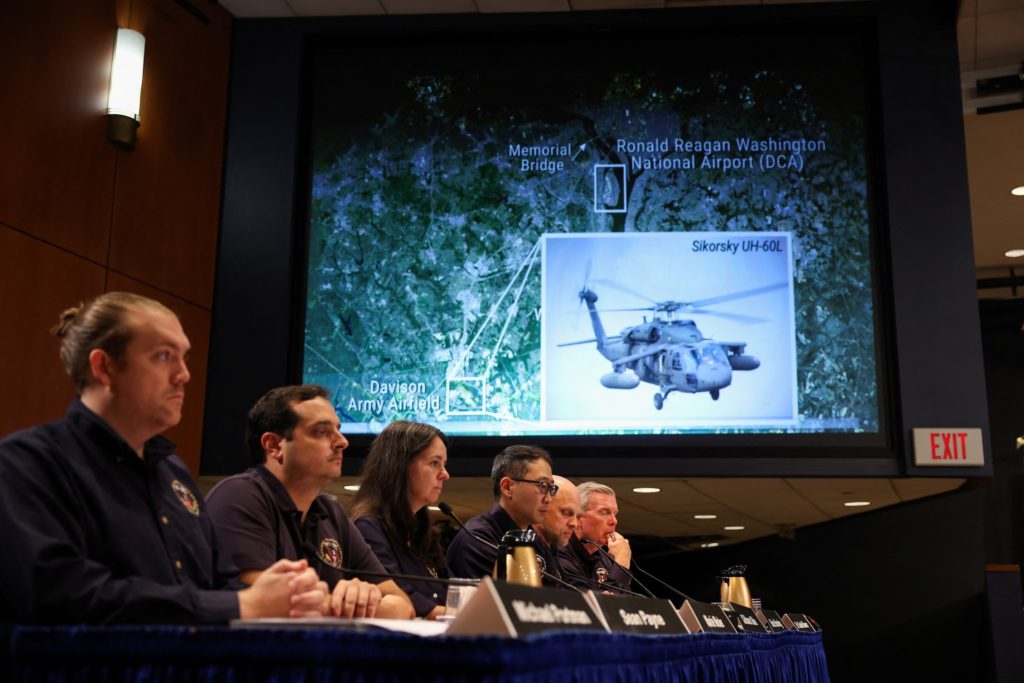
The collision was caused by the helicopter flying at an altitude above the permitted 200 feet limit near Reagan Airport, combined with barometric altimeter errors and the helicopter pilot missing air traffic control instructions due to a radio communication overlap.
The FAA did not effectively communicate the collision risk to the airliner despite prior warnings; an air traffic controller was managing both airplane and helicopter traffic simultaneously and there was a missed radio transmission during a critical instruction to the helicopter pilots.
Yes, the barometric altimeters on the helicopters tested showed discrepancies of 80 to 130 feet, which is within accepted variability but could have contributed to inaccurate altitude readings, complicating separation between aircraft.
A 2022 FAA working group considered moving helicopter traffic away from the airport but ultimately did not implement changes; the NTSB has highlighted the need for improved FAA communication, better air traffic management, and evaluation of altitude equipment to prevent similar accidents.
The air traffic controller was handling both airplane and helicopter traffic simultaneously, describing the workload as moderately complex but manageable, with no dedicated controller for the helicopters at that time, which may have contributed to the oversight.

