Chinese Leader Xi Jinping Visits Tibet Amid 60th Anniversary of Contested Rule
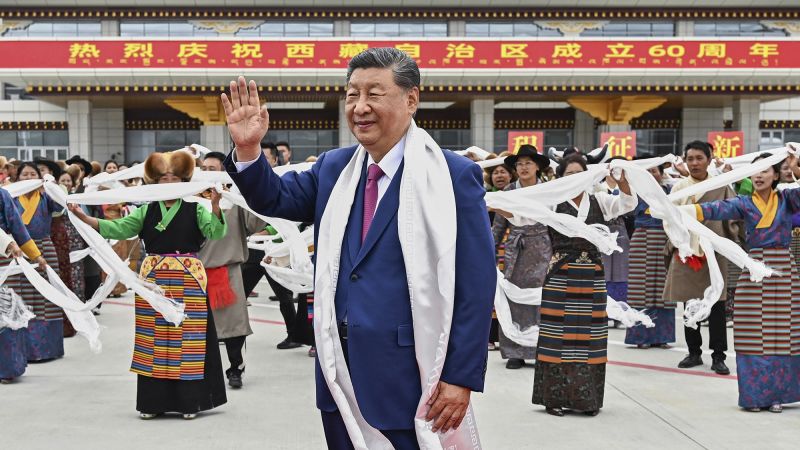
Chinese leader Xi Jinping visited Tibet, marking 60 years of contested rule. This rare visit underscores China's control as the Dalai Lama's succession looms.
 CNN
CNNXi Jinping makes rare visit to Tibet to showcase control as Dalai Lama succession looms
 Associated Press
Grand ceremony and parade mark 60 years of Chinese Communist Party rule in Tibet

 Al Jazeera
Xi Jinping makes rare visit to Tibet as 60 years of Chinese rule celebrated
 BBC News
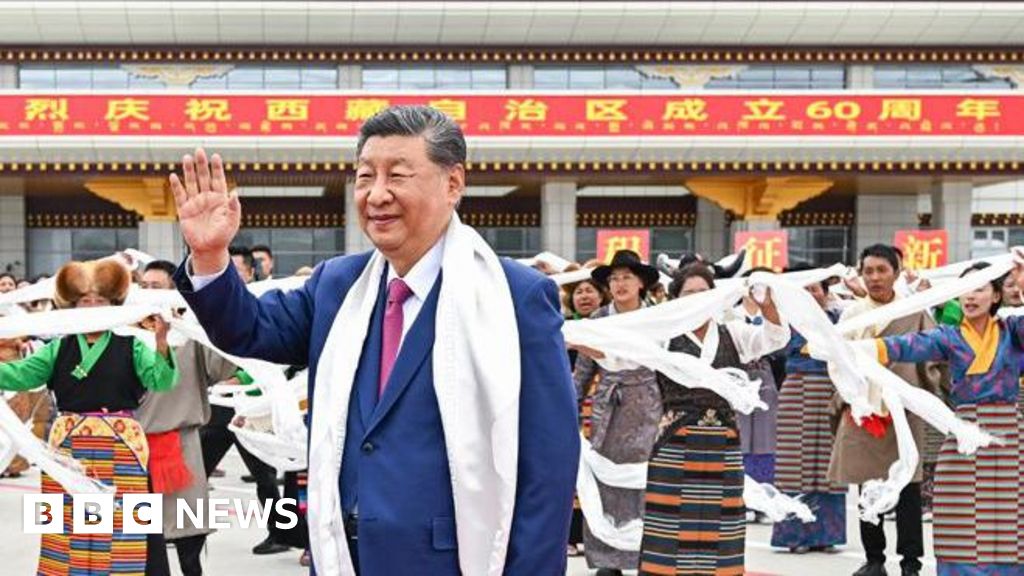
China's Xi touts unity and development in surprise Tibet visit

 ABC News
China's Xi makes a rare visit to Tibet to mark 60 years of contested rule there
Overview
Chinese leader Xi Jinping undertook a rare visit to Tibet, commemorating 60 years of Beijing's contested rule over the Himalayan territory, emphasizing China's firm control.
During his visit, Xi Jinping called for the creation of a "modern socialist" Tibet, aiming for a united, prosperous, civilized, harmonious, and beautiful region under Chinese governance.
Communist forces occupied Tibet in 1951, leading to the establishment of the Tibet autonomous region in 1965, marking decades of contested sovereignty by China's Communist Party.
China asserts its historical sovereignty over Tibet and insists on its right to appoint the reincarnation of the Dalai Lama, Tibetan Buddhism's highest-ranking leader.
Human rights groups raise concerns about eroding cultural identity and religious freedom in Tibet, while Tibetans assert historical independence under their Buddhist theocracy.
Analysis
Center-leaning sources cover the story neutrally by presenting both the official Chinese narrative of development and the historical context of repression and ongoing opposition. They balance celebratory descriptions with factual accounts of the situation, including the Dalai Lama's status and the existence of a government-in-exile, providing a comprehensive view without overt bias.
FAQ
Xi Jinping's visit to Tibet in 2025 marked the 60th anniversary of the Tibet Autonomous Region and emphasized China's firm control over the region, calling for ethnic unity, political stability, and a modern socialist Tibet under Chinese governance.
Tibet was occupied by Communist forces in 1951 and designated as the Tibet Autonomous Region in 1965. Since then, its sovereignty has been contested, with China asserting historical claims and the right to appoint the Dalai Lama, while many Tibetans advocate for historical independence and express concerns about cultural and religious restrictions.
Human rights groups have raised concerns about the erosion of Tibetan cultural identity and religious freedom, highlighting repression and massive surveillance in Tibet under Chinese administration.
The Chinese government views Tibet as an integral part of China, emphasizing the need for political and social stability, ethnic unity, and development. It considers attempts to separate Tibet from China as doomed to failure and promotes policies aimed at economic growth and border security.
