U.S. Vice President Vance Meets Netanyahu, Discussing Gaza Ceasefire and Regional Peace
U.S. Vice President JD Vance met Israeli Prime Minister Benjamin Netanyahu in Jerusalem to advance the Gaza ceasefire, emphasizing Hamas disarmament, Gaza rebuilding, and strong U.S.-Israel partnership for lasting peace.
 Associated Press
Vance and Netanyahu meet to push Gaza ceasefire agreement forward
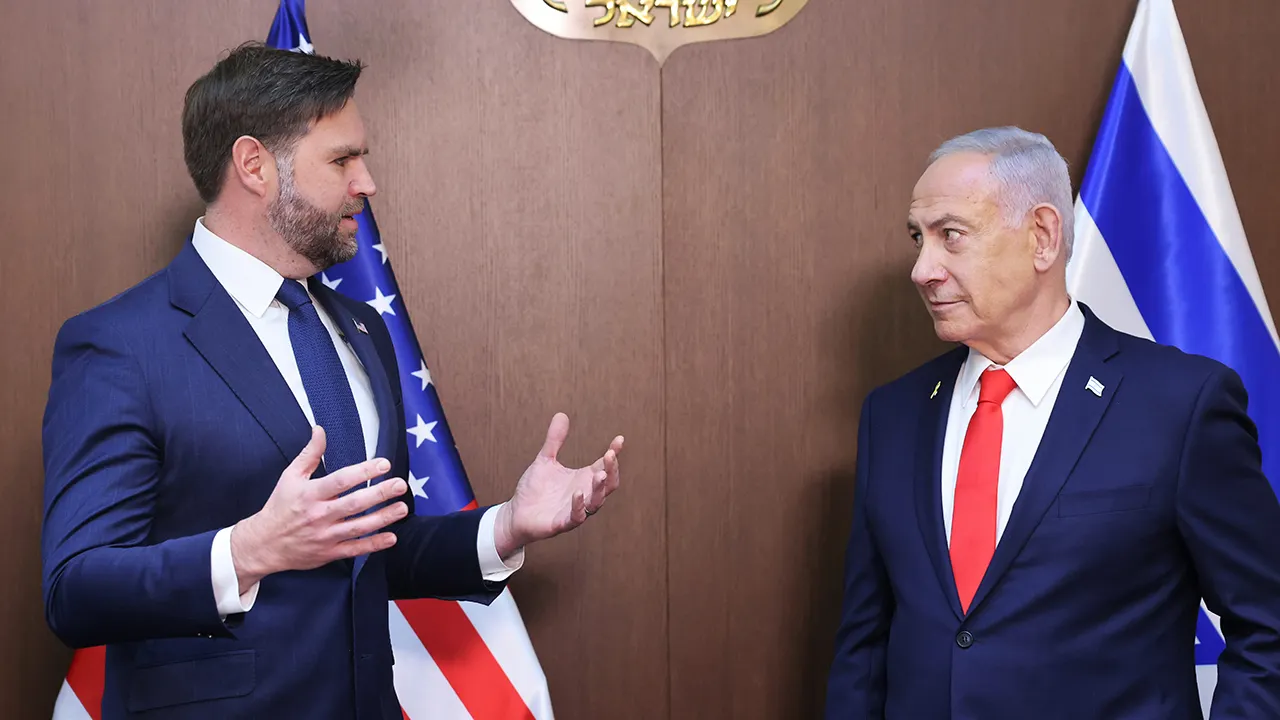
 FOX News
Vance hails 'days of destiny' as VP seeks to build on ceasefire agreement
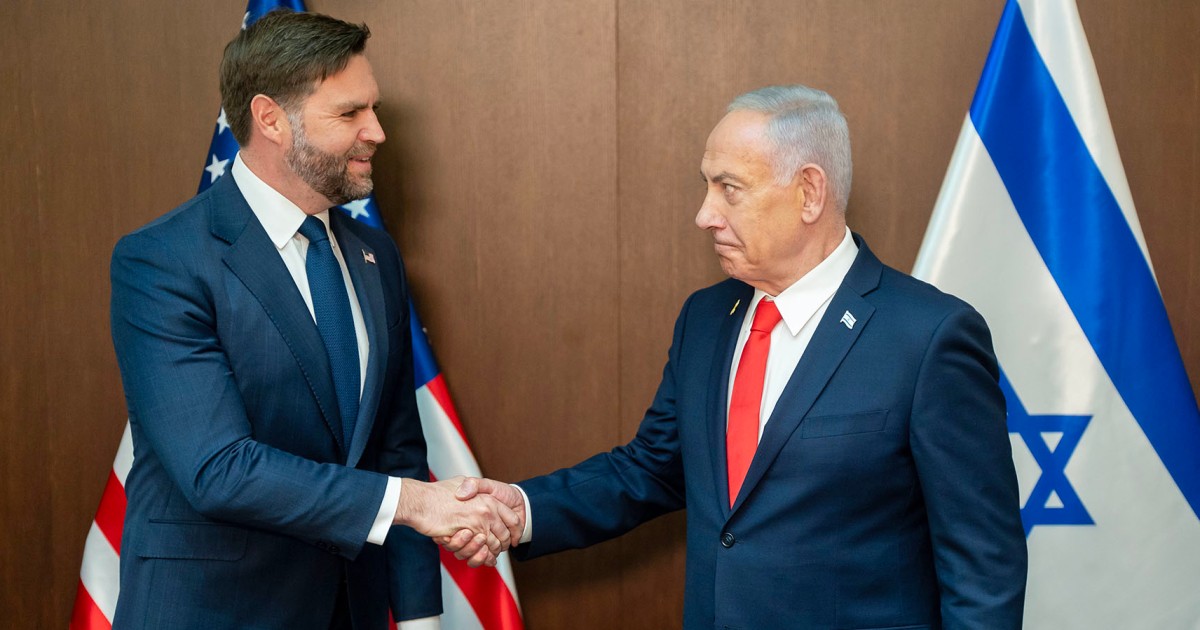
 NBC News
Vance says he's not in Israel to babysit Gaza ceasefire as next steps remain uncertain
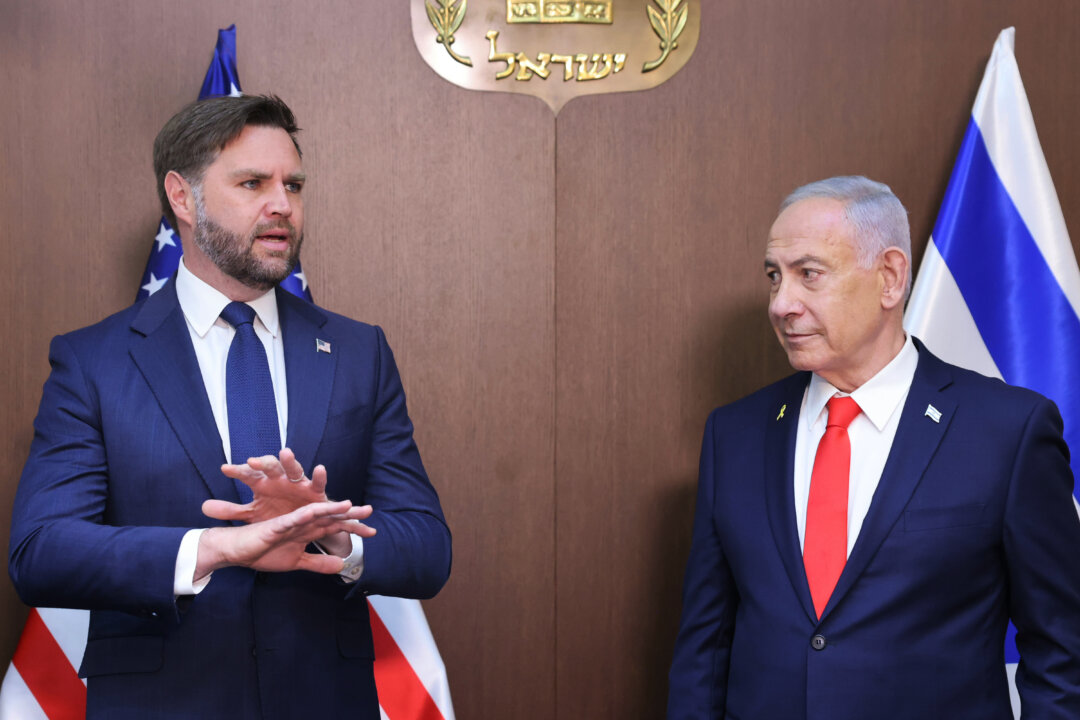
 Epoch Times
Vance, Netanyahu Discuss Gaza Civil Governance, Security to Advance Cease-Fire Agreement
Overview
U.S. Vice President JD Vance met Israeli Prime Minister Benjamin Netanyahu in Jerusalem to advance the Gaza ceasefire agreement and discuss regional peace efforts.
Netanyahu underscored the robust U.S.-Israel alliance, founded on shared values, which is essential for promoting security and stability across the Middle East.
Vance emphasized the critical need to disarm Hamas, rebuild Gaza, and bolster Israel's security to improve the living conditions for Gaza residents.
Vance expressed strong optimism for achieving lasting peace in the Middle East, believing in the capacity of regional allies and Israeli leadership to succeed.
The Vice President clarified the U.S. is not in Israel to "babysit," but to support the process, as Hamas reportedly continues to hand over dead hostages.
Analysis
Center-leaning sources frame the story by emphasizing the U.S. role as a crucial, yet carefully defined, partner in stabilizing the Gaza ceasefire. They highlight Vice President Vance's efforts to reassure Israel of U.S. support without overstepping, consistently stressing "no American boots on the ground." This collective framing positions the U.S. as a proactive, non-interventionist mediator in a delicate regional situation.
FAQ
They discussed advancing the Gaza ceasefire agreement, emphasizing Hamas disarmament, rebuilding Gaza, enhancing Israel's security, and strengthening the U.S.-Israel partnership for lasting peace in the Middle East.
Since the ceasefire began on October 10, the remains of 15 hostages have been returned to Israel, with 13 still to be recovered from Gaza. Hamas reportedly continues to hand over dead hostages as part of the fragile ceasefire agreement.
Netanyahu underscored that Israel is not a U.S. protectorate and emphasized the robust U.S.-Israel alliance based on shared values as essential for promoting security and stability in the region.
Vice President Vance clarified that the U.S. is not in Israel to 'babysit' but to support the peace process, aiming for Israel to be a strong ally while the U.S. reduces its interest in the Middle East.
Vance expressed strong optimism about achieving lasting peace in the Middle East, believing in the capacity of regional allies and Israeli leadership to succeed in promoting security and stability.

