Africa Hosts First G20 Summit Amidst US Boycott and Ambitious Agenda
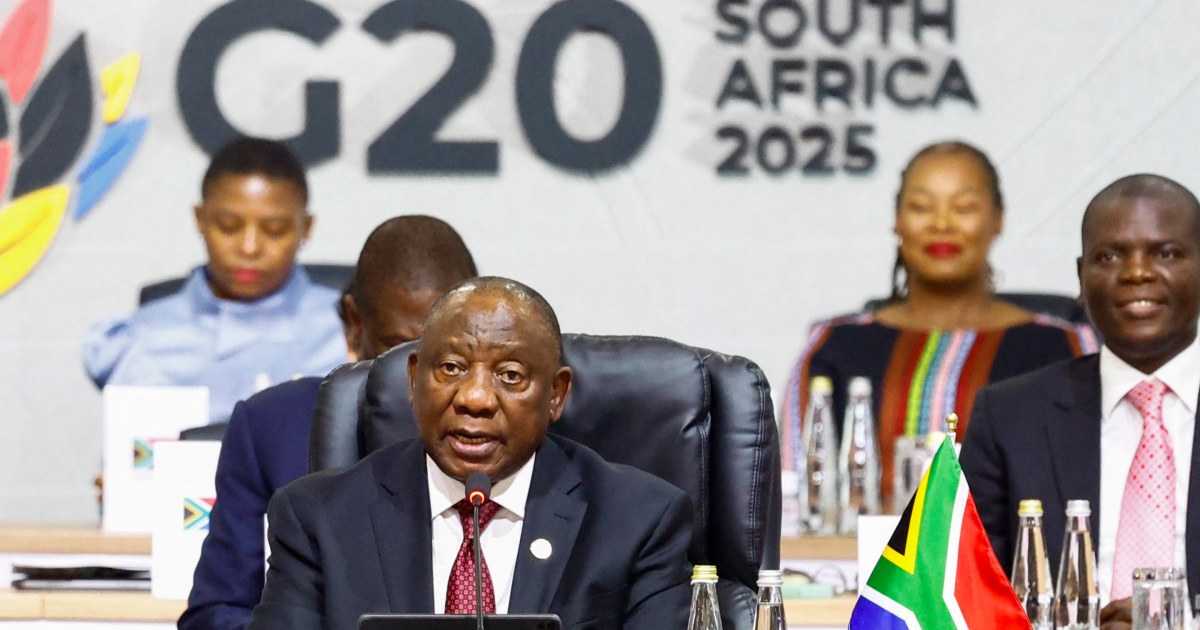
Africa's first G20 summit in South Africa opened with an ambitious agenda to aid poor countries, despite a US boycott ordered by President Trump.
 NBC News
Africa's first G20 summit opens with an ambitious agenda and a U.S. boycott

 Al Jazeera
G20 summit in South Africa: Who’s attending and what’s on the agenda?

 ABC News
Africa's first G20 summit opens with an ambitious agenda and tries to move on from Trump's boycott
 Associated Press
Africa's first G20 summit opens with an ambitious agenda and a US boycott
Overview
Africa's first G20 summit commenced in South Africa, near Soweto, gathering leaders and top officials from the richest and leading emerging economies to address global issues.
The summit faced a significant US boycott, ordered by President Trump, who criticized South Africa's hosting and cited concerns about its white Afrikaner minority.
South Africa championed an ambitious agenda, advocating for increased G20 assistance to poor nations for climate recovery, green energy transition, and foreign debt reduction.
The G20 expanded its membership to include the African Union, now comprising 21 members, aiming to foster greater collaboration between rich and developing countries.
The summit concluded with a leaders' declaration, outlining broad agreements reached by members, despite initial resistance from the United States to South Africa's key priorities.
Analysis
Center-leaning sources frame the G20 summit by emphasizing South Africa's "ambitious agenda" for developing nations, contrasting it with the U.S. boycott and opposition. They highlight the "diplomatic rift" and how U.S. actions "threatened to undercut the agenda," portraying South Africa as a resilient host. The framing underscores global inequality and climate change as critical issues facing resistance.
FAQ
The United States boycotted the G20 summit in South Africa due to President Trump's criticism of South Africa's hosting, citing concerns about its white Afrikaner minority and broader political disagreements.
The inclusion of the African Union in the G20 expands the group to 21 members, aiming to enhance collaboration between rich and developing countries and ensure African perspectives are better represented in global economic governance.
South Africa's G20 presidency focused on solidarity, equality, and sustainability, with priorities including climate recovery, green energy transition, foreign debt reduction, and increased assistance for poor nations.
The G20, under South Africa's leadership, aims to increase the quality and quantity of climate finance flows to developing countries by strengthening multilateral development banks and leveraging private capital.
The Cost of Capital Commission will deliver a comprehensive expert review on issues impacting the cost of capital for developing economies, aiming to address debt sustainability and fiscal space challenges.