President Trump Signs Historic DRC-Rwanda Peace Deal at Newly Named Institute
President Trump signed a historic peace agreement between DRC and Rwanda at the newly named Donald J. Trump Institute of Peace, aiming to resolve eastern Congo's conflict.

 USA TODAY
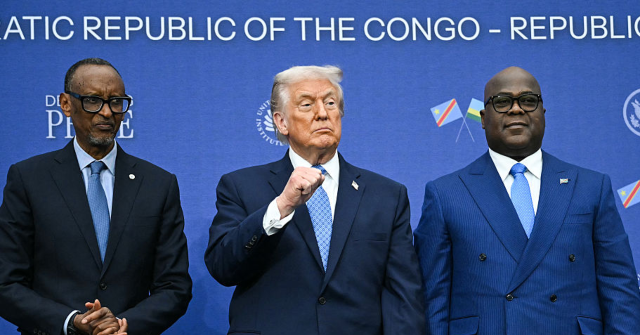
Trump fumbles African leaders' names, jokes about 'killing each other'
 Breitbart News
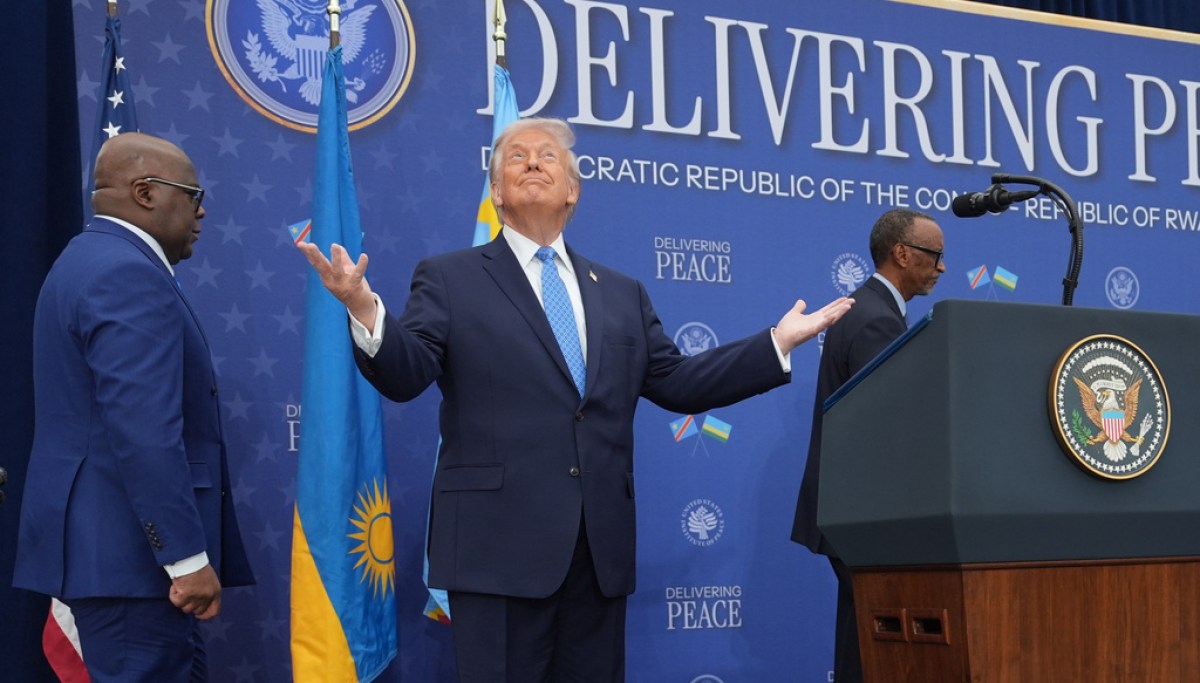
Trump Formalizes Historic Peace Agreement Between Democratic Republic of Congo, Republic of Rwanda
 Washington Examiner
Trump touts Congo-Rwanda peace deal in push to end conflict
 Epoch Times
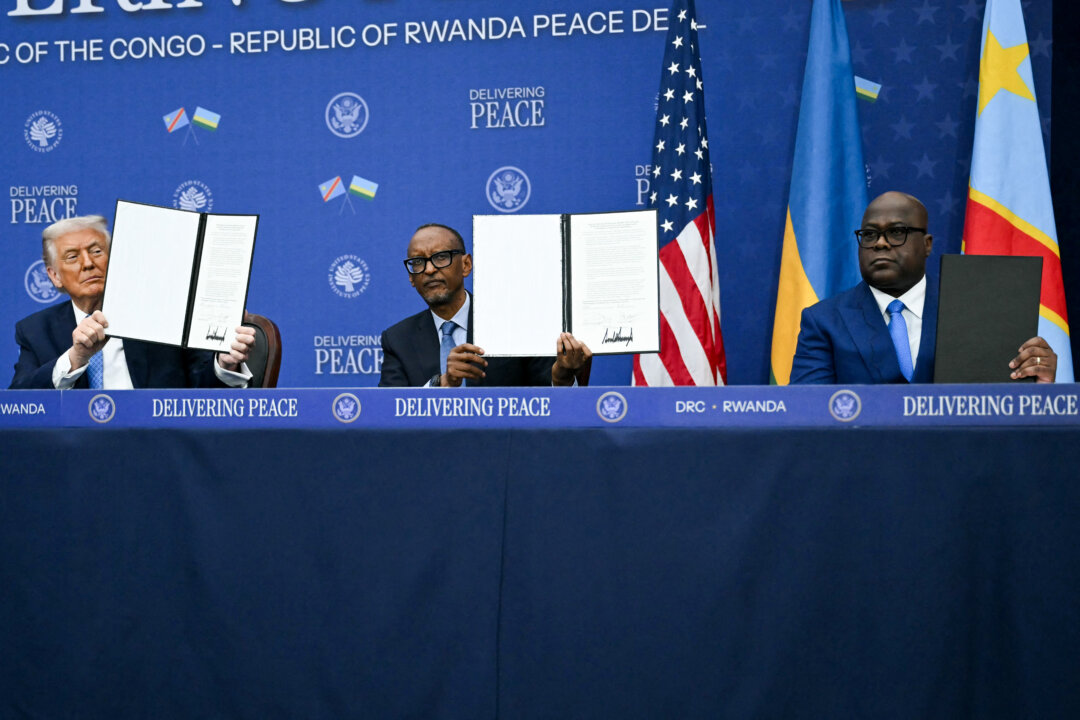
Trump Presides Over Peace Signing Between Democratic Republic of Congo and Rwanda
Overview
President Donald Trump hosted and signed a historic peace agreement between the Democratic Republic of Congo and Rwanda in Washington, D.C., at the newly named Donald J. Trump Institute of Peace.
The agreement aims to address the decades-long conflict in eastern Congo, a region plagued by over 100 armed groups, including the Rwanda-backed M23 rebels, severely impacting the nation.
Despite the peace summit and signing, clashes between M23 rebels and Congolese forces continued this week in the conflict-battered eastern region, highlighting ongoing instability.
Peace efforts have been consistently hindered by accusations of ceasefire violations between the warring factions, complicating the path toward achieving lasting stability and trust.
Analysts remain skeptical, predicting the deal will not lead to immediate peace, with US funding cuts further exacerbating post-conflict hardship and impacting crucial aid support.
Analysis
Center-leaning sources frame this story by highlighting President Trump's perceived diplomatic missteps and insensitivity, particularly his "joke" about African nations "killing each other" and his past comments on Somalia. They collectively cast doubt on the peace deal's effectiveness and emphasize the underlying US economic interests in the region's mineral resources, often juxtaposing Trump's optimistic claims with ongoing conflict and expert skepticism.
FAQ
The main terms include the withdrawal of Rwandan troops from eastern DRC, the end of Congolese support for the FDLR militia, disarming non-state armed groups like M23, facilitating the return of refugees, and establishing a regional economic integration framework focused on critical minerals trade. The agreement also calls for a joint security coordination mechanism within 30 days and the restoration of state authority over all DRC territory.
Skepticism arises due to ongoing clashes between M23 rebels and Congolese forces, repeated ceasefire violations, and deep-seated mistrust between the DRC and Rwanda. Additionally, global powers' economic interests in DRC's minerals and continued illegal exploitation undermine the agreement's long-term success.
The United States hosted the signing ceremony and is involved in facilitating the regional economic integration framework, particularly around critical minerals trade. The agreement was signed at the newly named Donald J. Trump Institute of Peace, highlighting U.S. diplomatic involvement.
The agreement calls for the disengagement, disarmament, and conditional integration of non-state armed groups, including M23 and FDLR. Both countries pledge to end support for these groups and work toward their disarmament.
Challenges include ongoing violence and ceasefire violations, lack of trust between the DRC and Rwanda, economic interests of global powers in DRC's minerals, and the continued presence of over 100 armed groups in eastern Congo. US funding cuts also threaten post-conflict aid and stability efforts.