Farmers in France and Greece Block Roads to Protest EU-Mercosur Trade Deal
Farmers in France and Greece blocked roads with tractors to protest an EU-Mercosur trade deal, citing rising costs, unfair competition and insufficient government support measures.

 The Guardian
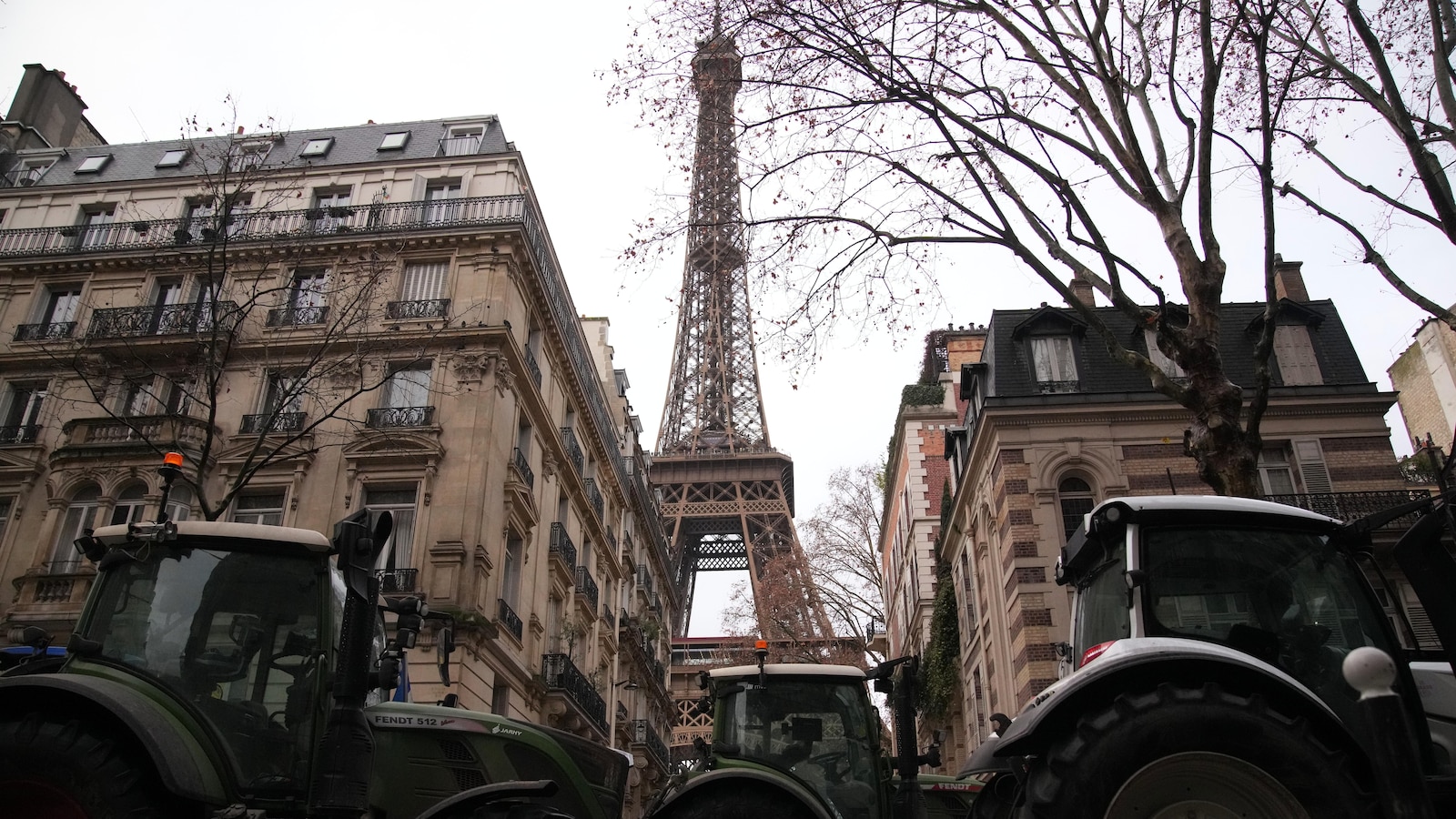
French farmers stage protest in Paris to oppose EU-Mercosur trade deal
 ABC News
French farmers force their way through Paris with tractors to protest free trade deal
 ABC News
Farmers block highways across Greece in protest over rising costs and EU trade deal
 Associated Press
Farmers drive tractors through Paris and block highways in Greece to protest free trade deal
Overview
Dozens of French farmers drove about 100 tractors into Paris, gathering at the National Assembly and landmarks like the Arc de Triomphe and Eiffel Tower on Thursday to protest.
In Greece, farmers mounted a 48-hour blockade of major highways, junctions and tolls, halting most traffic and demanding rejection of the Mercosur agreement and stronger support.
Protesters cited rising production costs, subsidy-payment delays, disease outbreaks and fears of being undercut by cheaper South American imports if the EU-Mercosur deal proceeds.
French authorities blocked many tractors at Paris' outskirts, denounced illegal gatherings; France, Germany and others remain divided as the EU considers ratifying the accord soon.
Supporters say the deal boosts EU exports and includes agricultural safeguards and extra funding; opponents warn it threatens local production and could prompt further protests.
Analysis
Center-leaning sources foreground farmers’ grievances, using escalation language and emotive quotes to humanize protests, emphasize cost comparisons and government concessions while briefly noting an official warning. By privileging farmer voices and omitting pro-trade or independent economic perspectives, the coverage frames the dispute as an urgent, crisis-driven clash.
FAQ
The EU‑Mercosur trade deal is a proposed association agreement between the European Union and the Mercosur bloc—Brazil, Argentina, Uruguay and Paraguay—aimed at reducing tariffs, opening markets for goods and services, and strengthening political and economic ties between the two regions.
Many European farmers oppose the EU‑Mercosur agreement because they fear increased competition from cheaper South American imports produced under what they consider less stringent environmental and sanitary rules, which they say could depress EU farm prices and undermine local production.
The proposed deal includes tariff‑rate quotas that cap sensitive imports like beef and poultry, safeguard clauses that allow the EU to restrict imports if they cause or threaten serious injury to EU sectors, and a financial safety net to support farmers if markets are negatively affected.
Supporters say the agreement would cut high Mercosur tariffs, saving EU exporters an estimated billions of euros per year in customs duties, simplify customs procedures, and give EU firms improved access to public contracts and key raw materials in Mercosur countries.
Ratification of the EU‑Mercosur deal has been repeatedly delayed due to political resistance from several member states, notably France and Italy, and ongoing farmer protests, prompting the EU to add extra safeguard clauses and financial support proposals while negotiations continue.


