Tens of thousands rally in Havana to condemn U.S. strike in Venezuela and demand Maduro's release
Thousands gathered publicly at Havana's José Martí Anti-Imperialist plaza to protest a U.S. strike in Venezuela, mourn 32 Cuban officers and demand Nicolás Maduro's release.


Overview
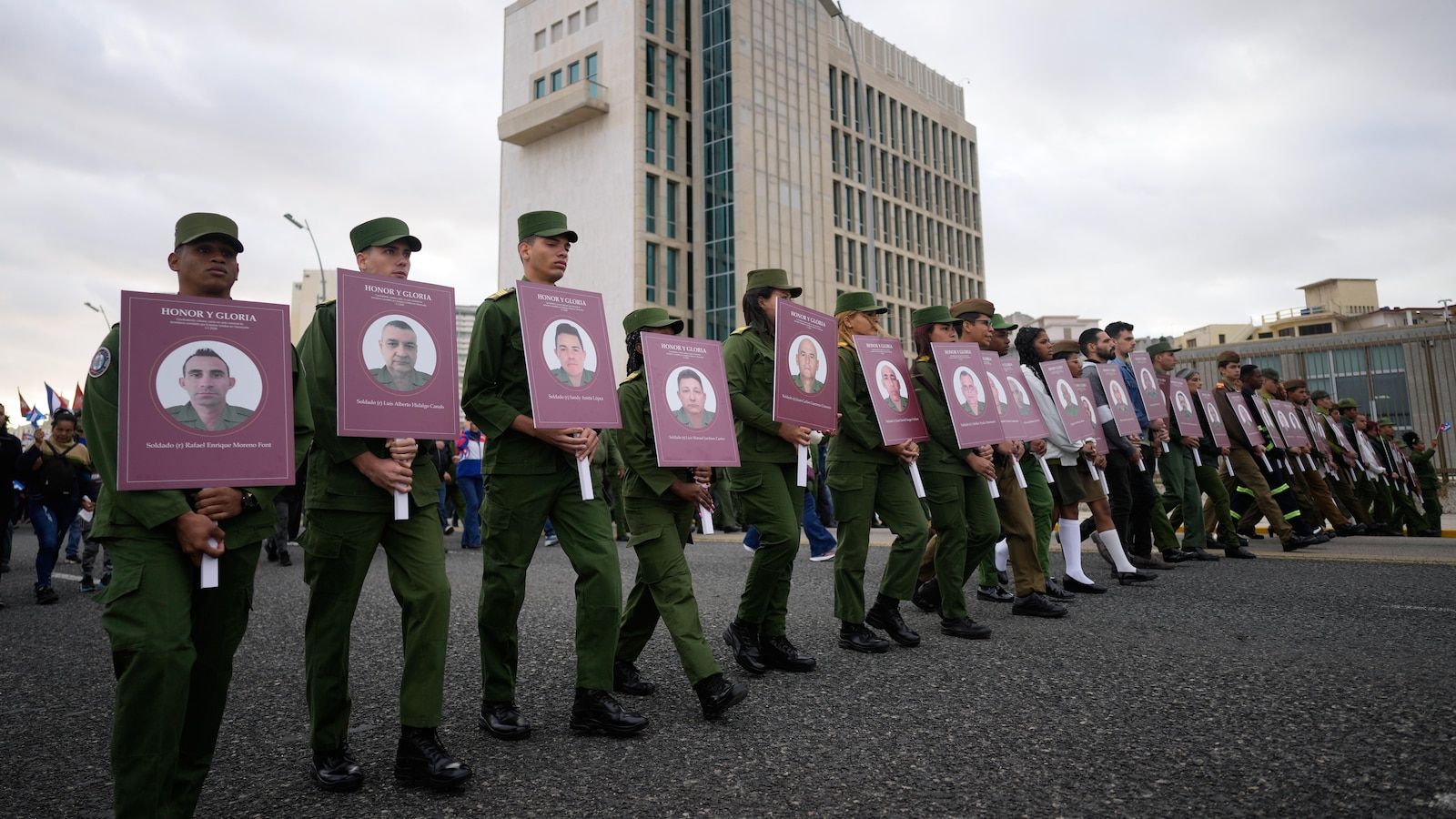
Tens of thousands of Cubans gathered Friday at Havana's José Martí Anti-Imperialist plaza across from the U.S. Embassy for a government-organized demonstration and procession.
Protesters denounced the Jan. 3 U.S. strike on Caracas that killed 32 Cuban officers, held photos of the fallen, and demanded the U.S. release former Venezuelan president Nicolás Maduro.
President Miguel Díaz-Canel spoke at the rally, accusing the U.S. administration of neo-fascism, rejecting political concessions, and calling for dialogue only on equal, respectful terms.
The demonstration occurred amid long-standing U.S. sanctions dating from the 1960s, recently tightened, and U.S. threats to cut Venezuelan oil support that experts warn could worsen Cuba's crisis.
Organizers led a combatant march tradition, with the national hymn, flags and provincial memorials; the officers' remains arrived Thursday and burials were scheduled across Cuba on Friday.
Analysis
Center-leaning sources frame this coverage by foregrounding the government-organized rally and emotive imagery while prioritizing official Cuban voices and protesters. Editorial phrasing (e.g., 'show of popular strength,' 'suffocating the island’s economy') amplifies Cuban victimhood; structural choices downplay dissenting Cuban perspectives and offer limited U.S. or independent expert counterpoints.
FAQ
The United States launched Operation Absolute Resolve, a large-scale military strike on Caracas and surrounding areas, capturing Venezuelan President Nicolás Maduro and his wife Cilia Flores, who were transported to New York for charges including narco-terrorism.[1]
32 Cuban officers, serving as security personnel for Maduro, were killed during the U.S. strikes in Caracas.
Maduro and his wife face U.S. federal charges of narco-terrorism, cocaine importation conspiracy, and possession of machine guns; they pleaded not guilty.
Díaz-Canel accused the U.S. of neo-fascism, rejected political concessions, and called for dialogue only on equal, respectful terms.[story]
The rally highlighted long-standing U.S. sanctions on Cuba since the 1960s, recently tightened, and threats to cut Venezuelan oil support, potentially worsening Cuba's crisis.[story]